
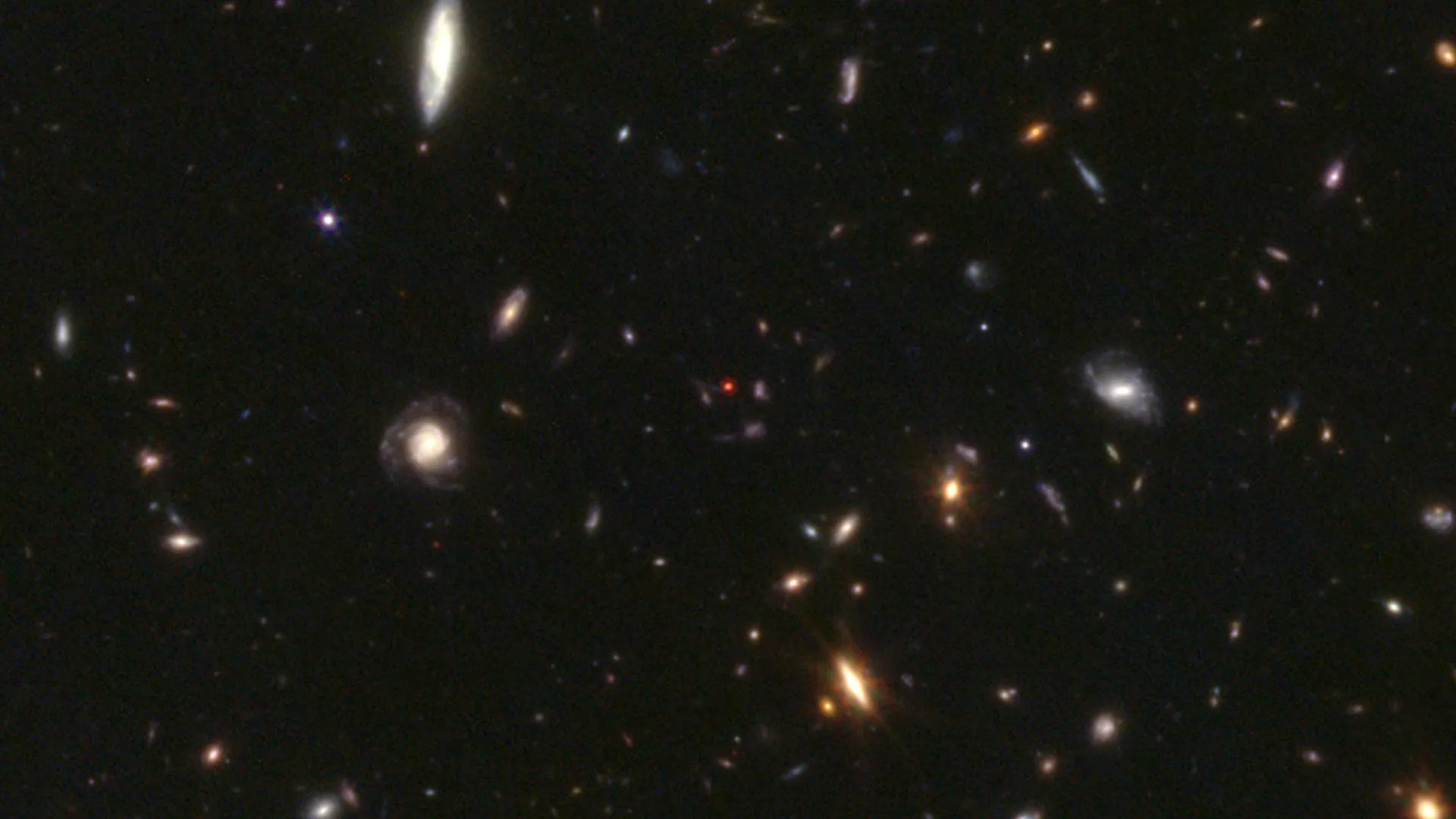
Tiny, glowing red specks keep appearing in images captured by the James Webb Space Telescope, and astronomers are still struggling to explain them.
These strange objects, now known as “little red dots” or LRDs, show up across nearly every deep-space image. They are bright, distant, and deeply puzzling. Despite years of research, their true nature remains unknown.
A Cosmic Mystery Scientists Can’t Explain

Since the telescope began observing the universe four years ago, hundreds of these red dots have appeared in its data. Their presence has sparked intense debate and triggered a wave of scientific studies.
“This is the first time in my career that I have studied an object where we truly do not understand why it looks the way it does,” said Jenny Greene, a professor of astrophysical sciences at Princeton University. “I think it’s fair to call them a mystery.”
From the start, one thing became clear. These objects are everywhere.
“Every deep pointing you did with James Webb, you were finding a few,” Greene said, referring to how frequently the dots appear when the telescope focuses on a single region of space.
Early Theories Keep Falling Apart

At first, astronomers believed the dots might be massive early galaxies or black holes hidden behind thick dust. However, further observations quickly challenged those assumptions.
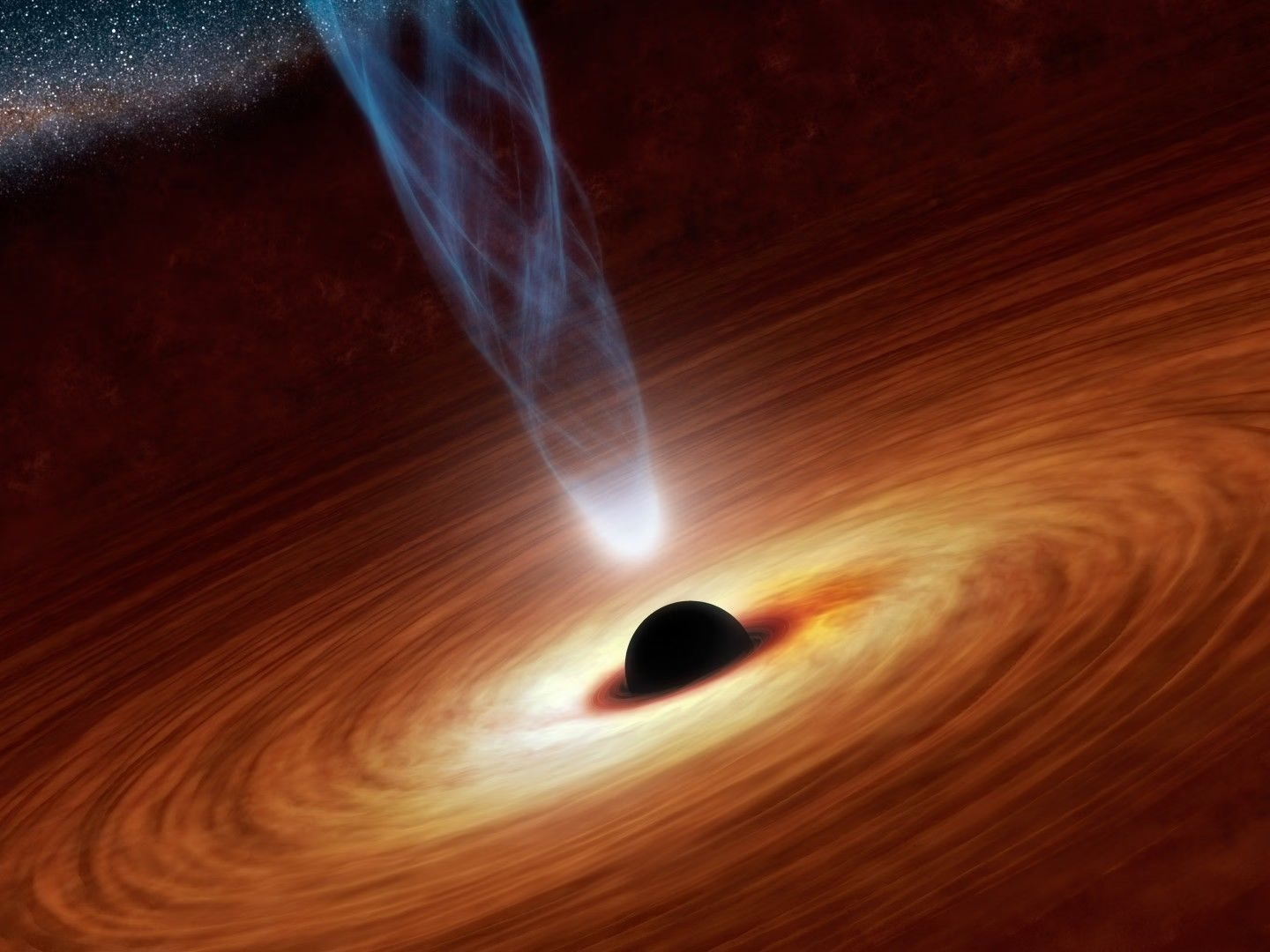
“I certainly think they’re powered by growing black holes, but there are other, more exotic suggestions, like some kind of very massive star dying,” Greene said.
Still, new data keeps shifting the narrative.
“So far, that’s what’s happened. We’ve had an expectation, it’s been wrong. We’ve had another expectation, it’s been wrong. So I would leave that possibility open still.”
Why Only Webb Can See Them
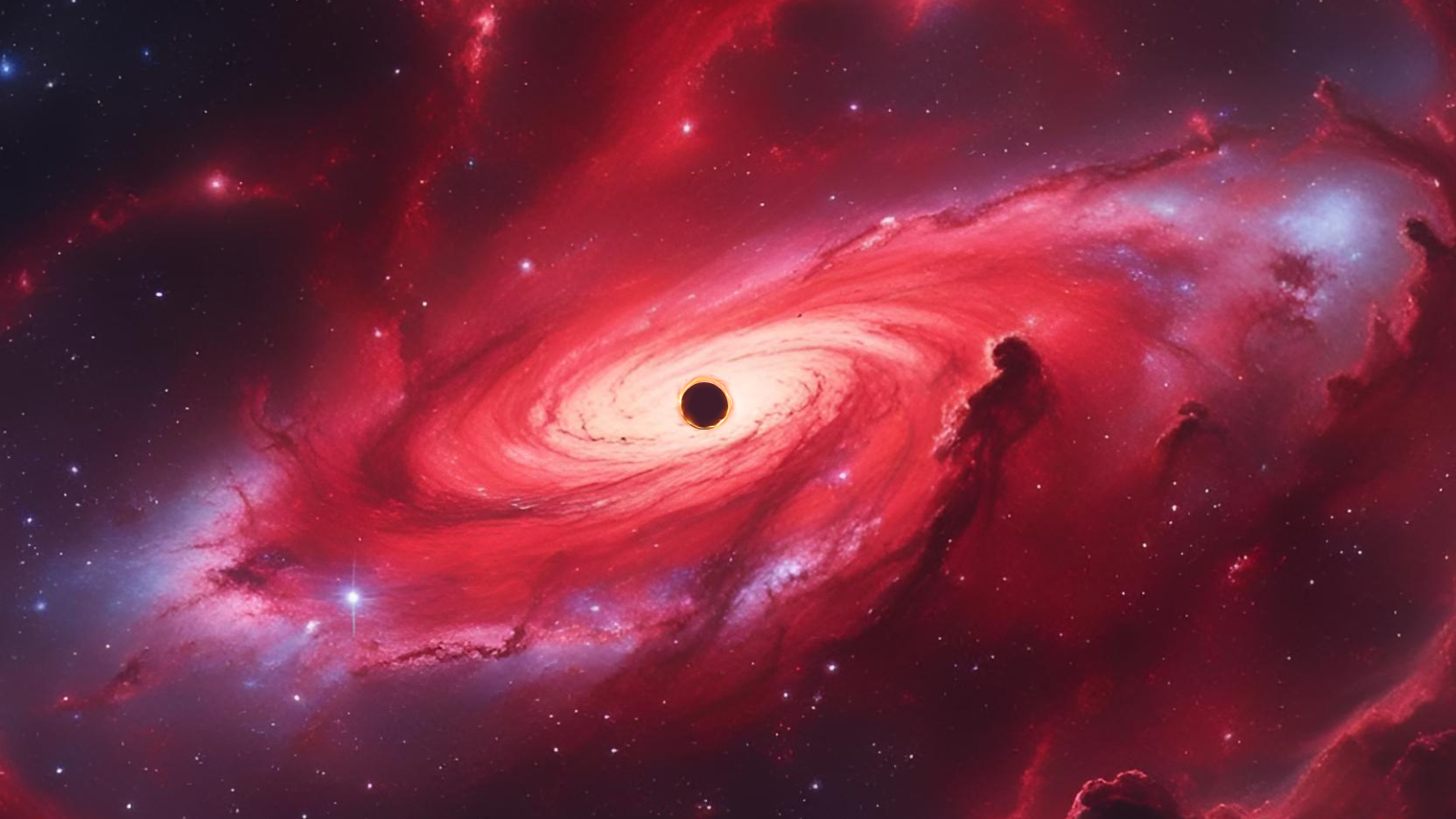
Earlier telescopes, including Hubble, could not detect these objects. The reason lies in Webb’s advanced infrared capabilities.
The telescope can capture light that has stretched over vast cosmic distances. This stretching effect, known as redshift, causes distant objects to appear red.
However, distance alone does not explain everything. These dots are not just red because they are far away. They also appear intrinsically red, which adds another layer of complexity.
“The main interpretation in our 2024 study was that these are growing black holes, and that they are red because they are surrounded by dust particles,” said Jorryt Matthee. “I would say that was the consensus after our paper for at least one or two years, but now the consensus has actually changed a bit. We still think they are growing black holes, but we now think they are not red because there’s dust, but because there’s hydrogen gas.”
A Window Into The Early Universe
Most little red dots come from a time when the universe was still very young.
“LRDs are widespread in the early universe — primarily the first billion years of cosmic time, with the current age being 13.8 billion years — but they are extremely rare in the more nearby, or later, universe,” Matthee explained.
This distance makes them difficult to study, as astronomers are essentially looking back in time.
However, there has been a breakthrough. Researchers recently identified three LRDs much closer to Earth, offering a new opportunity to study them in greater detail.
Could These Be A Missing Link?
Some scientists believe these mysterious dots could help solve one of astronomy’s biggest questions.
“In terms of how LRDs could change our understanding of black holes, I think they might turn out to be some kind of missing link,” Matthee said. “We know that galaxies, like our own Milky Way, have supermassive black holes in their center, and while this is very common, it’s basically a mystery how these supermassive black holes formed. The LRDs may actually be the birth phase, or the baby phase, of this formation, and we might be observing that for the first time.”
If confirmed, this would provide a rare glimpse into how black holes form and grow in the early universe.
The “Cliff” And A New Kind Of Object
A major breakthrough came from a research program called RUBIES, led by Anna de Graaff.
“It was really the first program to go after these red sources systematically, observing all sorts of strange objects — not just little red dots — but among them, also 40 or so LRDs,” de Graaff said.
One object stood out in particular, earning the nickname “The Cliff.”
“This source is really the first one where we could say unambiguously, this is neither a normal galaxy nor a dust-shrouded black hole — it has to be something else,” she said. “It was a bit of a breakthrough moment.”
Its unusual light signature revealed something unexpected.
“A feature that can only be caused by very dense hydrogen gas that is somewhat warm in temperature,” de Graaff said. “This is surprising, because it means that LRDs are not red because they have old stars or because they have dust, but they are red because the light is being absorbed by a very dense gas surrounding a central engine, which we think is a black hole. And that is something that has never been observed before.”
Are These “Black Hole Stars”?
Some researchers now suggest these objects could represent an entirely new type of cosmic phenomenon.
“We do think that there is a black hole there that’s powering it, and the light from this black hole is illuminating the gas around it, in a way that is a little bit similar to what we see in stars,” de Graaff said.
This idea has led to the term “black hole stars,” though scientists acknowledge it is not a perfect label.
Meanwhile, theorists have proposed an even more unusual explanation known as quasi-stars.
“I realized that we had predicted the existence of black holes with enormous envelopes of matter. I don’t think we necessarily have the smoking gun that this is the explanation for LRDs, but so far, I haven’t seen any evidence that poses an insurmountable problem for that picture,” said Mitch Begelman.
Still More Questions Than Answers
Despite progress, uncertainty remains.
“It could well be that LRDs are quasi-stars, but in my view we have not yet fully ruled out other scenarios,” Matthee said. “I would definitely love this to be true, as it would imply we discovered a new type of astrophysical phenomena that bridges stars and supermassive black holes, but it’s too early to tell, in my view.”
Even the presence of black holes inside these objects has not been fully proven.
“It’s very hard to prove that there is a black hole in LRDs, the evidence is nonexistent at the moment,” de Graaff said. “The only reason we think that there are black holes in them is because they are so luminous and because there are so many of them. That’s our scientific gut feeling, but actually proving that is difficult.”
For now, the little red dots remain one of the universe’s most fascinating mysteries. With every new observation, astronomers move closer to an answer, but the puzzle is far from solved.