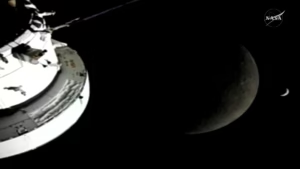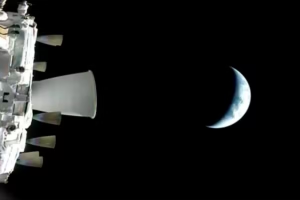

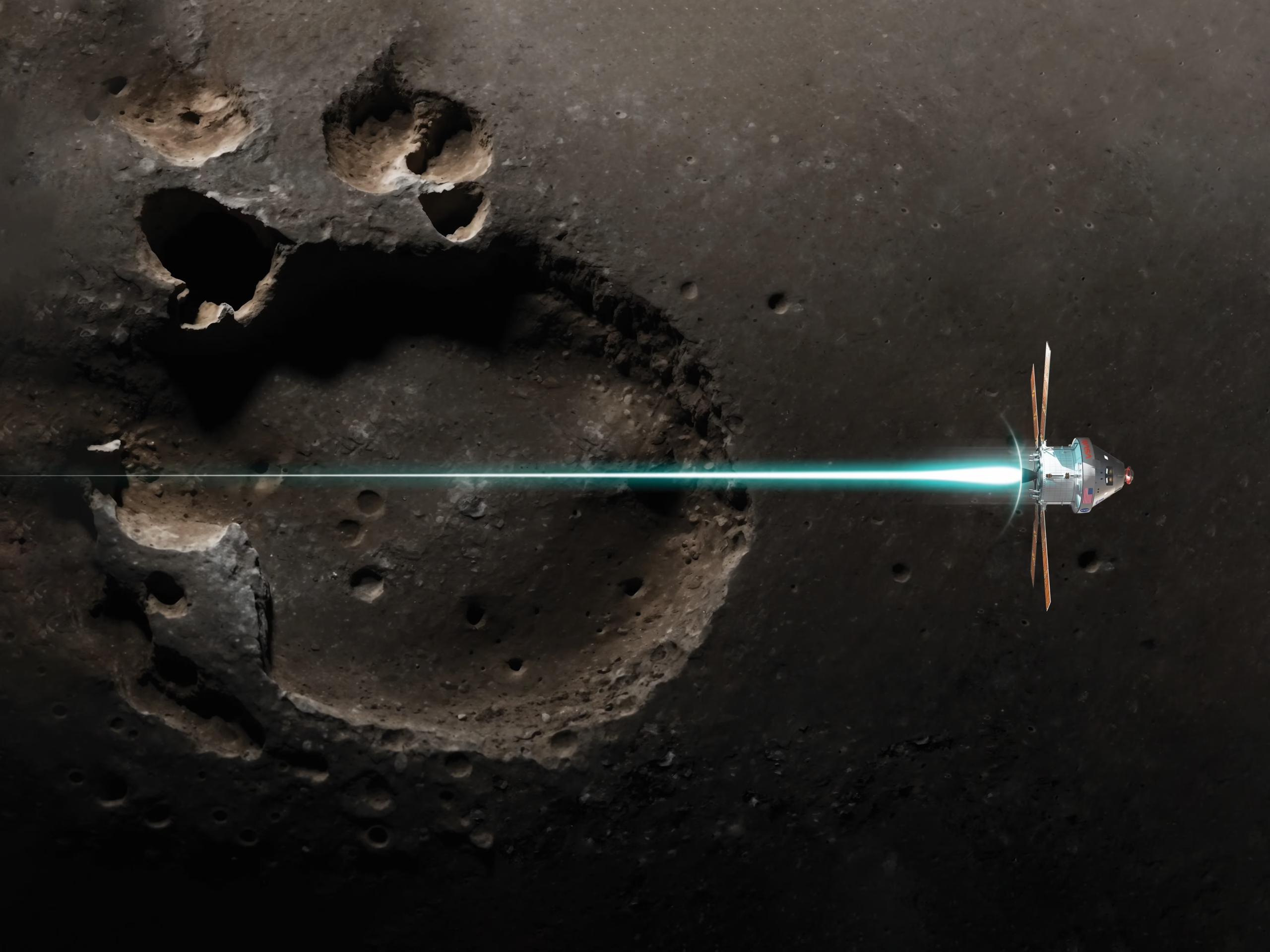
In the final, nerve-racking hours before liftoff, NASA’s Artemis II mission came dangerously close to delay. What should have been a seamless countdown turned into a tense scramble, as engineers raced against time to fix unexpected technical glitches.
Even as astronauts strapped in, a faulty toilet and concerns with critical safety systems surfaced over the radio. Yet somehow, the team pushed through. Now, the crew is safely orbiting Earth, carrying out vital tests before attempting their historic journey toward the Moon.
So what exactly went wrong, and what risks still remain?
Toilet Trouble In Space
Space travel may be high-tech, but some problems remain surprisingly human.
Shortly after launch preparations intensified, sensors in the spacecraft’s waste management system began sending unusual readings. It was not long before the crew had to step in.
Astronaut Christina Koch reportedly took on an unexpected role, acting as a plumber in orbit. Under guidance from mission control, she dismantled parts of the onboard toilet to investigate the issue.
Then came a moment of relief.
“Happy to report that toilet is go for use,” mission control confirmed over the radio. “We do recommend letting the system get to operating speed before donating fluid”.
It may sound minor, but in zero gravity, waste management becomes a serious engineering challenge. NASA has invested more than $23m (£17.4m) into developing its Universal Waste Management System.
The system is carefully designed. A funnel and hose handle urine using controlled airflow, while a specialized seat ensures solid waste is securely collected. Meanwhile, restraints and tethers prevent astronauts from drifting mid-use.
Importantly, the Orion spacecraft also carries backup options, including alternative collection bags and redundant fluid routing systems. In space, redundancy is survival.
Safety System Concerns Raise Tension
While the toilet issue grabbed attention, more serious concerns were unfolding quietly in the background.
Two critical safety systems raised red flags.
First, the flight termination system, which allows ground engineers to destroy the rocket if it veers off course, experienced a communications issue. Engineers quickly improvised, resolving it using hardware originally designed for the Space Shuttle program.
At the same time, the launch abort system, the crew’s emergency escape mechanism, reported a higher-than-expected temperature reading. Although alarming, officials ultimately determined it would not compromise the mission.
Still, the tension was unmistakable.
The countdown clock paused at 10 minutes as engineers conducted final checks. Then came the familiar but emotionally charged sequence of system confirmations.
One by one, voices echoed across mission control.
“Booster, go”, “GNC, go”, “Range, go”
Each call carried weight. Each response edged the mission closer to liftoff.
Finally, the decisive moment arrived.
“Artemis II, this is Launch Director – you are go for launch,” the crew was told.
“We go for all humanity,” Commander Reid Wiseman responded.
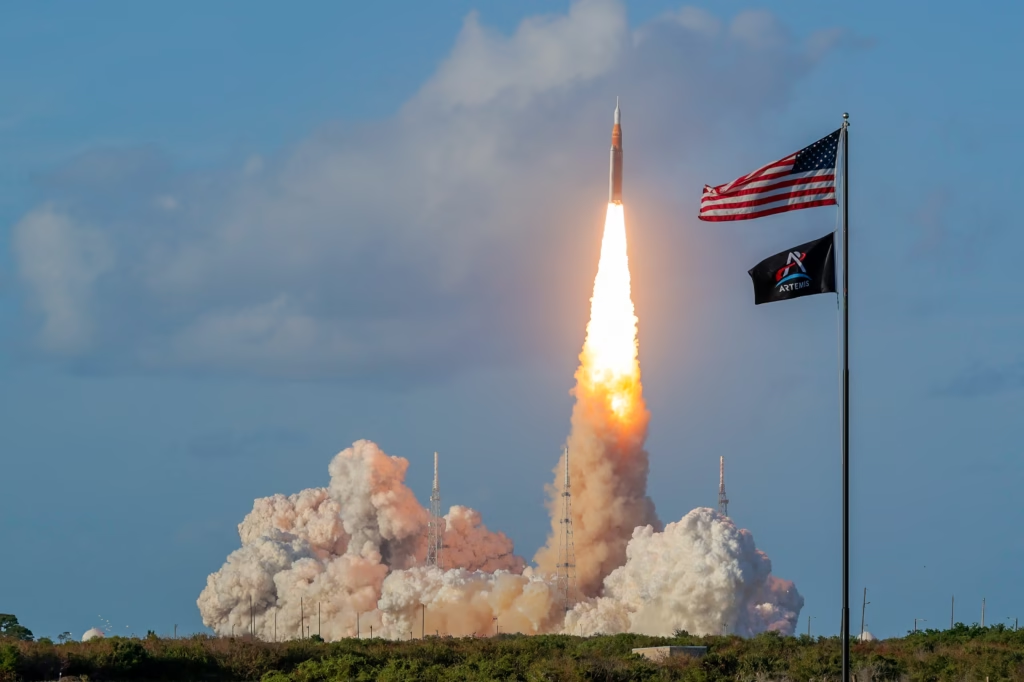
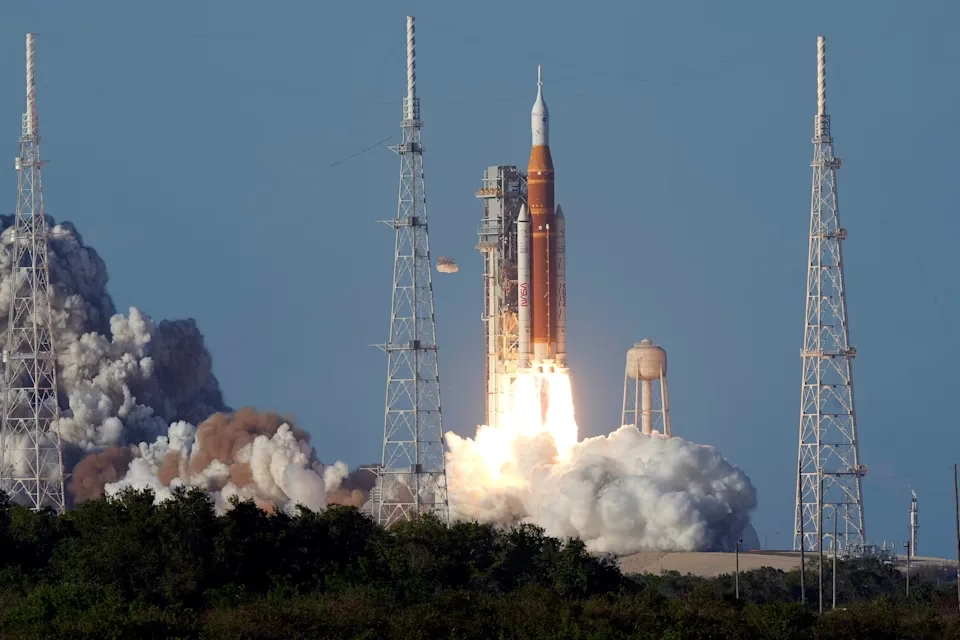
Seconds later, the rocket roared into the sky, watched by thousands at the Kennedy Space Centre and millions around the world.
Testing The Spacecraft To Its Limits
Now in Earth’s orbit, the mission has entered a quieter but equally critical phase.
The crew has been instructed to do something unusual: try to break their own spacecraft.
Deliberately.
They are cycling onboard computers through multiple modes, switching communication systems between ground stations and satellites, and moving around the cabin to stress the life support system.
Meanwhile, engineers are monitoring how the spacecraft handles rising carbon dioxide levels and humidity. Small thruster firings are also being tested to confirm the European-built service module behaves exactly as expected.
This is not routine testing. It is a calculated risk.
The goal is simple but crucial: determine whether Orion is safe enough to carry humans hundreds of thousands of kilometers into deep space.
What Still Could Go Wrong
Despite the successful launch, the mission is far from risk-free.
If any system behaves unpredictably during these tests, NASA will not hesitate to abort the lunar phase. Instead, the spacecraft would fire its engines and return the astronauts safely back to Earth.
That decision could come at any moment.
Space exploration has always walked a fine line between ambition and danger. Artemis II is no exception.
For now, everything is holding steady. But as the spacecraft prepares for its next phase, the question remains:
Will Orion prove itself ready for the Moon, or will hidden issues force an early return?