

South Florida’s rare winter freeze created an unusual scene across the region. Temperatures dropped to record lows, and thousands of green iguanas suddenly fell from trees, unable to move as the cold temporarily paralyzed them.
The unexpected cold snap also triggered an extraordinary response from wildlife officials and residents. Within just two days, more than 5,000 invasive iguanas were removed from the wild.
Massive iguana roundup during rare freeze
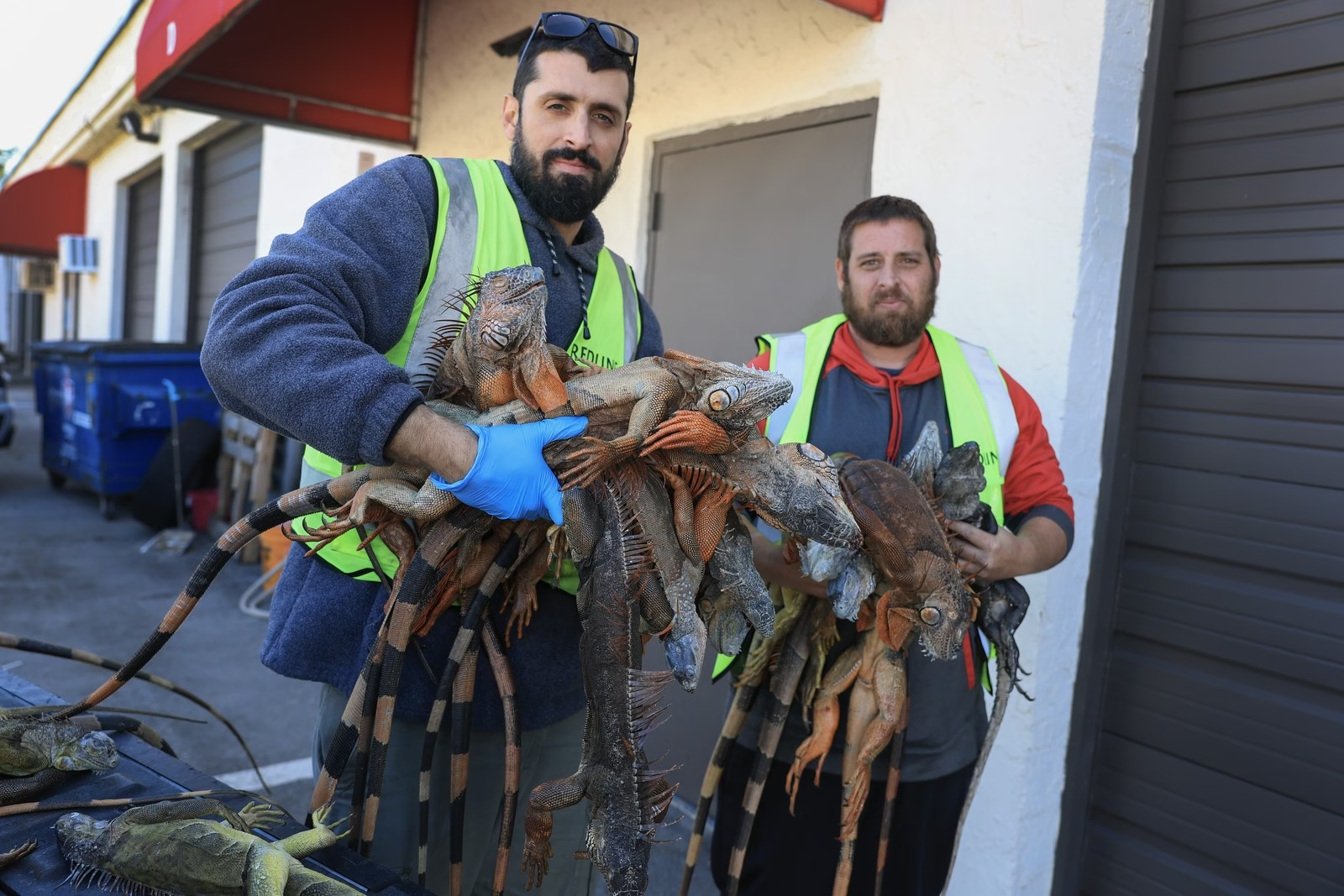
State wildlife officials confirmed that more than 5,000 green iguanas were collected during a special two-day period that allowed the public to capture the reptiles without a permit.
More than 5,000 invasive green iguanas in Florida were removed during the state’s two-day exemption that allowed residents and visitors to capture the cold-stunned reptiles without a permit, according to the Florida Fish and Wildlife Conservation Commission.
Officials said a total of 5,195 iguanas were brought to designated drop-off sites on Feb. 1 and Feb. 2 as South Florida experienced record-breaking cold temperatures.
“The removal of over 5,000 of these nonnative lizards in such a short time span was only possible thanks to the coordinated efforts of many staff members in multiple FWC divisions and offices, our partners and, of course, the many residents that took the time to collect and turn in cold-stunned iguanas from their properties,” Roger Young, FWC’s executive director, said at a Feb. 4 meeting in Tallahassee.
Temporary rule allowed public to help
To address the sudden wave of immobilized reptiles, wildlife officials issued a short-term exemption that allowed people to remove live iguanas without needing a permit.
Special regulations under an executive order allowed people to remove live, cold-stunned iguanas from the wild without a permit for two days only, the FWC said in a news release.
That window sparked widespread participation across South Florida. Residents, visitors, and wildlife officials all joined the effort to capture the reptiles and deliver them to designated collection sites.
Sunrise location collected majority
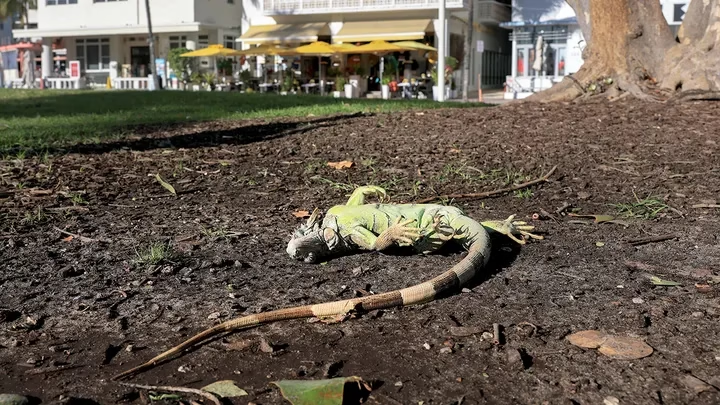
The largest number of iguanas was delivered to the agency’s Sunrise office near Fort Lauderdale.
Out of the 5,195 collected reptiles, 3,882 were brought to the Sunrise facility, located roughly 13 miles west of the city.
Another 1,075 iguanas were delivered to the agency’s Tequesta office, about 24 miles north of West Palm Beach.
Meanwhile, the Florida Keys drop-off site received 215 reptiles, while another 23 were collected at a facility in Fort Myers along the Gulf Coast.
What happened to the captured reptiles
After the massive collection effort, officials worked quickly to handle the captured iguanas.
FWC staff worked to coordinate the transfer of iguanas collected to permit holders, including for sale outside the state. Any of the reptiles that couldn’t be transferred to permit holders were humanely killed by trained staff, according to the FWC.
The reptiles are considered invasive and harmful to the region’s ecosystem and infrastructure.
Green iguanas are a prohibited species in the Sunshine State because of their “negative impacts on Florida’s environment and economy,” Young said.
Why cold weather affects iguanas
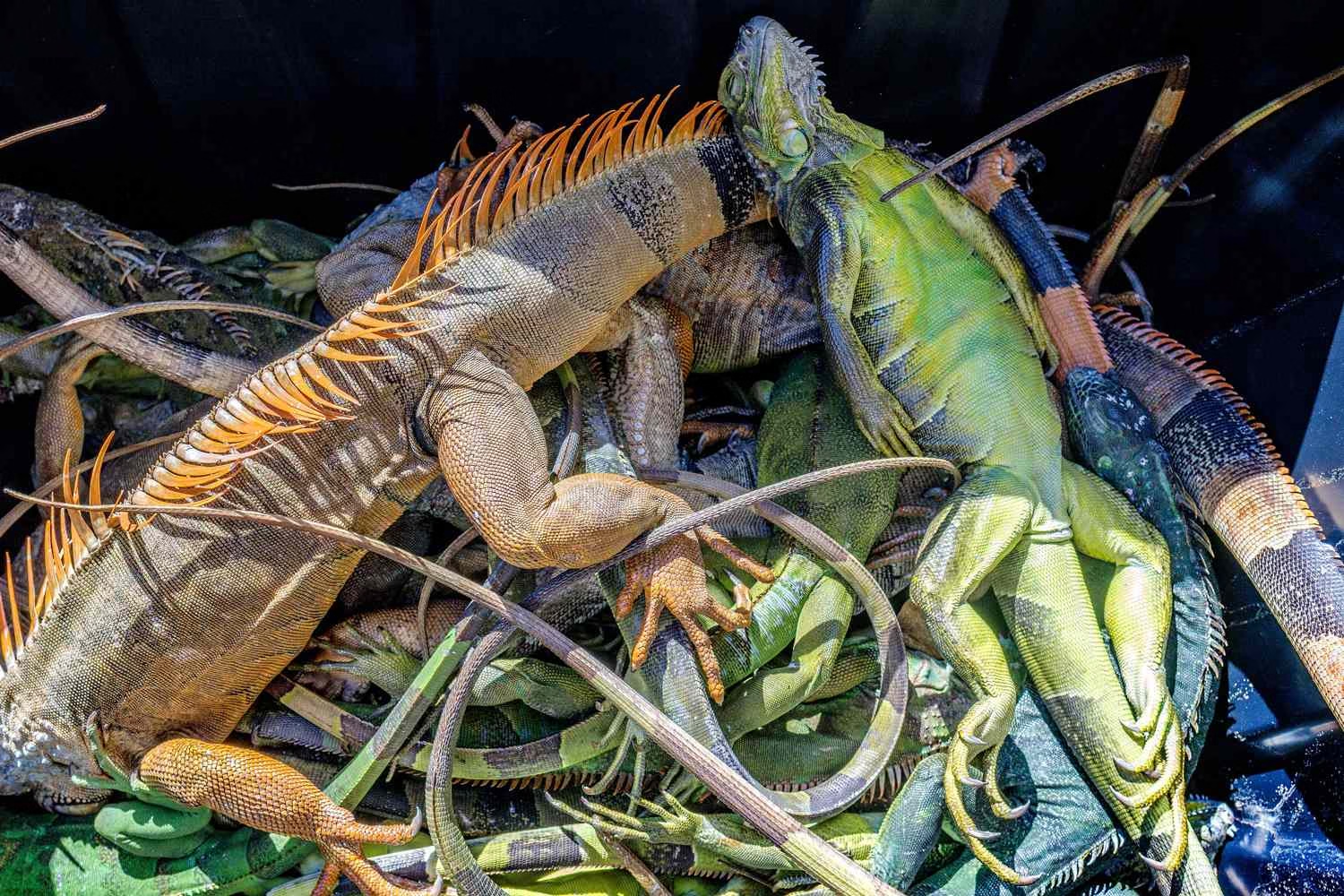
Green iguanas are tropical reptiles and cannot regulate their body temperature. When temperatures drop too low, their muscles stop functioning properly.
When temperatures dip, iguanas lose the ability to move their muscles.
As a result, they often fall from trees or remain motionless on the ground. To an untrained eye, the reptiles may appear dead, but they are typically in a temporary state of paralysis known as torpor.
When temperatures dip, they lose the ability to move their muscles and have been known to fall from trees, appearing dead. But they’re very much alive and in a state of paralysis, or torpor.
Officials warn that these reptiles can recover quickly if temperatures rise.
“Iguanas can recover from cold-stunning more quickly than you may expect — and, once recovered, can act defensively, with long tails that whip and sharp teeth and claws.”
Because of that risk, authorities strongly advise people not to attempt warming them indoors.
“If you encounter a cold-stunned green iguana, you should never bring it into your home or building to warm up,” according to the FWC’s news release.
Record cold temperatures hit South Florida
The unusual weather event set new historical records across the region.
Low temperatures in Miami reached 35 degrees on Feb. 1, while lows in West Palm Beach hit 30 degrees — breaking records for that date, set in 1909, according to National Weather Service data.
The cold snap temporarily stunned thousands of iguanas across South Florida neighborhoods.
Long history of iguanas in Florida
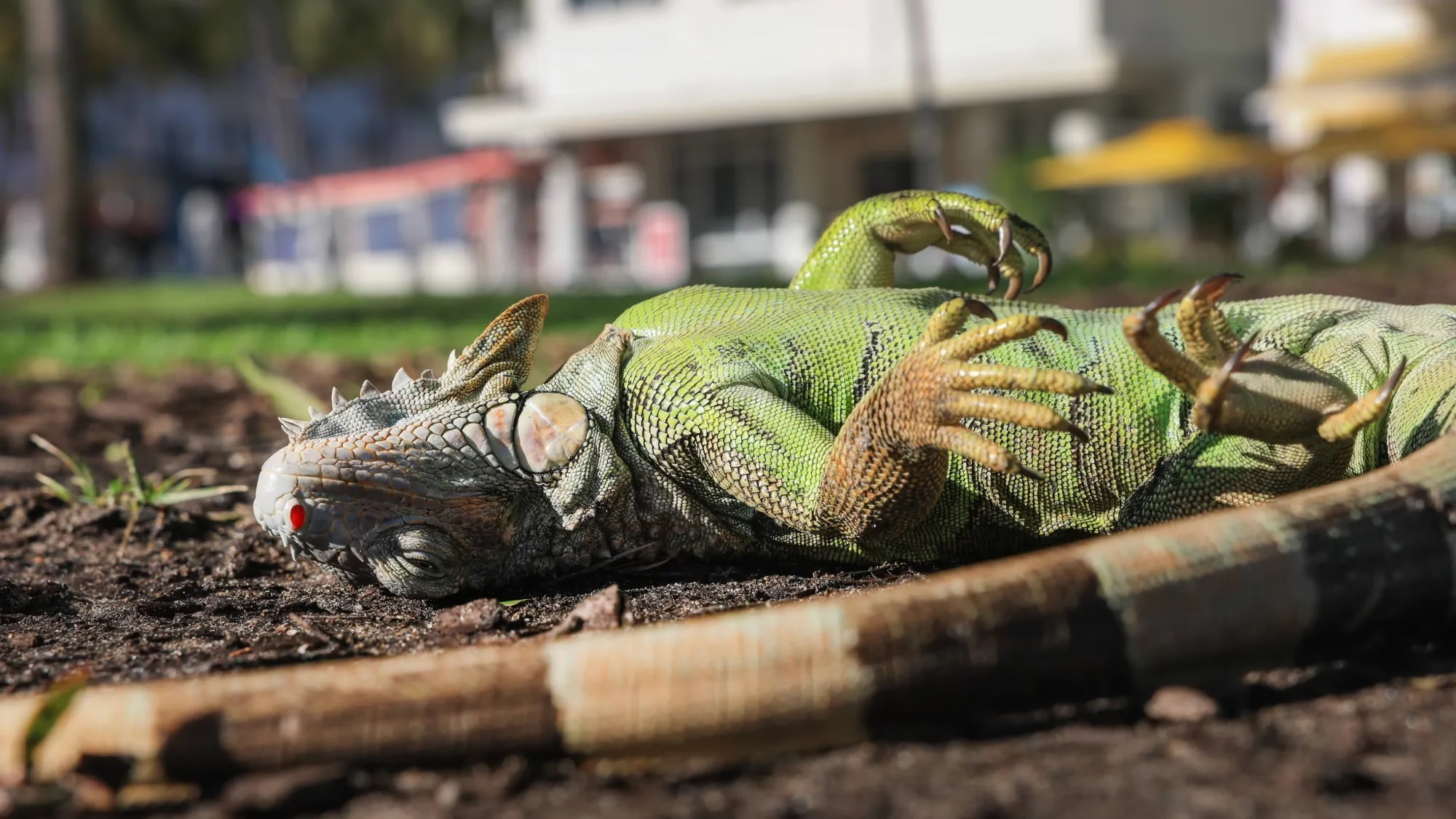
Green iguanas were first reported in South Florida in the 1960s, according to the FWC.
Since then, their population has expanded dramatically. The reptiles thrive in warm climates and frequently live near canals, waterways, and urban areas.
“In cleared habitats such as canal banks and vacant lots, green iguanas reside in burrows, culverts, drainage pipes and rock or debris piles,” according to the FWC.
The region’s infrastructure also helps them spread quickly.
“South Florida’s extensive man-made canals serve as ideal dispersal corridors to further allow iguanas to colonize new areas.”
Many residents view them as destructive pests because they damage landscaping, burrow under structures, and leave droppings across docks and outdoor areas.
Iguana collection now closed
With temperatures returning to normal, the temporary collection program has ended.
The wildlife agency confirmed it is no longer accepting live iguanas from members of the public.