

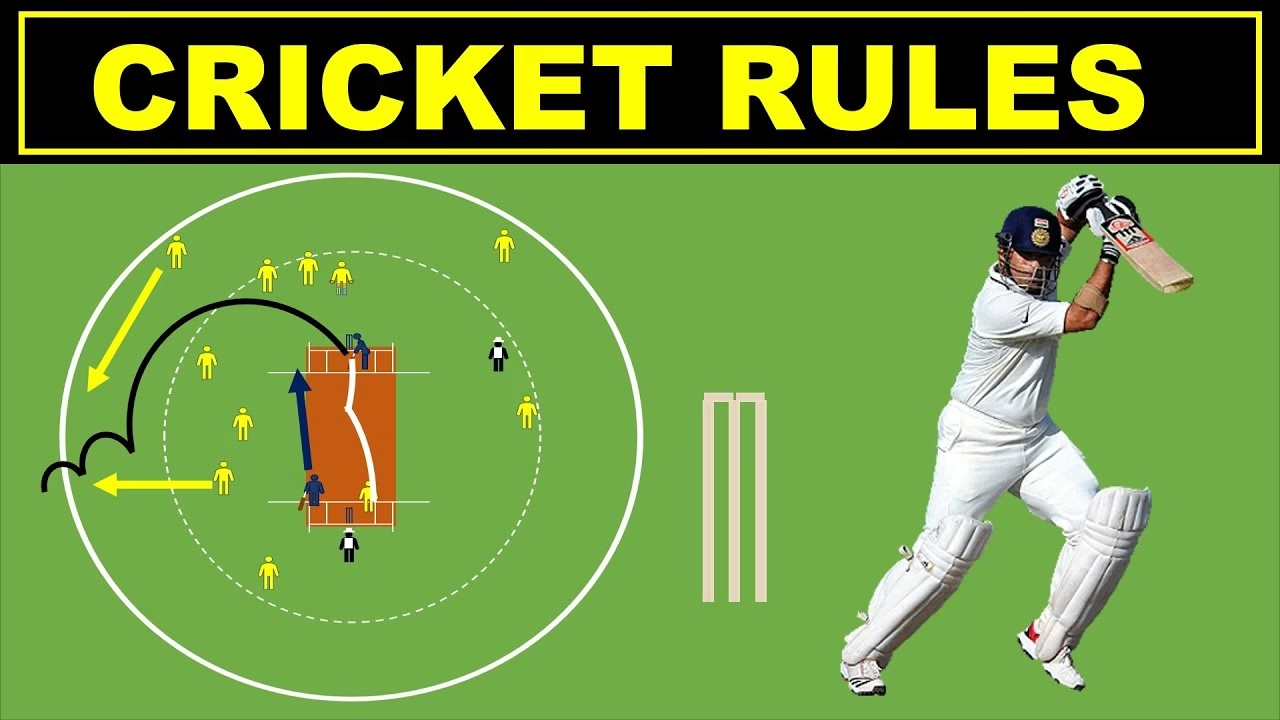
Cricket can look confusing at first, especially for new viewers who see bowlers running in, batters changing ends, and fielders spreading across the ground with different positions. But once the basics are clear, the game becomes much easier to follow and far more enjoyable to watch. Cricket rules are built around a simple contest between bat and ball, with each team trying to score more runs than the other.
This guide explains the game in simple English. It covers how a match starts, how runs are scored, what an over means, how wickets fall, what fielders do, and how different formats work. Whether someone is watching international cricket, a local match, or a T20 league, knowing cricket rules helps every moment make more sense.
Cricket Rules and Basic Match Structure
At its core, cricket is played between two teams of 11 players. One team bats and tries to score runs, while the other team bowls and fields to stop them. After one side finishes its turn, the teams switch roles.
A cricket match is played on a large field with a rectangular pitch in the center. At each end of the pitch, there is a set of stumps with bails on top. The batting team sends out two batters at a time, while the fielding team uses one bowler at a time from one end of the pitch.
The basic aim is simple:
- The batting team wants to score as many runs as possible
- The bowling team wants to dismiss batters and limit scoring
- The team with more runs wins
These cricket rules stay the same across formats, although the number of overs and innings can change.
How the Toss and Innings Work
Before the match begins, the captains take part in a toss. The winning captain chooses whether to bat first or bowl first. This decision often depends on pitch conditions, weather, and the format of the game.
An innings is the period in which one team bats. In limited-overs cricket, each team usually gets one innings. In Test cricket, each team gets two innings.
The batting innings can end in a few ways:
- All 10 wickets fall
- The allotted overs are completed
- The captain declares the innings closed, in longer formats
- The chasing team reaches the target
Understanding innings is one of the most important parts of cricket rules, because it shapes how teams plan their scoring and bowling.
How Runs Are Scored
Runs are the main way teams build their total. Batters score runs by hitting the ball and running between the two ends of the pitch. One completed run means both batters have safely changed ends once.
A batter can score runs in several ways:
Running between the wickets
After hitting the ball, the batters may run one or more times between the wickets. Quick running is a major skill in cricket and can turn safe shots into valuable runs.
Boundaries
If the ball reaches the boundary after touching the ground, it counts as four runs. If it clears the boundary without bouncing, it counts as six runs. These are called boundaries.
Extras
Some runs are awarded to the batting team even if the batter does not score them from the bat. These include:
- No-balls
- Wides
- Byes
- Leg byes
These extra runs are also part of cricket rules and can become very important in close matches.
Understanding Overs in Cricket
An over consists of six legal balls bowled by one bowler. After one over ends, another bowler usually bowls from the other end of the pitch.
Overs are central to how cricket is organized. They control the pace of the game and decide how long a batting side has to score.
Different formats use different over limits:
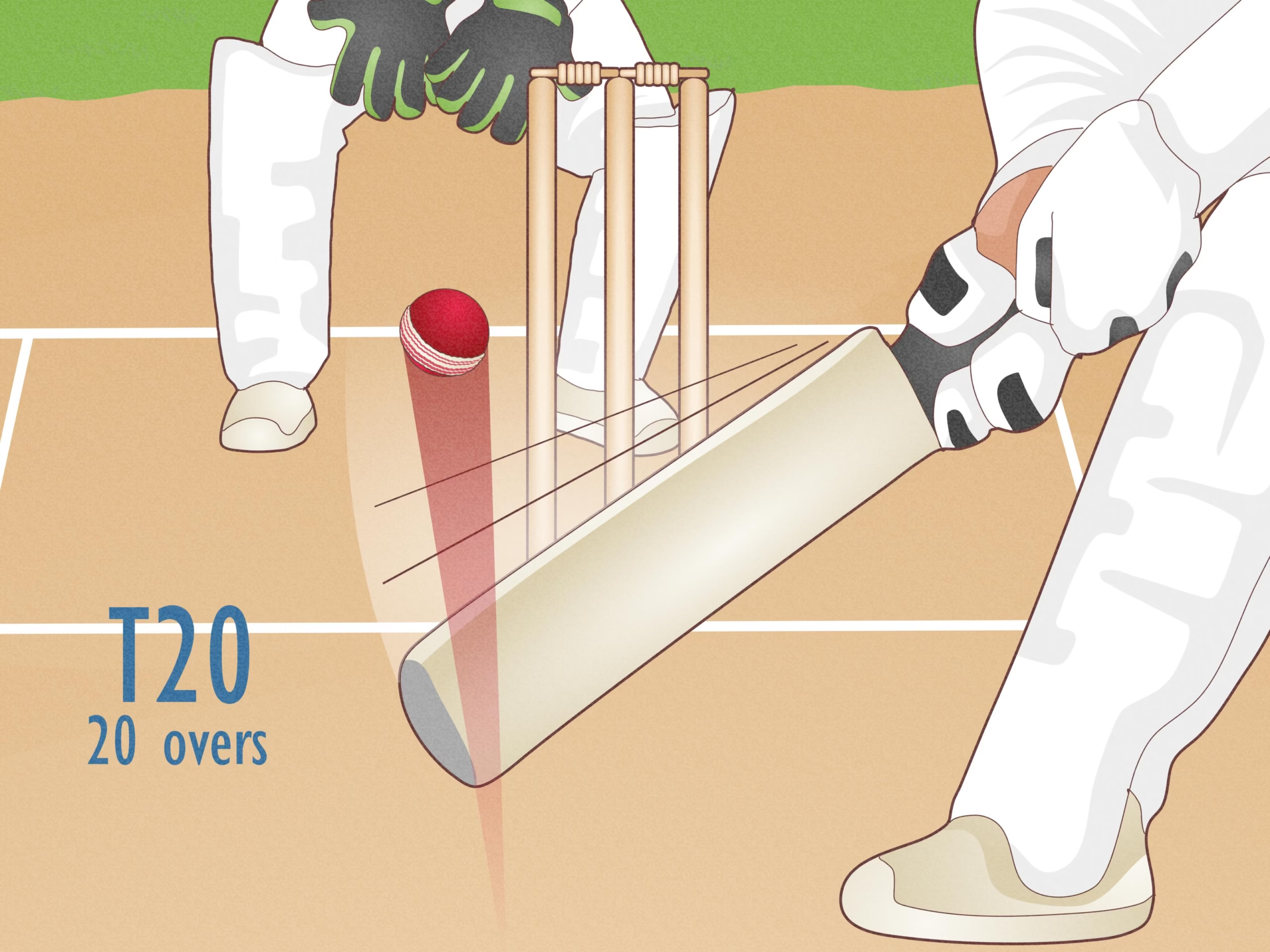
- T20 cricket: 20 overs per side
- One Day cricket: 50 overs per side
- Test cricket: no fixed over limit for innings
Not every delivery counts as a legal ball. If a bowler sends down a wide or no-ball, that delivery must usually be bowled again. That means the over continues until six legal deliveries are completed.
Anyone learning cricket rules should understand overs early, because strategy in cricket often depends on how many overs remain.
What a Bowler Can and Cannot Do

The bowler delivers the ball toward the batter, aiming to take wickets and prevent scoring. Bowlers use speed, movement, bounce, and accuracy to challenge batters.
However, there are clear rules for a legal delivery.
No-ball
A no-ball can be called for several reasons, such as:
- Overstepping the front line
- Bowling a dangerous full toss
- Using an illegal action
- Breaking certain fielding restrictions in some formats
The batting team gets an extra run, and the ball often must be bowled again. In limited-overs cricket, the batter may also get a free hit after some types of no-ball.
Wide ball
A wide is called when the ball is too far from the batter to be played fairly. The batting side receives one extra run, and the delivery usually does not count in the over.
These details matter a lot in cricket rules, because poor discipline from bowlers can hand easy runs to the opposition.
Main Ways a Batter Gets Out
A batter is dismissed when the fielding team removes them according to the laws of the game. This is often called losing a wicket.
Here are the most common methods of dismissal:
Bowled
The bowler hits the stumps with the ball, and the bails come off.
Caught
A fielder catches the ball before it touches the ground after the batter hits it.
Leg before wicket
Often called LBW, this happens when the ball would have hit the stumps but is blocked illegally by the batter’s body, usually the leg.
Run out
A batter is out if the fielding team breaks the stumps while the batter is outside the crease and trying to complete a run.
Stumped
The wicketkeeper removes the bails while the batter is out of the crease and not attempting a run.
Less common dismissals also exist, but these are the ones most people see regularly. Learning these dismissal types makes cricket rules much easier to follow during live matches.
The Role of the Crease and Stumps
The crease is the marked area near the stumps. It is very important for both batters and bowlers.
For batters, the crease acts as a safe zone. If a batter has grounded part of the body or bat behind the popping crease, they are usually safe from a run out or stumping.
For bowlers, the crease helps officials judge whether the front foot has crossed the line, which can result in a no-ball.
The stumps and bails are also key to many decisions. If the bails are removed legally while certain conditions are met, a batter can be dismissed. This is one of the most basic parts of cricket rules, yet it affects almost every ball.
Fielding Positions and Team Roles

The fielding team spreads players around the ground to stop runs and create chances for wickets. The captain places fielders based on the batter, the bowler, and the match situation.
Common positions include:
- Slip
- Gully
- Point
- Cover
- Mid-off
- Mid-on
- Square leg
- Fine leg
- Third man
The wicketkeeper stands behind the stumps at the batter’s end and plays a special role. This player catches missed balls, attempts stumpings, and supports the bowler constantly.
Every player has a clear job under cricket rules, and good field placement can change the result of a game.
Powerplays, Restrictions, and Match Control
In limited-overs cricket, there are fielding restrictions that shape how teams attack and defend. These periods are often called powerplays.
During a powerplay, only a certain number of fielders are allowed outside the inner circle. This gives batters a better chance to find gaps and score boundaries.
Later in the innings, more fielders may move to the boundary. This helps slow down scoring. These tactical changes are a modern but important part of cricket rules in white-ball cricket.
Umpires control the match throughout. They decide:
- Whether a ball is fair or not
- Whether a batter is out
- Whether runs and extras should be awarded
- Whether time or weather affects play
At higher levels, television replays and decision review systems may also be used.
Different Formats of Cricket
Cricket is played in more than one format, and each version changes the pace and strategy of the game.
Test cricket
Test cricket is the longest format. It is played over up to five days, and each team usually gets two innings. This version tests patience, technique, and long-term planning.
One Day Internationals
In ODIs, each team gets 50 overs. These matches balance attack and control, with teams building innings more carefully than in T20 cricket.
T20 cricket
T20 is the shortest major format, with 20 overs per side. It is fast, aggressive, and packed with boundary hitting. Batters often attack from the beginning, and bowlers must be very accurate.
Even though the pace changes, the foundation of cricket rules stays the same in every format.
Common Umpire Signals Explained
Umpires use hand signals to show what has happened on the field. These signals help players, scorers, and fans understand each decision quickly.
Common signals include:
- One arm out to the side for a no-ball
- Both arms spread for a wide
- Arm raised with finger up for out
- Waving one arm for a boundary four
- Both arms raised for a six
- Touching the shoulder for a short run
Knowing these signals helps new viewers read the game better. In practical terms, they are a useful visual part of cricket rules.
Simple Tips for New Viewers
Cricket becomes easier when watched step by step instead of trying to understand everything at once. A new viewer should focus first on the score, number of wickets, and overs remaining.
A few simple tips help a lot:
- Watch how many runs a team has
- Notice how many wickets are down
- Follow the over count
- See whether the team is setting or chasing a target
- Learn the common dismissal types first
Once these basics are clear, the rest of cricket rules starts fitting together naturally.
Key Points Every Fan Should Know
Cricket is a game of skill, timing, patience, and strategy, but its structure is not as difficult as it first appears. Two teams compete, one bats while the other fields, runs are scored through shots and running, and wickets change the direction of the match. Overs control time in limited formats, and clear laws guide bowlers, batters, and fielders.
For anyone starting out, learning cricket rules is the fastest way to enjoy the sport properly. The more a viewer understands dismissals, extras, overs, innings, and match formats, the more exciting every contest becomes. With the basics in place, cricket stops looking confusing and starts looking smart, competitive, and full of small moments that matter.