

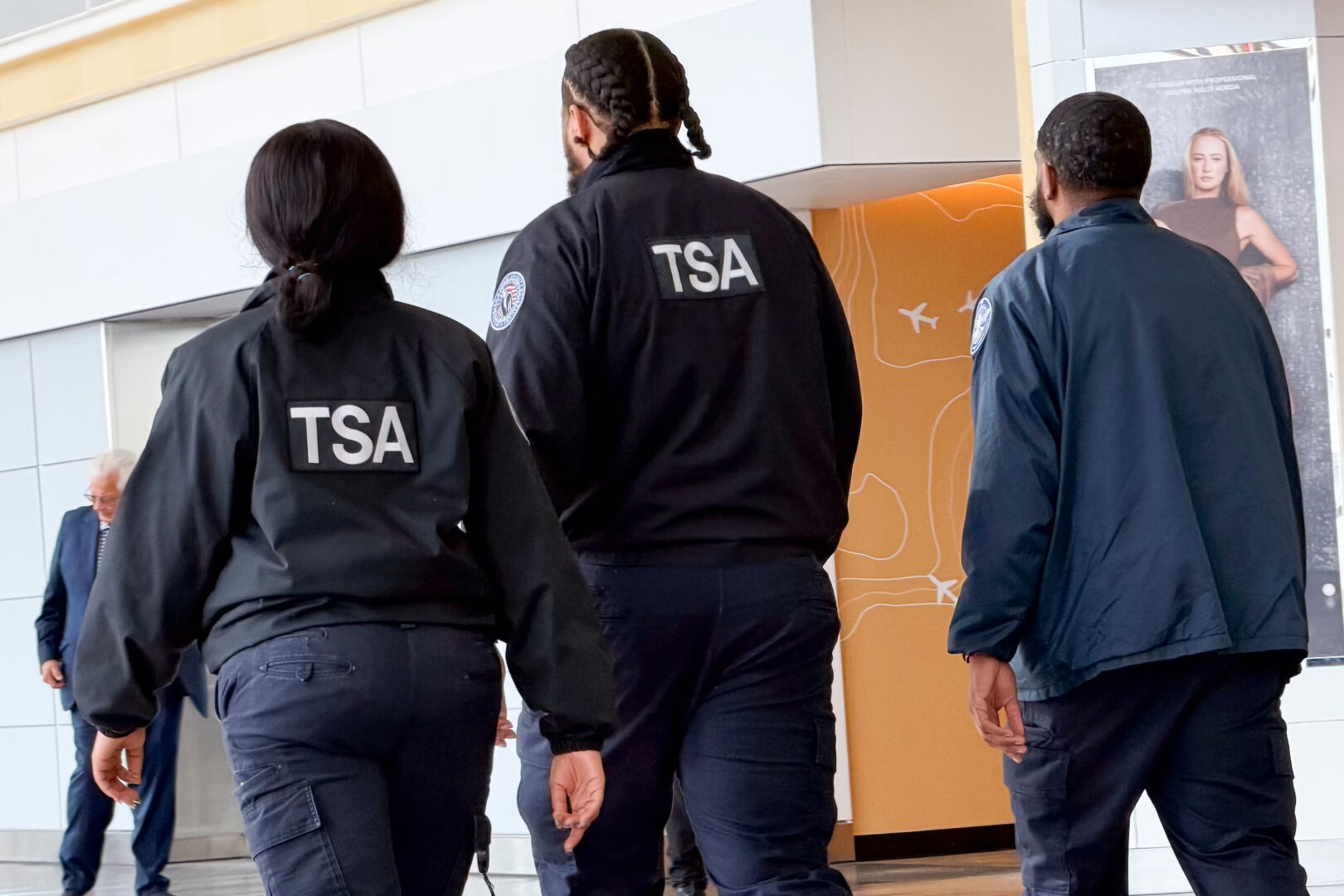
President Donald Trump signaled a sudden shift in strategy on Thursday, saying he plans to authorize payments for Department of Homeland Security employees, a move that appears to ease immediate pressure on lawmakers grappling with a prolonged funding impasse. The decision comes as House Republicans back away from plans to cut short their Easter recess, choosing instead to remain out of Washington while the situation unfolds.
Trump Intervention Changes Political Calculus
The announcement quickly altered the tone inside Republican ranks. Lawmakers who had been weighing an early return to address the ongoing DHS shutdown now see less urgency, at least for the moment.
Trump’s proposed order aims to ensure that DHS employees continue receiving pay despite the funding gap. Meanwhile, the step is being framed as a temporary solution rather than a long-term fix. Still, it offers immediate relief to thousands of workers affected by the disruption.
However, questions remain. Can an executive action truly substitute for congressional funding? And if so, for how long?
House Republicans Opt To Stay On Break
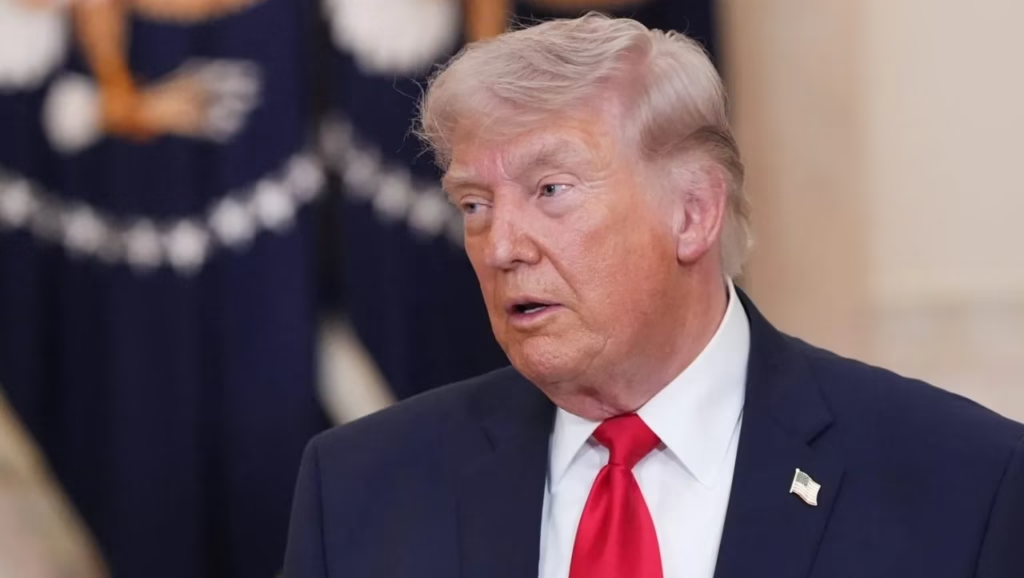 Behind closed doors, House leadership moved swiftly after Trump’s signal. Speaker Mike Johnson informed lawmakers during a Thursday conference call that the anticipated order would remove the need for an emergency return to Capitol Hill.
As a result, Republicans who had been under mounting pressure to act are now set to continue their scheduled two-week Easter recess. The decision reflects both political strategy and practical calculation, with leadership betting that Trump’s move will buy them time.
That said, critics argue the delay risks prolonging uncertainty, especially if the underlying funding dispute remains unresolved.
Pressure Mounts Over DHS Shutdown
The DHS shutdown, now stretching into record territory, has already raised concerns across multiple sectors tied to national security and immigration enforcement. While Trump’s proposed payments may stabilize the workforce temporarily, they do not resolve the broader budget standoff.
Meanwhile, lawmakers from both parties continue to face growing scrutiny. Some argue Congress should act immediately to restore full funding, while others see the standoff as part of a larger negotiation battle.
In contrast, federal workers caught in the middle are left navigating uncertainty, even as promises of pay offer a degree of reassurance.
Temporary Relief Or Political Delay?
Trump’s move, while decisive, raises deeper questions about governance during shutdowns. Is this a workaround, or simply a pause button?
Supporters say the president is stepping in where Congress has stalled, ensuring that essential personnel are not left without income. Critics, however, warn that executive actions cannot replace legislative responsibility.
Still, for now, the immediate crisis appears contained. The focus shifts to what happens next, and whether lawmakers will return with a long-term solution once recess ends.