


Voters in three key federal byelections are heading to the polls Monday in contests that could reshape the balance of power in Ottawa and hand the Liberals a narrow majority government.
The stakes are unusually high. The Liberals need to capture just one of the three ridings in Ontario and Quebec to move from governing on the edge to holding a slim majority in the House of Commons. That would give the party firmer control over the next phase of its mandate and strengthen Prime Minister Mark Carney’s position as he pushes ahead with his agenda.
With only a handful of races in play, the political math is simple. The consequences are not.
Why These Byelections Matter So Much
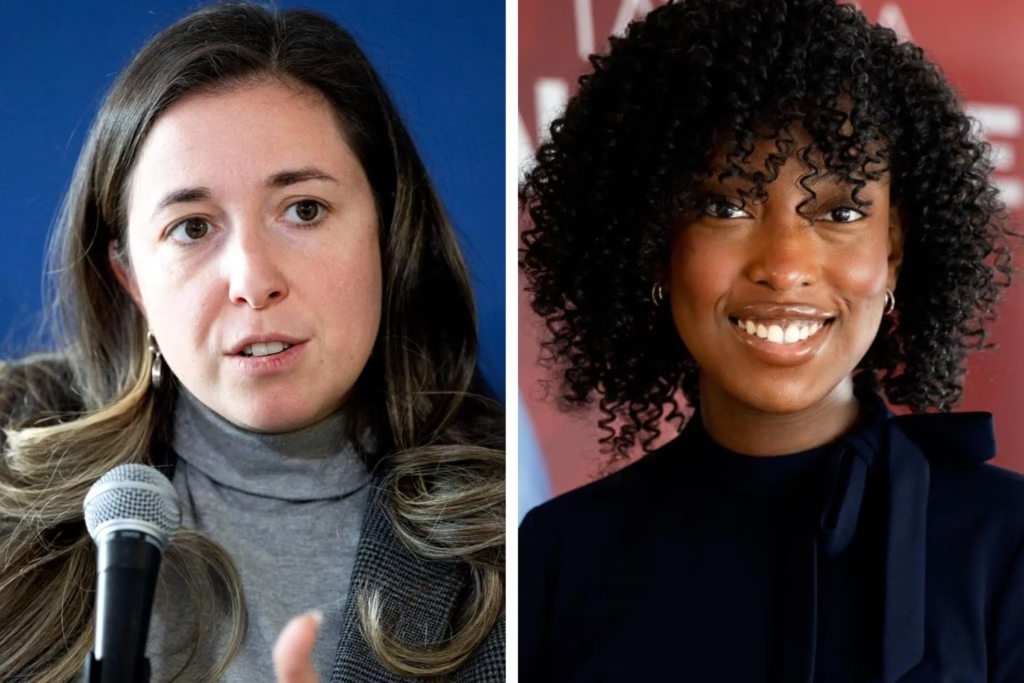
The Liberals are one seat away from a majority, which means Monday’s results could prove decisive.
If they win one riding, they secure that thin majority. If they win two or all three, their grip tightens further because the Speaker of the House is a Liberal MP, giving the government even more room to manage House business and advance legislation with less friction.
That would also give Carney added political space and more time to govern before the next scheduled federal election in 2029.
The Three Ridings In Play
The races are unfolding in University—Rosedale and Scarborough Southwest in Ontario, and Terrebonne in Quebec.
The two Ontario ridings are widely viewed as safe territory for the Liberals. Terrebonne, however, is another story. That Quebec seat was decided by the narrowest possible margin in the spring 2025 election, with the Liberals defeating the Bloc Québécois by a single vote.
That razor-close outcome did not stand. The Supreme Court of Canada later annulled the result in the Montreal-area riding, setting the stage for a high-stakes rematch.
Liberals Keep Public Expectations In Check
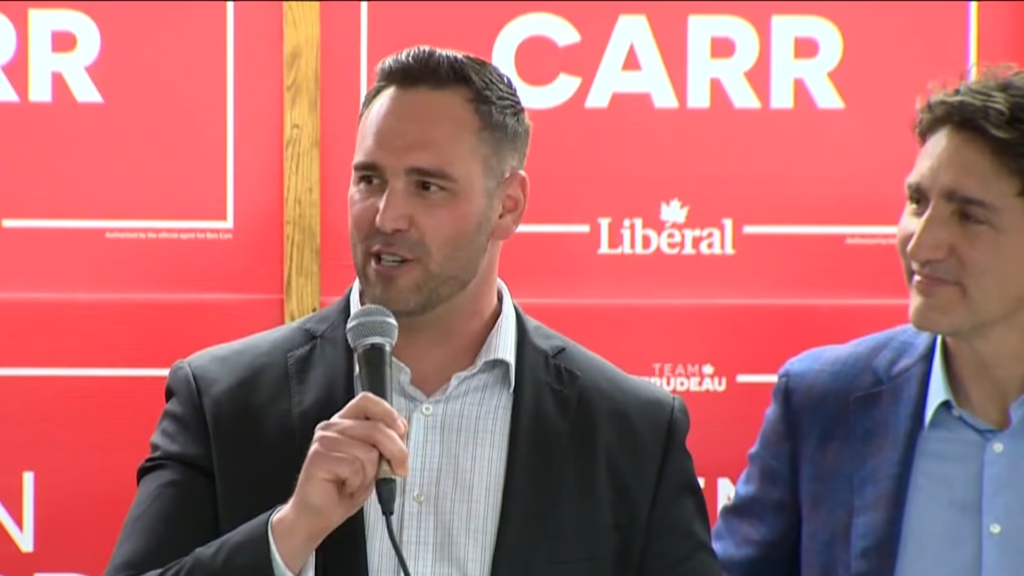
Despite the favorable arithmetic, Carney and his team have not publicly projected confidence about the outcome.
Still, the party has made clear what a majority would mean. A stronger standing in the House would allow the government to move faster on its priorities and spend less time navigating the day-to-day uncertainty that comes with minority rule.
Last week, government House leader Steven MacKinnon signaled that a majority would not necessarily mean a harder partisan edge. In his words, the federal government will “continue that impulse of working across party lines” even if it’s not required to co-operate to pass legislation.
That line may be politically useful, but it also hints at the balancing act ahead. A majority offers freedom. It also brings pressure to show restraint.
A Floor Crossing Changed The Numbers

The Liberals’ path became easier last week when they gained another floor-crosser from the Conservatives.
Ontario MP Marilyn Gladu broke ranks and joined the Liberals, lifting the party to 171 seats in the House of Commons. That move left the governing party just one win away from majority status heading into Monday’s vote.
Suddenly, what looked like a tight parliamentary squeeze began to look like a very real opening.
A Small Set Of Races, A Big National Impact
gb
Byelections do not always draw national attention, but these ones carry outsized weight. Three ridings. One threshold. A possible shift in how Ottawa functions for years.
That is why Monday matters.
A single win could give the Liberals the numbers they need to govern with more certainty, more control, and more time. Anything beyond that would only deepen their advantage.
For voters in University—Rosedale, Scarborough Southwest, and Terrebonne, the ballots they cast will do more than fill vacant seats. They could determine how much power the government holds until 2029.