
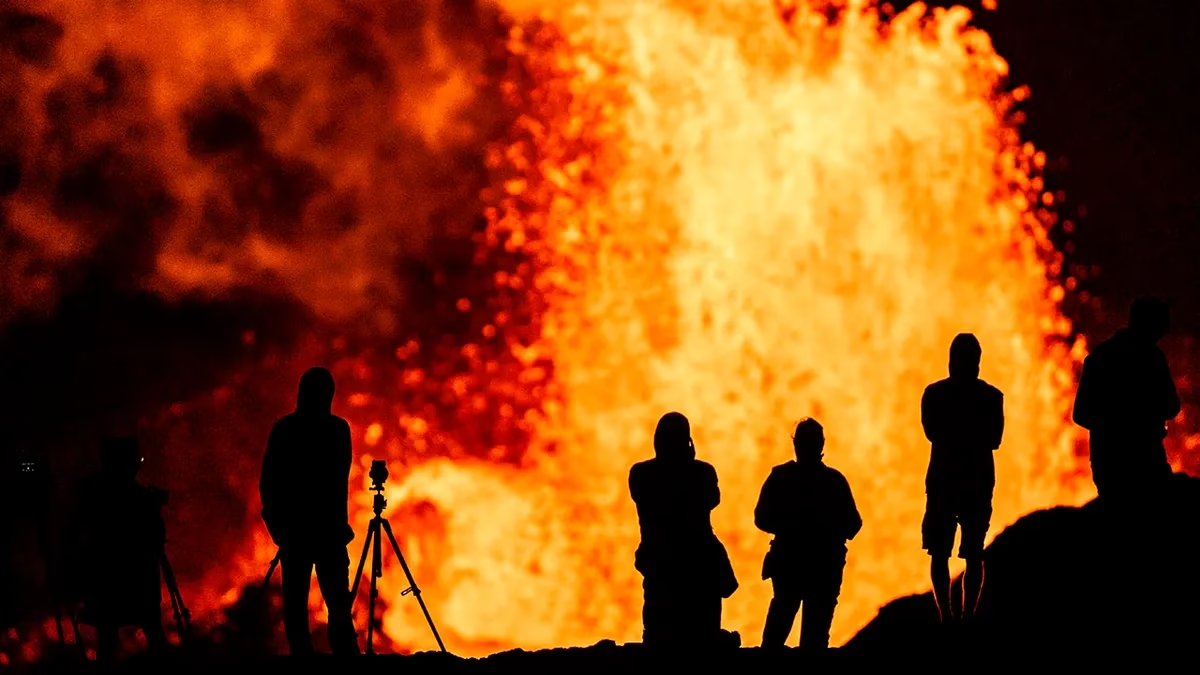
A dramatic volcanic eruption in Hawaii has sent towering fountains of lava shooting nearly 1,000 feet into the sky, forcing emergency closures and drawing global attention to one of the world’s most active volcanoes.
The powerful eruption occurred on March 10 at Kilauea, the famous volcano on Hawaii’s Big Island. Authorities quickly moved to shut down parts of a national park and sections of a nearby highway as ash and volcanic debris drifted into surrounding areas.
Meanwhile, residents and visitors watched in awe as the glowing lava burst high above the crater, creating a fiery spectacle visible for miles.
Kilauea Sends Lava Fountains High Into The Sky
The eruption has once again put Kilauea in the spotlight. Known for its frequent activity, the volcano has been erupting intermittently for more than a year.
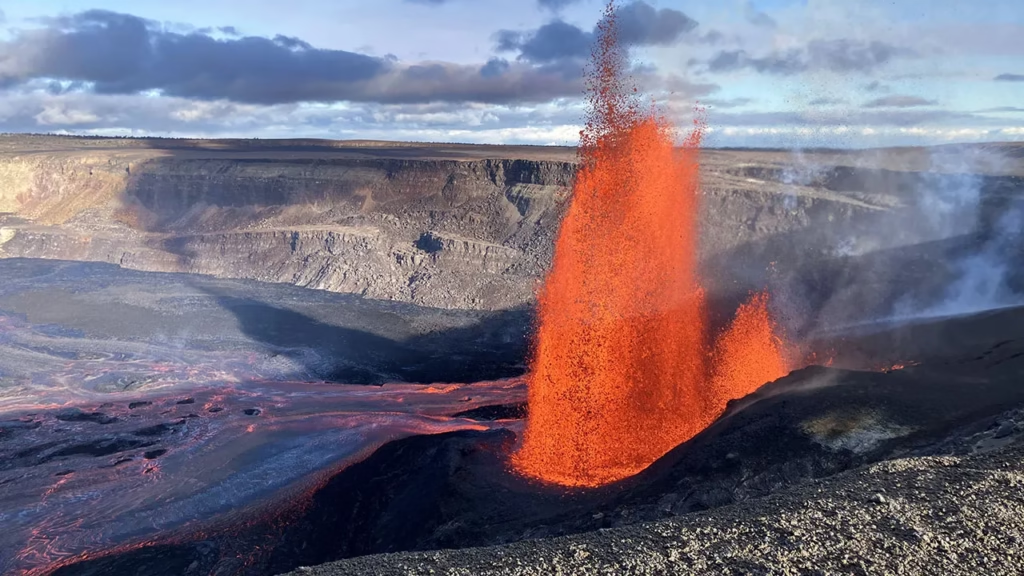
According to reports, lava fountains during the latest episode reached heights of nearly 1,000 feet.
Kilauea, located on Hawaii’s Big Island, has been dazzling residents and visitors with an on-and-off eruption that periodically sends fountains of lava soaring into the sky.
Scientists say the fountaining that began earlier this week marked the eruption’s 43rd episode since the current eruptive cycle started in December 2024.
A livestream captured the moment when two fountains of bright red lava burst upward alongside plumes of smoke, offering a dramatic view of the powerful geological event.
However, experts say the length of each eruption can vary widely. Some eruptive episodes last several days, while others may end within just a few hours.
National Park And Highway Closures Ordered
While the eruption itself remains contained within the volcano’s summit crater, the falling volcanic material has created hazards for nearby areas.
The molten rock has stayed confined within Kilauea’s summit crater inside Hawaii Volcanoes National Park and hasn’t threatened homes or buildings.
Still, nearby communities have felt the impact as volcanic fragments and ash drift through the air.
These fragments, known as tephra, include glassy volcanic particles that can pose risks to drivers and visitors.
Because of this danger, officials temporarily closed areas of the national park around the summit.
At the same time, authorities shut down part of Highway 11, a critical route that circles the island, on both sides of the park.
Scientists Track Activity At Halemaumau Crater
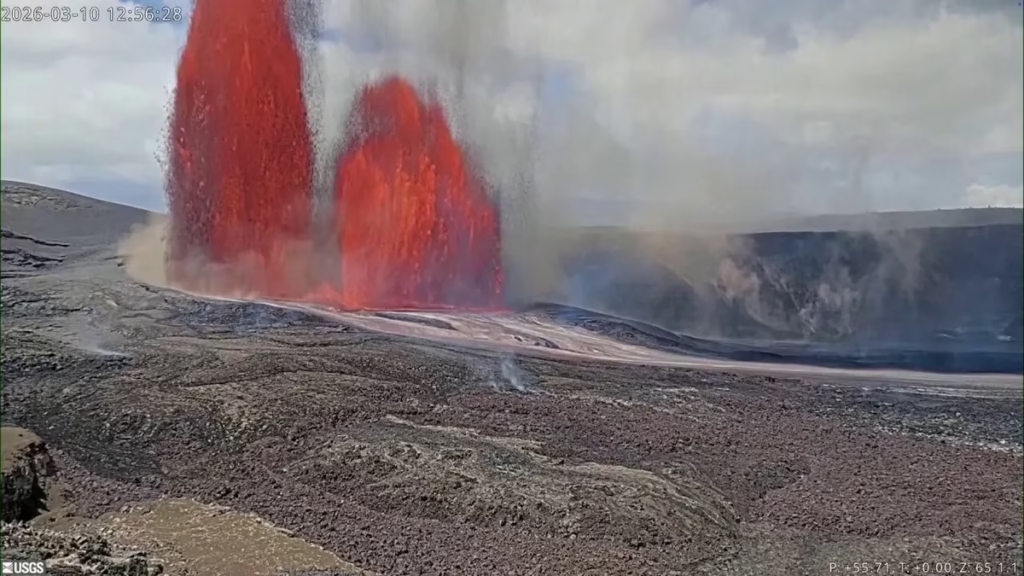
The Hawaiian Volcano Observatory closely monitored the eruption as it unfolded.
Using webcam imagery, scientists detected glowing lava inside the Halemaumau crater, which sits within the volcano’s summit caldera.
The images confirmed that Kilauea had once again entered an eruptive phase.
This latest eruption came less than a month after the volcano’s previous eruptive episode ended, underscoring how frequently Kilauea can awaken.
A Volcano With A Powerful History
Although the current eruption has remained contained, Kilauea’s history serves as a reminder of the volcano’s destructive potential.
In 2018, a massive eruption devastated communities across the Big Island.
More than 700 homes were destroyed as lava advanced through residential areas.
During that eruption, the volcano unleashed a series of rare explosive bursts that shocked even experienced scientists.
Today’s eruption is far more contained. However, the towering lava fountains and drifting ash still serve as a powerful reminder of the immense forces shaping Hawaii’s landscape.