
The Middle East conflict grew even more volatile as President Donald Trump pressed allies and other major powers to help reopen the Strait of Hormuz, oil exports from the Gulf plunged, and Israel announced fresh ground operations in southern Lebanon. Across the region, airports, oil facilities, military sites, and civilian areas remained under threat, with Tehran, Dubai, Abu Dhabi, northern Israel, and southern Lebanon all feeling the impact of a war that has now entered its third week.
Hormuz Flashpoint Puts Pressure On Allies
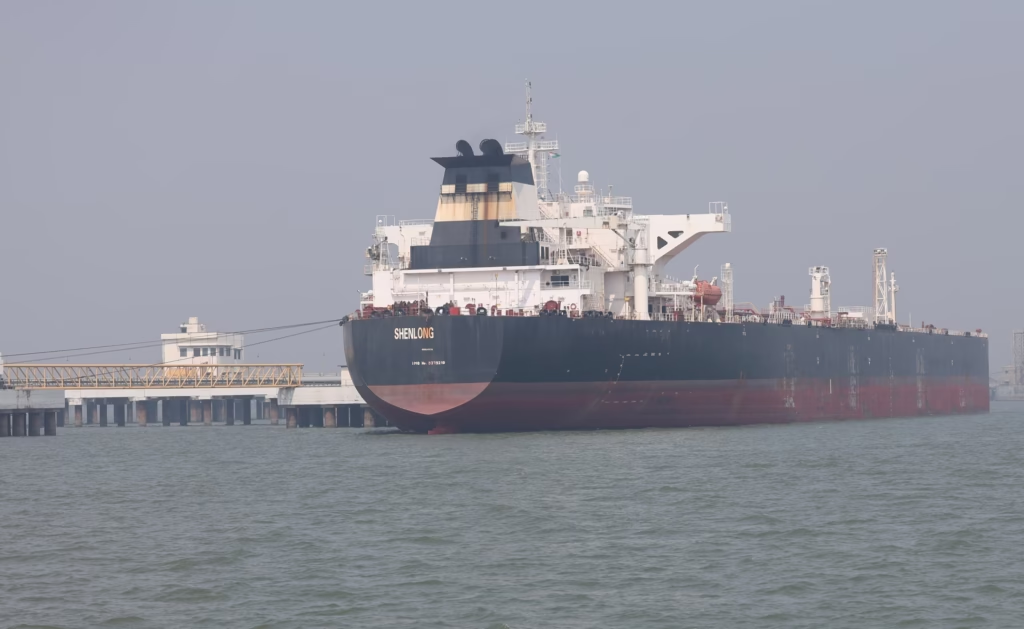
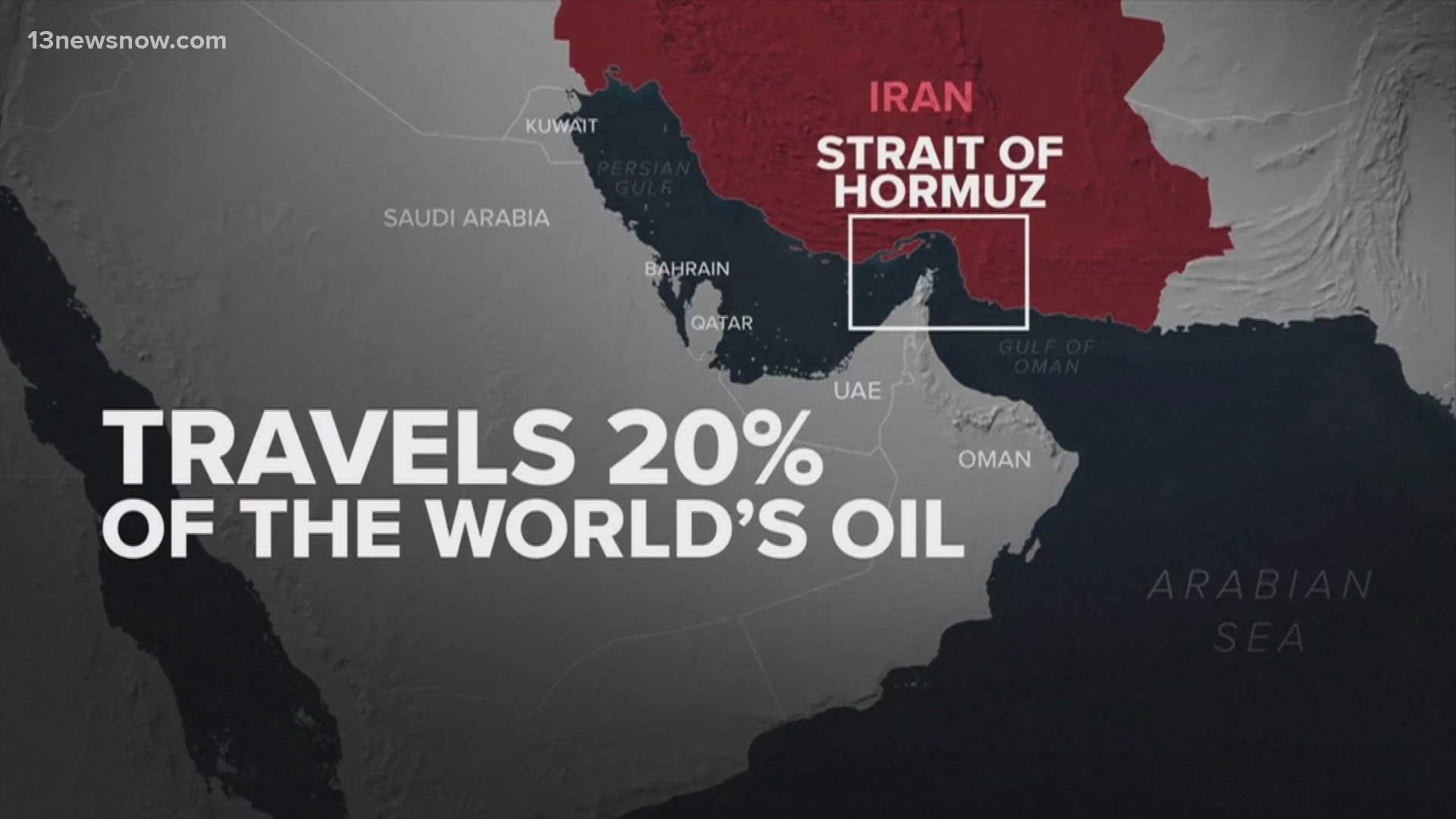
Trump kept up his public campaign to rally outside powers behind efforts to restore shipping through the Strait of Hormuz, a chokepoint vital to global energy markets. But several allies showed little appetite for getting drawn deeper into the fight.
European governments pushed back hard. Germany made its position unmistakable. “We lack the mandate from the United Nations, the European Union or NATO required under the Basic Law. It was therefore clear from the outset that this war is not a matter for NATO,” Chancellor Friedrich Merz said. He added, “The United States of America and Israel did not consult us prior to this war either. As for Iran, there has never been a joint decision on the ‘whether’ of the matter. That is why the question of how Germany might become militarily involved here does not arise.”
That hesitation did little to soften Trump’s stance. He said, “With more than 30 mine-laying ships destroyed, we hit, to the best of our knowledge, all of their mine-laying ships.” He continued, “Now they can put them on other types of ships, I guess, and drop them in, but we don’t know that any have even been dropped in. We’re not sure that any have been — that’s a big negative for them.”
Then came the warning. “If they do it, it’s a form of suicide. But we don’t know that they have dropped any in but we’ve, we’ve hit all 30 of their ships and destroyed them. They’re all at the bottom of the sea.”
Later, Trump insisted help may still be coming. “I think we’re going to have the situation straightened out pretty quickly, and I think we’re going to have some good help,” he said, while also conceding he expected disappointment from “some nations, too.” He added, “I’ll let you know who those nations are.”
House Speaker Mike Johnson backed the broader idea of burden-sharing, calling it justified under the circumstances. “He has made an invitation to a number of countries to assist in that endeavor because people’s economies and oil supplies rely upon that, and it’s a reasonable thing for others to do to assist us just with the security provision there,” Johnson said.
Oil Exports Sink As Global Energy Jitters Rise
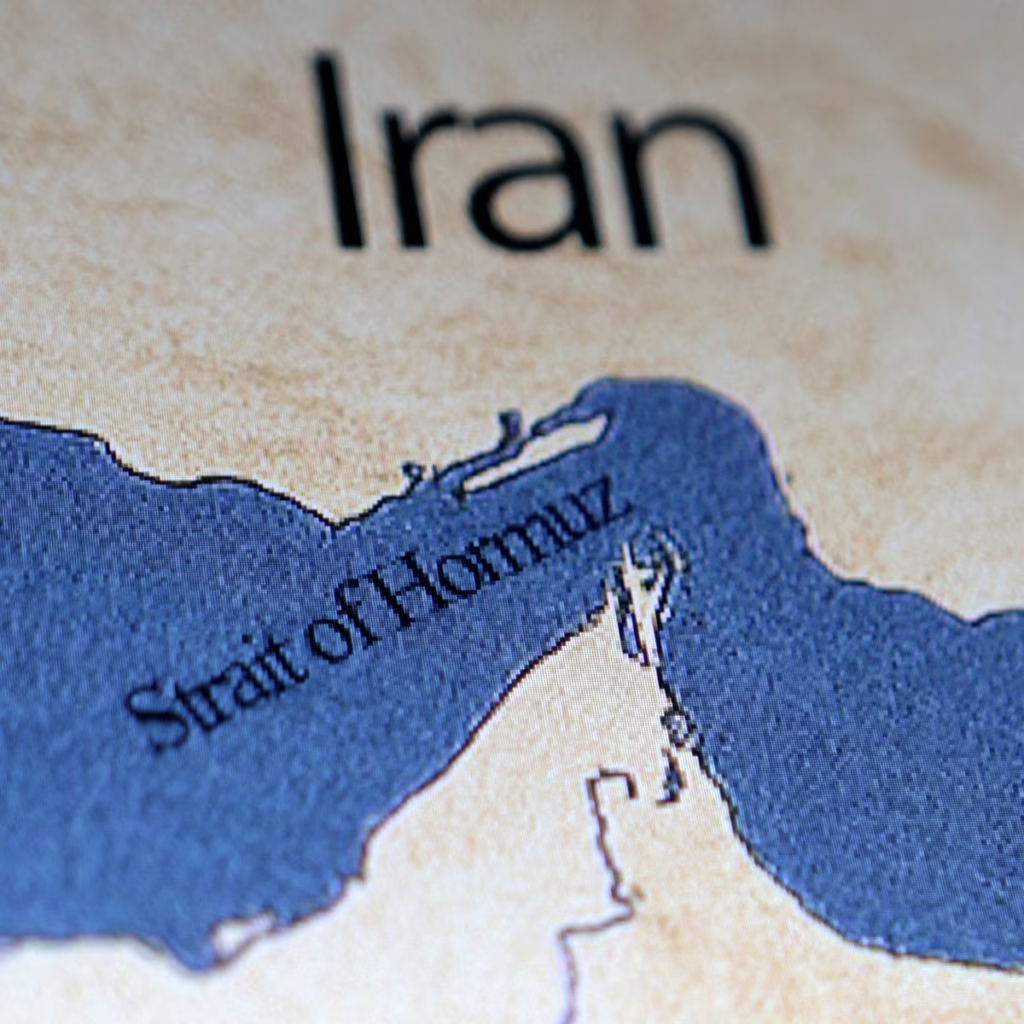
The economic shock is already taking shape. Shipping data showed Gulf exports have dropped sharply as disruption around Hormuz ripples through world markets. Exporters have canceled shipments, oilfields have shut down, and traders are increasingly bracing for deeper fallout if the passage remains restricted.
Still, Tehran offered its own sharply different message. Iranian Foreign Minister Abbas Araghchi declared that the strait “is open and only closed to enemies,” while also insisting, “We have sent no message and have not requested a ceasefire.” He added, “This war must end in such a way that enemies will no longer think of attacking Iran and such attacks will not be repeated.”
Meanwhile, the U.S. military signaled it is staying locked on the waterway. Adm. Brad Cooper said, “We will continue to rapidly deplete Iran’s ability to threaten freedom of navigation in and around the Strait of Hormuz.”
Trump Pushes China While Beijing Urges Calm
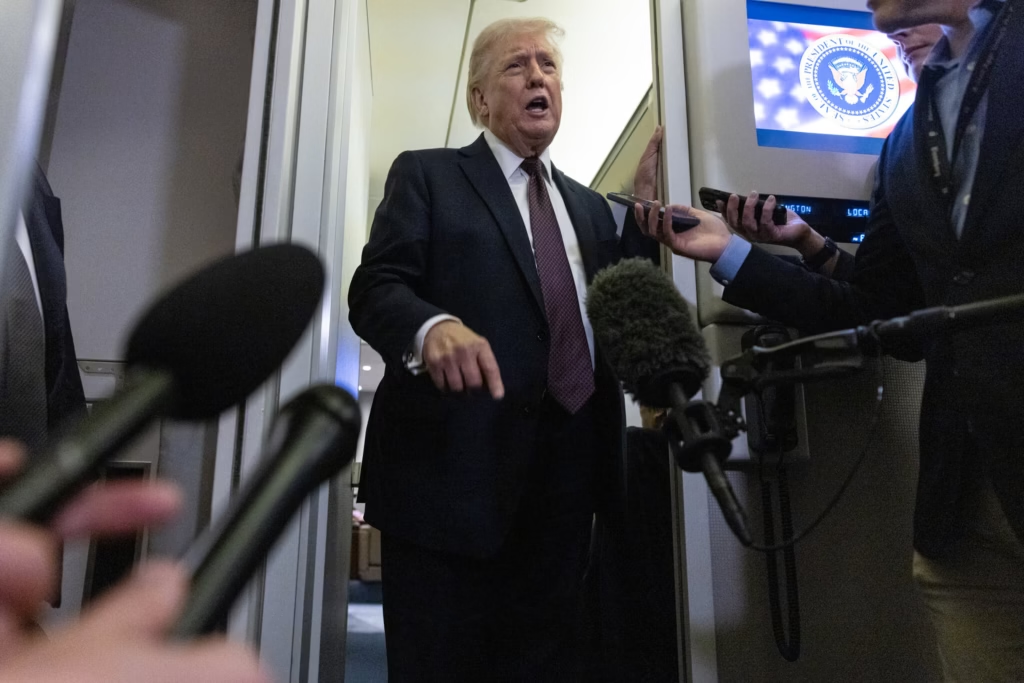
The standoff over Hormuz is also spilling into wider diplomacy, especially with China. Trump has suggested that countries dependent on the route should step up, and that includes Beijing.
China, for its part, signaled that top-level diplomacy with Washington remains alive. “Head-of-state diplomacy plays an irreplaceable strategic guiding role in China–U.S. relations,” Chinese Foreign Ministry spokesperson Lin Jian said. He added, “China and the United States are maintaining communication regarding President Trump’s visit to China.”
On the war itself, Beijing tried to sound like the adult in the room. Lin said China “once again calls on all parties to immediately cease military actions, avoid further escalation of tensions, and prevent regional instability from having a greater impact on global economic development.”
Trump later confirmed a possible delay to his China trip, saying, “We’re working on that right now.” He added, “I’d love to, but because of the war, I want to be here. I have to be here, I feel. And so we’ve requested that we delay it a month or so, and I’m looking forward to being with them.”
He drove the point home again, saying, “It’s very simple. We’ve got a war going on. I think it’s important that I be here, so it could be that we delay a little bit, not much.”
Treasury Secretary Scott Bessent also tried to tamp down speculation over the reason for any schedule change. “We will see whether the visit takes place as scheduled,” he said. “But what I do want to parse, and there’s a false narrative out there that if the meetings are delayed, it wouldn’t be delayed because the President’s demanded that China police the Straits of Hormuz.” He added that if the trip is moved, “it would be rescheduled because of logistics.”
Tehran Under Fire As Iranian Leaders Trade Warnings
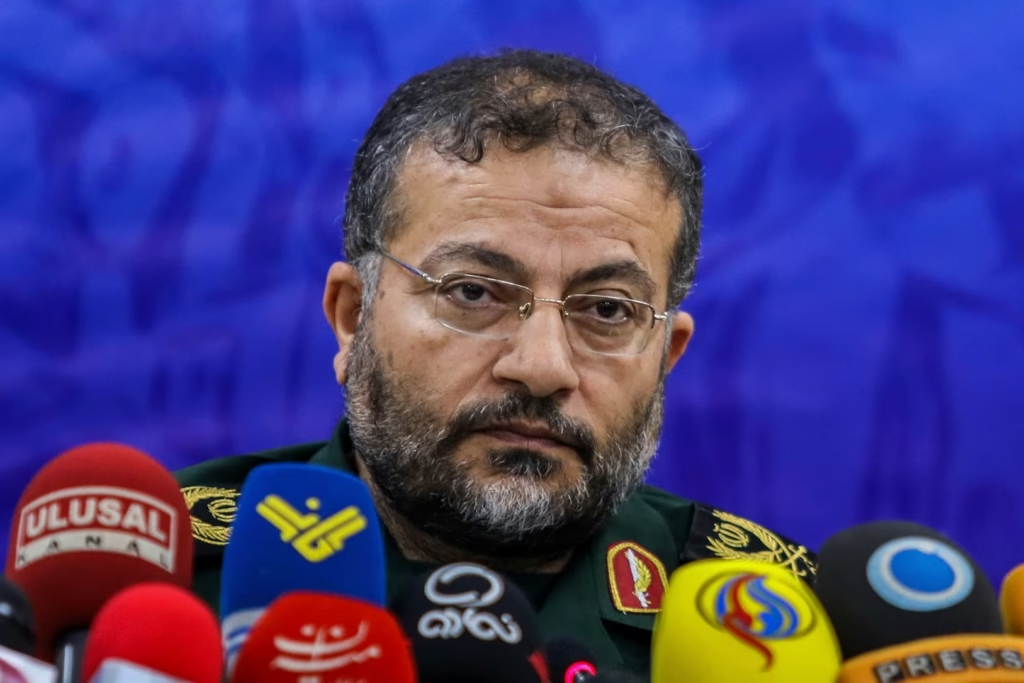
On the ground, or rather across the skies, the war kept pounding Iran. Iranian officials said key areas in Tehran and beyond have been targeted repeatedly, while U.S. and Israeli officials continue to describe major military gains.
Tehran mayor Alireza Zakani said some 14,000 sites in the capital had been hit. “We have a large number of martyrs and injured people,” he said.
Iranian President Masoud Pezeshkian insisted the country had not started the war. He said Iran “will not submit to bullies,” and accused the U.S. and Israel of launching the conflict “based on false information and with the aim of conquest,” which he called “a medieval act in the 21st century.” He added, “We expect the international community to condemn this aggression and to persuade the aggressors to respect international law,” and warned, “Talking about stopping the aggression is meaningless until there is assurance that our territory will not be attacked again.”
Iranian parliament speaker Mohammad Bagher Ghalibaf vowed the fight would continue. “We will not accept a ceasefire until the enemy shows regret and appropriate political and security conditions are created in the world and the region,” he said. He also boasted, “We have sufficient missile and drone reserves, and because this technology is domestic, we also have the capability to produce them, at a much higher rate and at a much lower cost than the enemy’s interceptor missiles.”
Iran’s deputy foreign minister, Saeed Khatibzadeh, lashed out at any talk of a U.S. ground campaign. “Even suggesting that a foreign country can put boots on the ground of another country, invade another country, occupy the land of another country, is something very much rogue, very reckless, illegal, and against all international law,” he said. He continued, “There is no mandate for Americans to do that, and they are doing this because they are so drunk of power.”
Iran’s military also broadened its warnings at sea. “The presence of the U.S. aircraft carrier Gerald Ford in the Red Sea is considered a threat to the Islamic Republic of Iran,” a spokesperson for the Khatam al-Anbiya command said. He added, “Therefore the logistical and service centers supporting the mentioned carrier group in the Red Sea are considered targets of the armed forces of the Islamic Republic of Iran.”
Trump Sends Mixed Signals On Iran’s Leadership
Trump’s public comments on Iran’s chain of command raised fresh questions, and drew criticism from Democrats.
At one point, he said, “They’re taking a pounding. I don’t know if they’re ready yet, and we don’t even know their leaders.” He followed with, “Look, all of their leaders are dead, as far as we know, but they’re all dead. We don’t know who we’re dealing with.”
He went on: “We met with the next group and but we don’t know who their leader is. We have people wanting to negotiate. We have no idea who they are.”
Trump also suggested Mojtaba Khamenei might be dead, saying, “They have no leadership; the leadership is gone.” He added, “But then they set up a new leadership to go and name a new leader, and that leadership is gone.”
Then came another startling remark. “And now they think maybe the son is gone,” Trump said. Earlier, he had told reporters, “A lot of people are saying he’s badly disfigured, they’re saying that he lost his leg.” Pressed further, Trump conceded, “We don’t know, Peter, if he’s dead or not.”
He also cast doubt on the Iranian public’s ability to rise up against the regime. “They put out a memo two days ago saying, ‘If you protest, we will shoot you and kill you in the streets,’” he said. Then he asked, “Who’s going to do that?” before adding, “They don’t have any guns, and the other ones have latest-in-line machine guns and every form of gun you can have.”
Senate Minority Leader Chuck Schumer seized on the contradictions. “Donald Trump created a mess in the Middle East, and he clearly has no plan for how to end it, and that is a huge problem for our country,” Schumer said. He mocked the president’s dueling claims, saying, “Which one is it? The leaders want to make a deal or we don’t know who the leaders are?”
War Timeline Still Murky
Trump insists the conflict will end quickly, though without offering a firm timetable. Asked whether it would be wrapped up this week, he replied: “Yeah, I don’t think so, but it’ll be soon. Won’t be long, and we’re gonna have a much safer world.”
He added, “When it’s wrapped up, it’ll be wrapped up soon. We’re gonna have a much safer world. I had an obligation to do this. I didn’t want to. I call it an excursion.”
That confidence contrasts sharply with the warnings from regional observers, humanitarian groups, and world leaders who fear the war is expanding, not narrowing.
Israel Broadens Campaign Into Southern Lebanon
While attention remained fixed on Iran, Israel opened another front more aggressively in Lebanon. The Israeli military said it had begun “limited and targeted ground operations” in the south, aiming at Hezbollah positions.
Defense Minister Israel Katz said the military “has begun a ground maneuver in Lebanon to remove threats” and warned that “hundreds of thousands of Shiite residents of southern Lebanon who have evacuated and continue to evacuate their homes in southern Lebanon and Beirut will not return to their homes south of the Litani River area until the safety of residents in the north is guaranteed.”
Analysts see a bigger push looming. Sanam Vakil said, “It appears to be imminent.” She added, “Whether it’s days or weeks, this is going forward.” In her view, “I think from Israel’s perspective, this is an opportunity to really go after Hezbollah in a serious way and the calculation in Israel is that can only be done through an invasion.” She also warned she had “hoped that Gaza would have taught” Israeli leaders that “a full decapitation and destruction is impossible” and that the devastation from such offensives was not “worth it.”
Bilal Y. Saab said Israel is “trying to apply as much pressure as possible on the Lebanese government and, of course, Hezbollah” to force movement on disarmament. He added that if that fails, Israel could “consider mounting a large-scale ground invasion.” Saab also said, “I certainly applaud the decision to enter into direct talks, but they’re going to have to demonstrate certain commitment that they haven’t thus far towards the issue of Hezbollah’s disarmament.” He continued, “Nobody’s asking them to task the army with confronting Hezbollah militarily. I think everybody knows that this could lead to communal bloodshed.”
Civilian Toll Mounts Across The Region
The human cost is climbing fast. More than 2,000 people have reportedly been killed across the region, with over 1,200 deaths in Iran, at least 850 in Lebanon, 13 in Israel, and casualties among U.S. forces as well. In the UAE, officials said the death toll has risen to seven, including civilians and service members, while more than 140 others have been wounded.
A Palestinian person was also reported killed after a missile struck a civilian vehicle near Abu Dhabi. Dubai airport, the world’s busiest for international travel, suspended operations after a drone-related incident sparked a nearby fuel fire, though flights later began returning on a limited basis.
Rights Groups And Global Figures Sound The Alarm
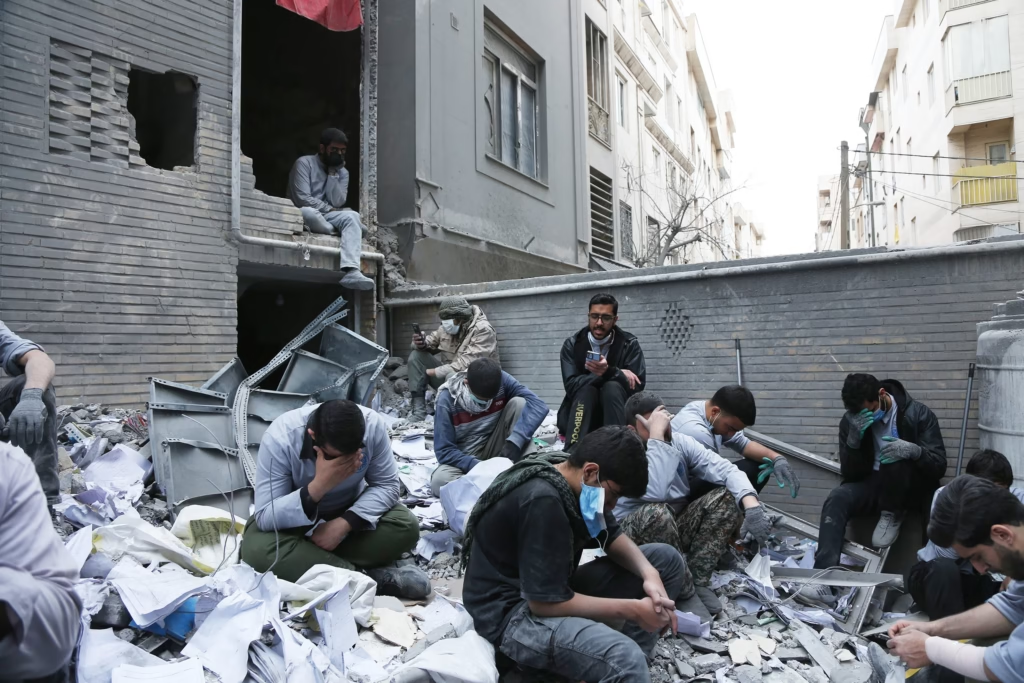
As military leaders trade threats, rights groups and public figures are warning about law, truth, and the treatment of civilians.
Amnesty International accused the United States of violating humanitarian law. The group said the U.S. had failed to take necessary steps to prevent civilian harm and cited an attack on a school in Minab. Erika Guevara Rosas called it “This harrowing attack on a school, with classrooms full of children, is a sickening illustration of the catastrophic and entirely predictable price civilians are paying during this armed conflict.” She added, “Schools must be places of safety and learning for children. Instead, this school in Minab became a site of mass killing.”
Iranian Foreign Minister Abbas Araghchi also took aim at Defense Secretary Pete Hegseth, writing, “When the U.S. Secretary of War declares ‘no quarter’, he doesn’t project strength. He conveys moral bankruptcy and ignorance about law of armed conflict. We advise him to review the Hague Convention and Rome Statute of the ICC, unless he aspires to join Netanyahu as war criminal.”
Even Pope Leo XIV weighed in on the information war surrounding the conflict. “In the dramatic circumstances of war, information must guard against the risk of turning into propaganda,” he wrote. “It is every journalist’s duty to verify the news, so as not to become a megaphone for power. They must show the suffering that war always brings to populations, which entails showing the face of war and recounting it through the eyes of victims.”
The Region Braces For What Comes Next
This is no longer just a conflict between Washington, Jerusalem, and Tehran. It is hitting Gulf shipping lanes, regional airports, oil markets, political alliances, and the fragile balance in Lebanon. Trump wants allies to step in. Europe is resisting. Iran is digging in. Israel is widening its operations. And civilians across the region are paying the price.
The biggest question now is not whether the war has widened. It already has. The question is how much farther it will go, and who gets pulled in next.