
The United Arab Emirates is facing one of the most intense waves of attacks in the region, with Iran dramatically increasing its strikes as the conflict spills across the Gulf. What was once seen as a safe economic hub is now under constant pressure, raising serious questions about stability, security, and global business confidence.
UAE Faces Heavy Iranian Assault
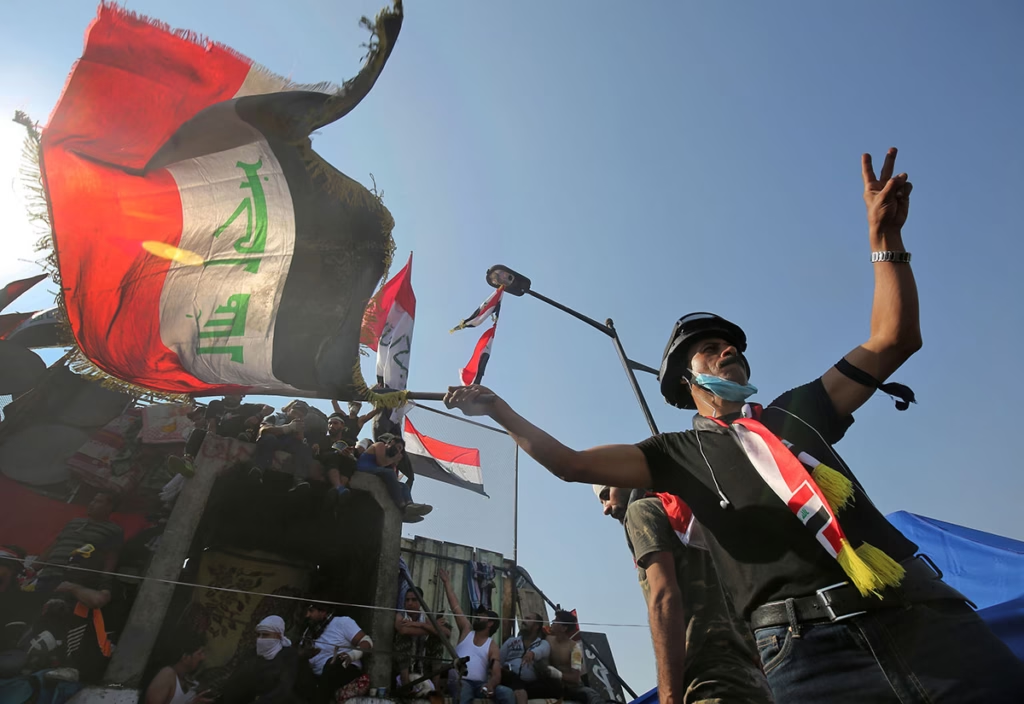
Iran’s retaliation campaign has hit at least 11 countries, yet the UAE stands out as one of the hardest hit, second only to Israel.
According to official figures, the UAE has intercepted the vast majority of incoming threats. By the 13th day of the conflict, air defenses had taken down 268 ballistic missiles, 15 cruise missiles, and 1,514 drones. Even so, the toll includes six deaths and more than 130 injuries.
The sheer volume of attacks is striking. Compared to neighboring Gulf states like Qatar, Saudi Arabia, and Bahrain, the UAE has endured significantly heavier firepower, nearly matching the scale of attacks seen in Israel.
Daily Life Disrupted Across Emirates
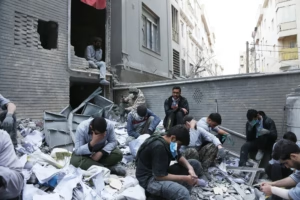
Despite strong defenses, life inside the UAE has changed dramatically. Residents in Dubai and Abu Dhabi now live with the constant sound of explosions as air defense systems intercept incoming threats.
Missile alerts have become routine, ringing on phones at all hours. Meanwhile, major infrastructure has not been spared.
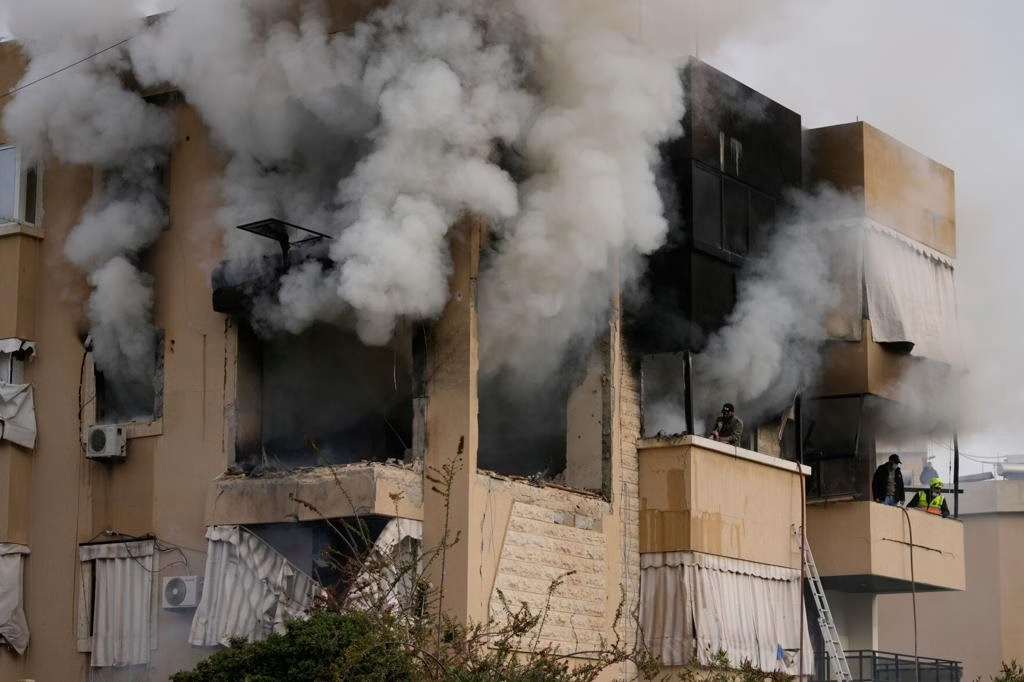
Targets have included airports, residential towers, luxury hotels, Dubai’s International Financial Center, Jebel Ali Port, and even the U.S. consulate. This comes despite Iran’s earlier claims that its operations were limited to U.S. military bases.
Why UAE Is A Strategic Target
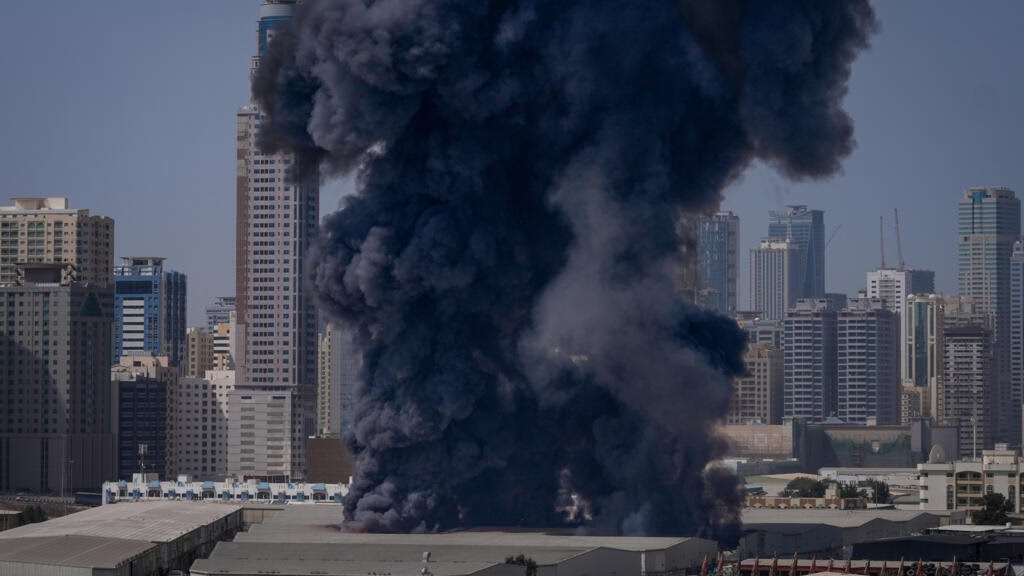
For Tehran, the UAE represents far more than just another Gulf state. It is a high-value target with global impact.
Striking the UAE allows Iran to simultaneously pressure Washington, disrupt international trade routes, shake financial markets, and capture worldwide attention. The country has long positioned itself as a bridge between East and West, making it central to finance, logistics, aviation, and emerging technologies.
That strategic importance now makes it vulnerable.
Strategic Alliance With The United States
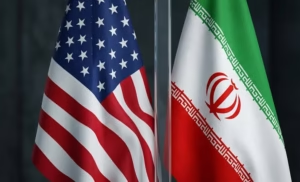
The UAE’s close relationship with the United States has also placed it firmly in the crosshairs.
The country was designated a major defense partner in 2024, strengthening cooperation in defense, artificial intelligence, and investment. U.S. forces are deeply embedded in the region, particularly at Al Dhafra Air Base near Abu Dhabi.
Earlier this month, that base was directly targeted by Iranian missile and drone strikes. The installation hosts thousands of American troops and serves as a key hub for intelligence and air operations.
Iranian leadership has made its stance clear, demanding the closure of U.S. bases in the Gulf and warning they will be “attacked” if they remain operational.
Experts Question Why UAE Hit Hardest
Observers are still trying to understand why the UAE has been targeted so heavily compared to its neighbors.
“There is no good answer as (to) why the UAE had been targeted more heavily than any other country in the neighborhood,” Abdulkhaleq Abdulla, an Emirati academic and political scientist, told CNBC on Sunday.
He pointed instead to the country’s defensive success, adding, “how well the UAE managed to defend itself against these daily missiles and drones going into its third week, it seems the country has been preparing itself for this kind of attack all along.”
A Global Business Hub Under Pressure
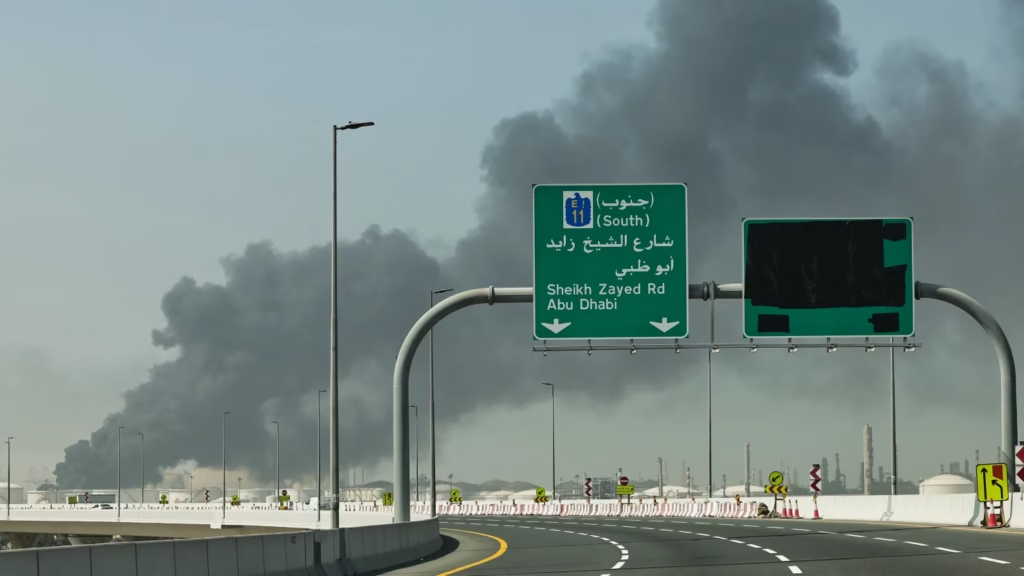
The UAE’s identity as a global business center is now being tested in real time.
Known for its openness and economic strength, the country hosts a population where nearly 90% are expatriates. Its reputation for tolerance and opportunity has helped attract international talent and investment for decades.
Mohamed Alabbar, founder of Emaar Properties, emphasized what is at stake, saying, “This is the global business hub, it’s a reflection of what life should be, and what success should be, what prosperity should be, what positivity should be, it’s this place.”
Yet behind that vision, cracks are beginning to show.
Several international banks have started relocating staff, and others have shifted employees to remote work after strikes targeted key financial districts. Dubai’s International Financial Center has already been hit twice, though officials confirmed no casualties.
Tech And Energy Sectors Feel The Impact
The consequences extend beyond finance.
Major technology firms operating regional hubs in the UAE have been placed on alert. Companies such as Google, Oracle, and IBM have been named as potential targets, highlighting the risks to global tech infrastructure.
Meanwhile, energy operations have also been disrupted. A drone strike forced precautionary shutdowns at Abu Dhabi’s Ruwais refinery, the largest in the Middle East, while activity at Fujairah terminals was temporarily halted.
An attack on an Amazon data center further rattled confidence, disrupting cloud services and raising concerns about the region’s future as a technology hub.
Global Ripple Effects From Regional Conflict
The broader implications are hard to ignore.
With tensions affecting supply chains and the Strait of Hormuz under pressure, global energy markets face uncertainty. Iran’s strategy appears aimed at creating maximum disruption, not just regionally but worldwide.
The UAE, once seen as a symbol of stability in a volatile region, now finds itself at the center of a high-stakes geopolitical struggle.
And as the conflict drags on, one question remains: how long can it maintain its role as the Gulf’s safest gateway?