
The economic fallout from the Iran war is beginning to hit where it hurts most, everyday wallets. As oil prices surge and gasoline costs climb, economists warn the financial strain is falling unevenly across society, deepening an already widening gap between rich and poor.
What began as a geopolitical crisis is now shaping into a household financial crisis, especially for those already struggling to keep up with rising costs.
Oil Shock Sends Gas Prices Soaring

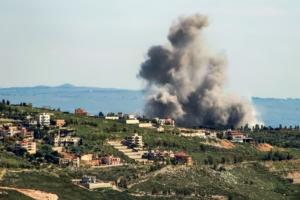
The conflict has disrupted one of the world’s most critical oil routes, the Strait of Hormuz, triggering a sharp spike in global energy prices.
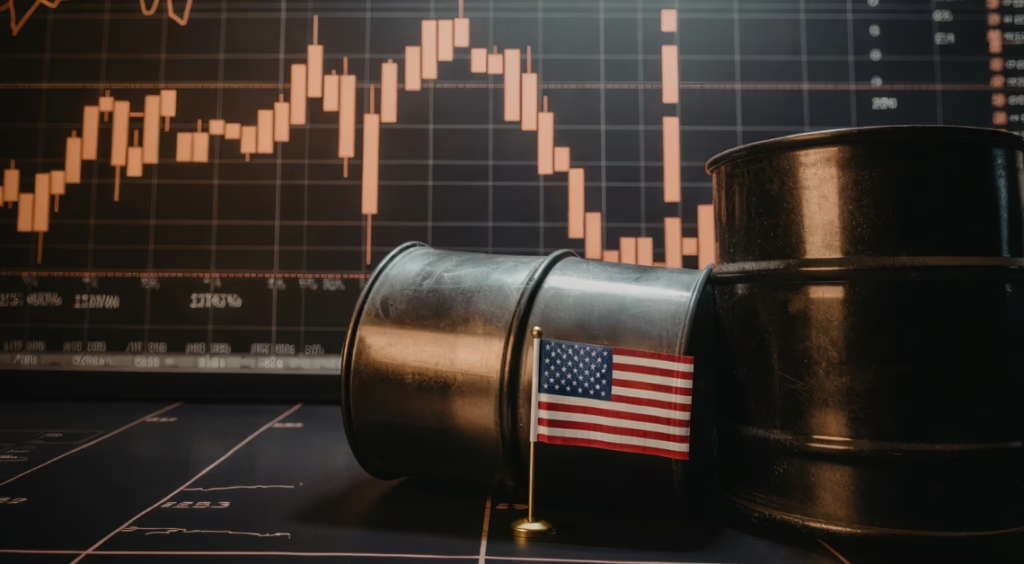
As a result, Brent crude has jumped more than 40% since late February, reaching around $102 per barrel. Meanwhile, gasoline prices have surged across the U.S., with the national average hitting $3.79 per gallon, a steep 30% increase in just one month.
That puts fuel costs at their highest level since 2023, squeezing consumers at a time when many were already feeling financial pressure.
Lower-Income Households Feel The Biggest Hit
Economists say the impact of rising fuel costs is far from equal. For lower-income households, gasoline isn’t optional, it’s essential. And when prices rise, there’s little room to adjust.
“This is especially hard on lower and middle-income households, who have little or no financial resources, and so if they need to put more of their earnings in their gas tank, they have to cut other spending or pay on their credit cards and other debts more slowly,” said Mark Zandi.
He added a blunt assessment of the situation: “Higher gasoline prices act like a regressive tax, as lower-income households devote a higher share of their budget to energy.”
In other words, the burden grows heavier the less you earn.
A Growing Divide In The Economy
This uneven impact feeds into what economists call a “K-shaped economy,” a pattern where different income groups experience sharply different financial outcomes.
The concept, widely discussed during the pandemic, shows higher-income households moving upward, supported by investments and asset growth. Meanwhile, lower-income groups fall behind, weighed down by rising costs and limited financial buffers.
“That, I think, is a major concern as an economist: inequality,” said Nicholas Bloom.
Before the current crisis, affordability was already a major concern. Now, higher fuel costs are pushing the lower half of the economic “K” even further down.
Energy Costs Ripple Across The Economy
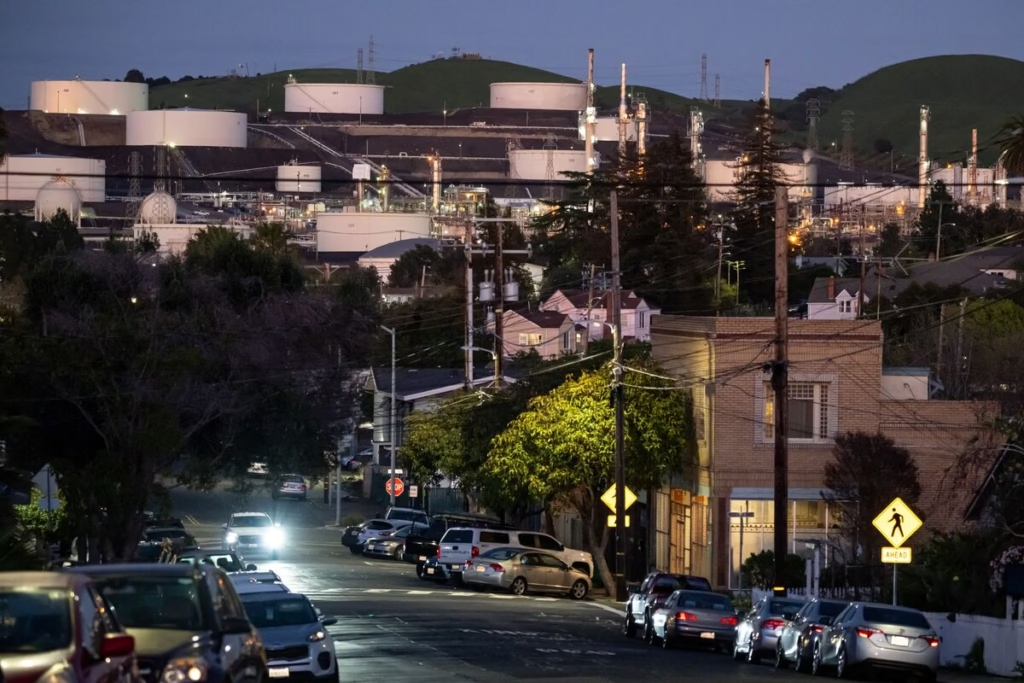
The impact of rising oil prices doesn’t stop at the gas pump. It spreads quickly across the entire economy.
Diesel prices have surged past $5 per gallon, increasing transportation costs. That, in turn, raises the price of goods, especially food, as shipping becomes more expensive. Airlines are also feeling the pressure, with jet fuel prices climbing sharply over the past month.
“Higher fuel costs, along with the downstream effects on shipping, travel, and trade, are likely to add further pressure to consumer prices,” said Stephen Kates.
Even everyday expenses, groceries, flights, deliveries, are now tied more closely to volatile oil markets.
Spending Power Shrinks As Costs Rise
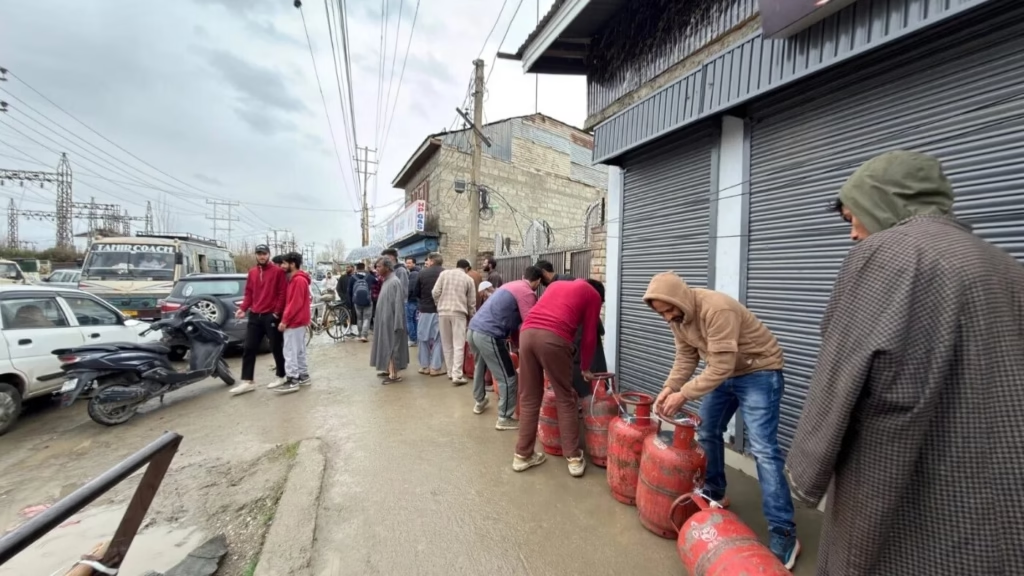
The broader concern is what happens when households have less money to spend.
According to Michael Klein, rising oil prices function much like tariffs, quietly draining consumer purchasing power.
When more income goes toward fuel, less remains for other goods and services. That shift can slow economic growth, especially in a consumer-driven economy like the U.S., where spending makes up a large share of GDP.
The effect is subtle but powerful. Households cut back. Businesses feel the slowdown. And the economy adjusts, often unevenly.