
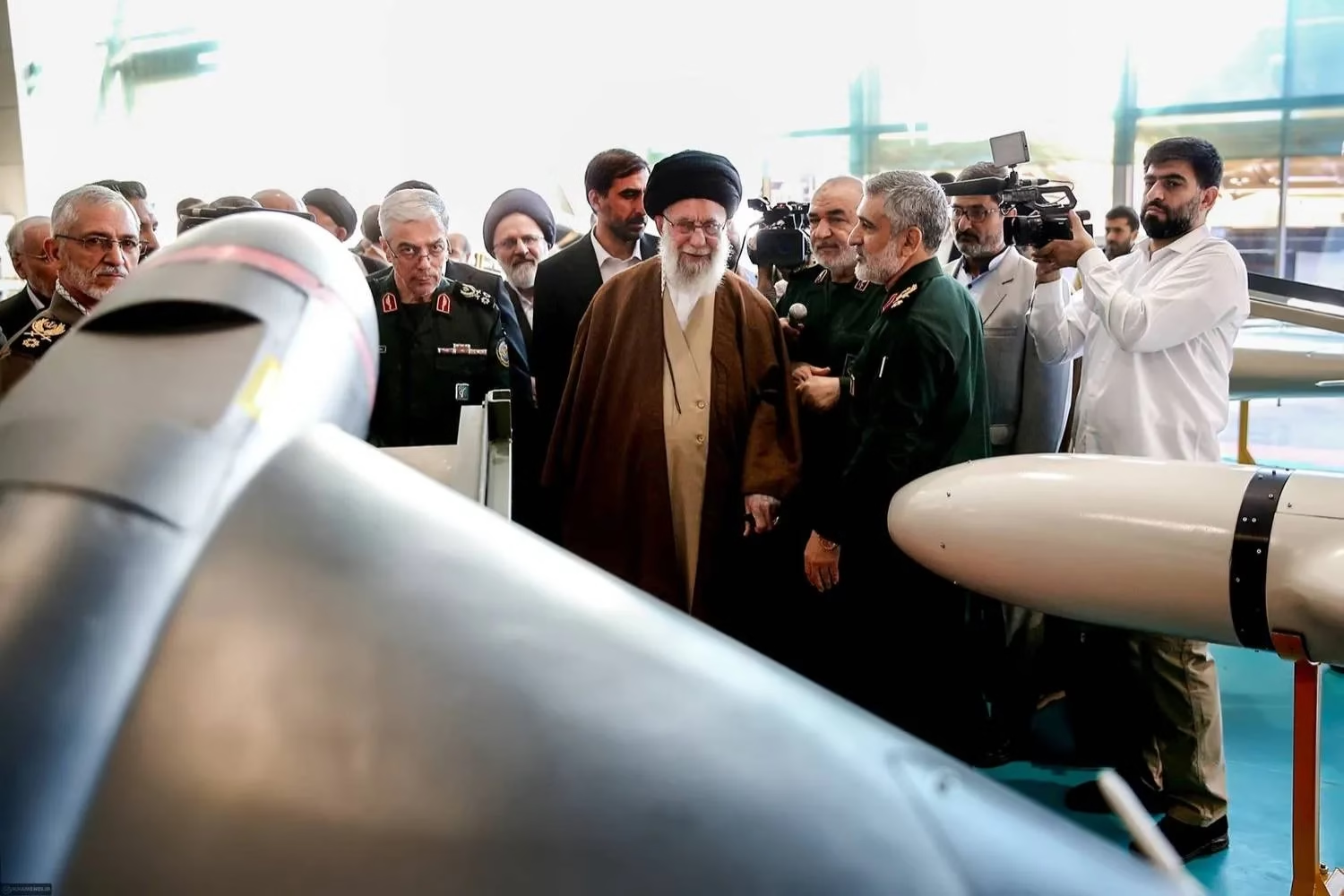
Iran’s power structure appears to be shifting fast, with the country’s Revolutionary Guard reportedly sidelining President Masoud Pezeshkian while expanding direct control over the state. Fresh claims suggest civilian authority is weakening, military commanders are calling key shots, and access to Supreme Leader Mojtaba Khamenei may now be tightly controlled.
The latest developments could reshape not only Iran’s internal politics, but also its posture toward the United States and the wider Middle East.
Military Power Moves To The Front
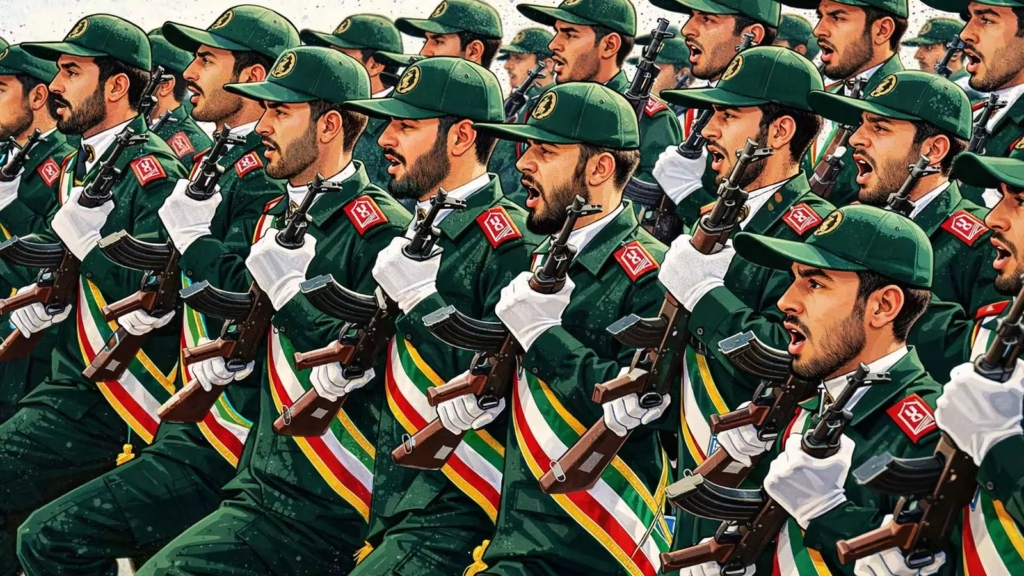
Iran’s Islamic Revolutionary Guard Corps, widely known as the IRGC, has allegedly blocked Pezeshkian’s presidential appointments and formed what sources described as a security perimeter around Mojtaba Khamenei.
According to the report, the IRGC has effectively stepped into control of several major state functions.
“It was always a matter of when, not if, the IRGC was going to step forward even more than it has in the last three decades,” Behnam Ben Taleblu, senior director of the Iran program at the Foundation for Defense of Democracies, said.
That assessment reflects a broader belief among analysts that Iran’s elected institutions have long been losing ground to security hardliners.
President Reportedly Hits Political Wall
The report described Pezeshkian as facing a “complete political deadlock” amid deepening tensions between his office and military leadership.
His recent attempt to appoint a new intelligence minister reportedly collapsed after pressure from IRGC commander Ahmad Vahidi. Sources said multiple candidates were rejected, including former Defense Minister Hossein Dehghan.
Vahidi allegedly argued that wartime conditions require all critical and sensitive posts to be selected and managed directly by the Revolutionary Guard until further notice.
“By any standard, Vahidi is considered a radical even within the regime’s hardline elite, and his rise is a warning that Tehran’s war machine now calls the shots,” Lisa Daftari, foreign policy analyst and journalist, said.
Supreme Leader Access Said To Be Restricted
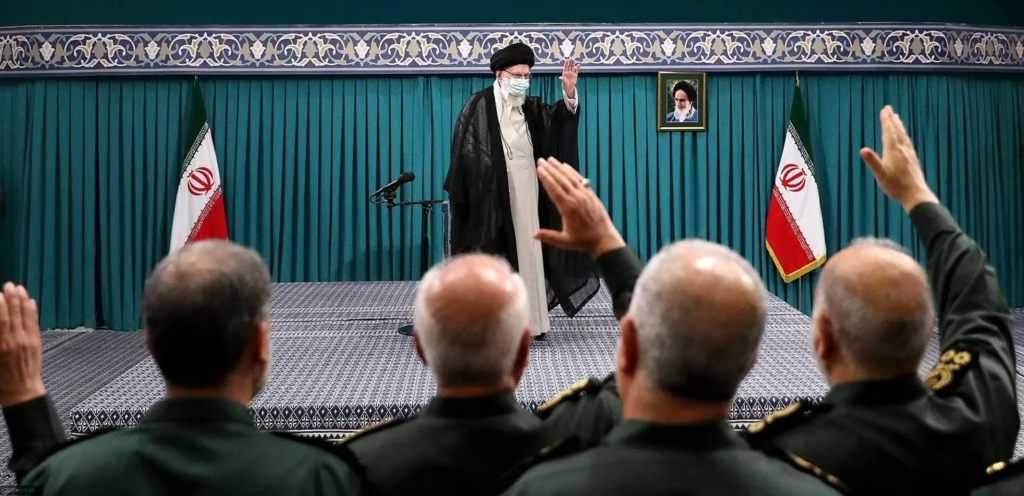
Under Iran’s political system, presidents traditionally nominate an intelligence minister only after approval from the supreme leader. However, uncertainty over Mojtaba Khamenei’s condition and whereabouts in recent weeks has fueled new speculation.
The report claimed Pezeshkian repeatedly sought an urgent meeting with Khamenei but could not establish contact.
Instead, a “military council” made up of senior IRGC officers is said to control access to the center of power, blocking government reports from reaching Mojtaba and isolating him from the elected administration.
If true, the implications are enormous. Who is actually governing Iran right now?
Analysts Warn This Is No Sudden Coup
Some experts caution against seeing the moment as a dramatic rupture. They argue the Guard’s rise has been building for years.
“But it’s a mistake to assume this is some sort of coup,” Ben Taleblu said. “This has been the process in Iran for years now, as the regime has chosen conflict over cooperation and emboldened its security forces at every juncture.”
He also pushed back on concerns about Pezeshkian’s diminishing role.
“Those who worry about Pezeshkian’s potential sidelining need to consider what he realistically was or wasn’t able to do mere months ago when the regime slaughtered 40,000 Iranians in the streets,” he said.
That view suggests the presidency may have carried less real power than many assumed.
Internal Friction Around Mojtaba Khamenei
Another striking allegation centers on Ali Asghar Hejazi, a powerful security figure within the supreme leader’s office.
According to the report, some of Mojtaba Khamenei’s allies now want Hejazi removed because he opposed Mojtaba inheriting power after his father.
Hejazi reportedly warned members of the Assembly of Experts that Mojtaba lacked the qualifications to become supreme leader and that hereditary succession would violate principles established by Ali Khamenei.
He also allegedly warned that elevating Mojtaba would hand effective control of the country to the Revolutionary Guard and permanently weaken civilian institutions.
That warning now appears increasingly relevant.
Why It Matters Beyond Iran
The IRGC was founded after the 1979 Islamic Revolution to defend the regime. Since then, it has grown into a sprawling military, political and economic force. It controls large sectors of Iran’s economy, oversees missile and nuclear programs, and influences nearly every branch of government.
Now, analysts say, it may no longer be working from the shadows.
A stronger IRGC could mean a more confrontational Tehran, tougher negotiating positions with Washington, and greater risk of regional escalation.
For the West, the key question is no longer just what Iran wants. It may be who has the authority to decide.