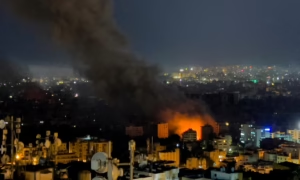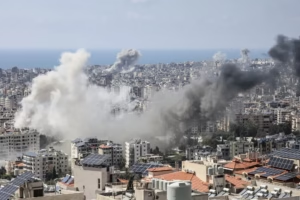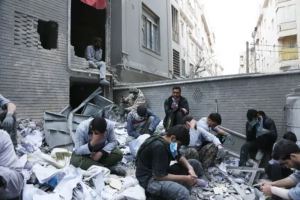

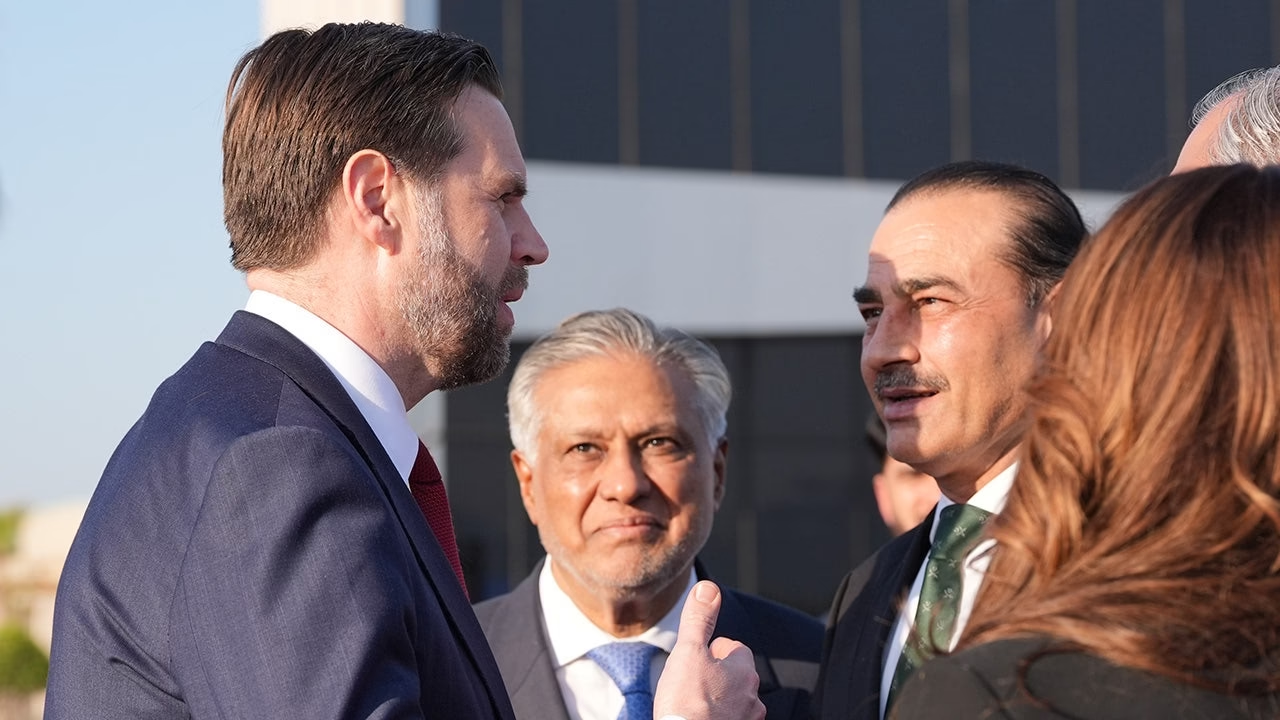
Tensions in the Gulf surged sharply on Monday as Donald Trump ordered a sweeping naval blockade targeting Iranian ports, triggering immediate backlash from Tehran and raising fears of a broader economic shock.
The move, announced after failed negotiations, has already set off warnings from multiple sides. Meanwhile, global markets and energy analysts are bracing for potential fallout.
Iran Slams Blockade As Economic Attack
Iran wasted no time in condemning the decision. Officials described the blockade not just as a military escalation, but as a direct strike against the global economy.
“Can an illegal ‘war of choice’ be won through a ‘revenge of choice’ against the global economy?!” Iran’s foreign ministry spokesperson Esmaeil Baqaei said on Monday. “Is it ever worthwhile to cut off one’s nose to spite one’s face?!”
That sharp response signals how seriously Tehran views the move. In contrast to past confrontations, this language reflects growing frustration and a willingness to escalate rhetorically.
Trump Issues Stark Military Warning
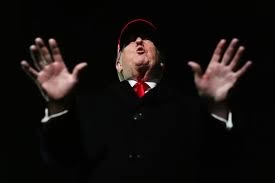
Even as criticism mounted, Trump doubled down with a blunt warning aimed directly at Iran’s naval forces.
“Iran’s Navy is laying at the bottom of the sea, completely obliterated – 158 ships. What we have not hit are their small number of, what they call, ‘fast attack ships,’ because we did not consider them much of a threat,” Trump wrote in a social media post.
“Warning: If any of these ships come anywhere close to our BLOCKADE, they will be immediately ELIMINATED.”
The language was unmistakably forceful. Still, it also raised questions about how close both sides are willing to get to open confrontation.
Blockade Comes Into Force After Failed Talks
The blockade officially came into effect at 10am in Washington, DC, shortly after negotiations between US and Iranian officials collapsed in Pakistan.
Those talks had been seen as a fragile opportunity to stabilize the region. However, disagreements over key issues quickly derailed progress.
Now, with diplomacy stalled, the focus has shifted back to military pressure.
Maritime Warning Expands Scope
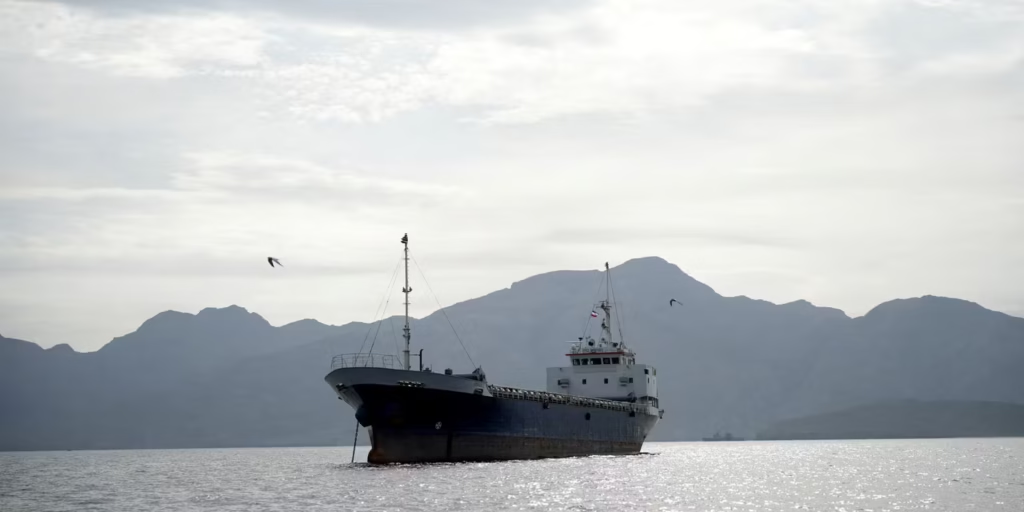
Meanwhile, the United Kingdom Maritime Trade Operations issued an advisory that widened the scope of concern.
“The restrictions encompass the entirety of the Iranian coastline, including the ports and energy infrastructure,” UKMTO, which is affiliated with the British Royal Navy, said in an advisory.
Notably, the blockade applies “without distinction,” meaning any vessel engaging with Iranian ports could be affected. That detail alone has alarmed shipping companies and insurers across the region.
Ceasefire Under Pressure
Although a two-week truce had previously been agreed upon, cracks are already showing.
Iranian officials accuse the US of undermining the agreement by allowing continued military activity elsewhere in the region. In particular, strikes linked to Benjamin Netanyahu have become a flashpoint.
At the same time, Pakistan, which helped broker the ceasefire, insists the deal covered all regional fronts.
“Pakistan remains committed to sustaining this momentum for peace and stability,” Pakistani Prime Minister Shehbaz Sharif said in a social media post on Monday.
Still, with tensions rising, that commitment faces a difficult test.
Oil Prices And Global Impact In Focus
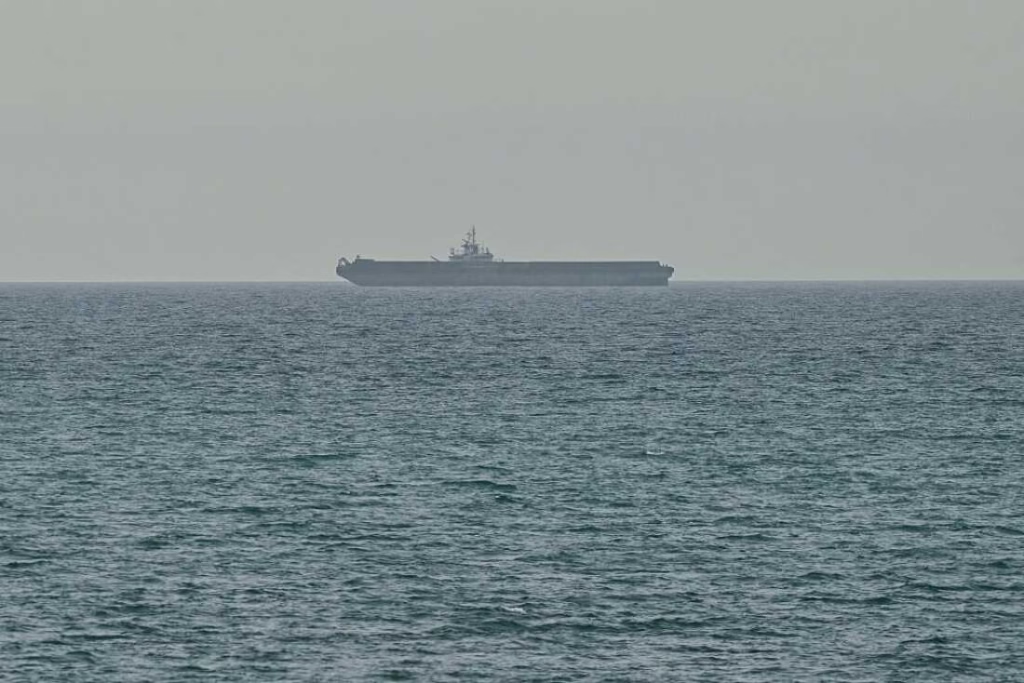
Beyond military risks, the economic consequences are already taking center stage.
Mohammad Bagher Ghalibaf warned that the blockade could hit American consumers directly at the pump.
“Enjoy the current pump figures. With the so-called ‘blockade’, Soon you’ll be nostalgic for $4–$5 gas,” Ghalibaf wrote on X.
Fuel prices in the US have already climbed above $4.12 per gallon, a sharp increase from pre-conflict levels. If supply disruptions intensify, those costs could rise even further.
Strategic Waterway Remains Critical
At the heart of the crisis lies the Strait of Hormuz, one of the world’s most vital oil transit routes.
Despite the earlier ceasefire, vessel traffic has yet to recover. That slowdown alone is enough to rattle global energy markets.
Iran, for its part, insists it will defend its territorial waters and has labeled the blockade an act of “piracy.” That stance suggests any miscalculation in the narrow waterway could quickly spiral.
What Comes Next?
For now, both sides appear locked in a dangerous standoff.
Diplomacy has stalled, military warnings are intensifying, and economic pressure is building. The real question now is whether cooler heads can prevail, or whether this confrontation edges closer to something far more serious.