
The war spreading across Iran, Iraq, Israel, Lebanon, and the Gulf showed no sign of slowing on Tuesday, as fresh explosions were reported near the US Embassy in Baghdad, Israel widened attacks in Lebanon, and Washington faced a sharp internal rupture over the conflict.
The latest developments underscored just how many fronts are now active at once. Rockets and drones again targeted diplomatic facilities in Iraq. Israeli strikes continued in Beirut and southern Lebanon. Iran said it had launched a new wave of attacks across the region. And in Washington, the resignation of a top counterterrorism official added new political heat to an already volatile war.
Baghdad Embassy Area Hit By Renewed Attacks
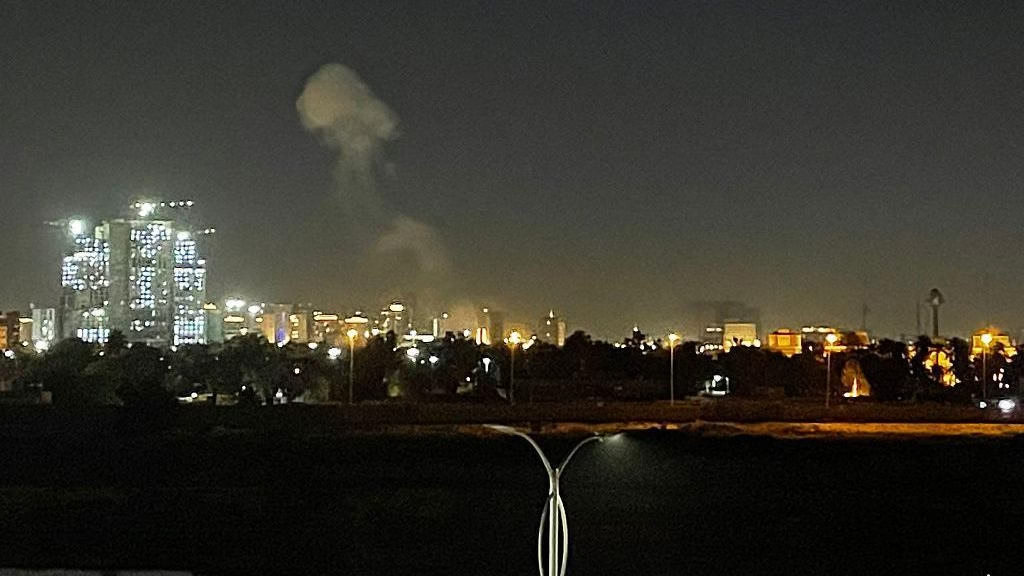
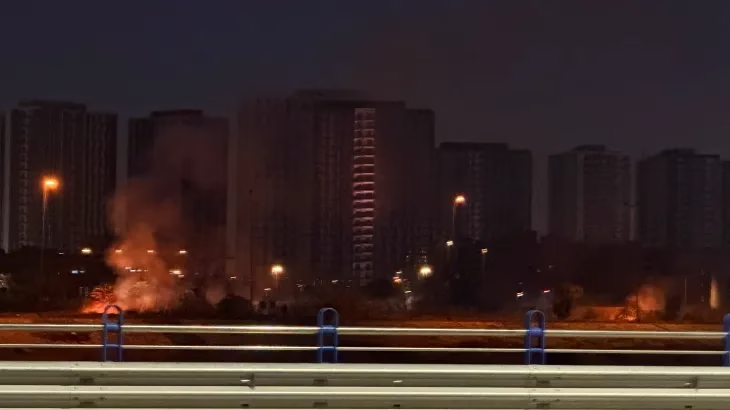
Fresh rocket and drone attacks were reported near the US Embassy compound in Baghdad, with security sources saying alarms were triggered and an explosion was heard close to the site.
At least three explosive drones also targeted a US diplomatic facility near Baghdad International Airport, activating C-RAM air defence systems. There were no immediate reports of casualties or damage, but the renewed attacks showed that Iraq remains dangerously exposed as the wider conflict deepens.
Earlier in the day, drone activity had already been reported in Baghdad’s Green Zone, putting one of the region’s most sensitive diplomatic districts back under pressure.
Joe Kent Resigns In Blow To Trump
Meanwhile, one of the most striking political developments came from inside the US government itself. Joe Kent, director of the US National Counterterrorism Center, resigned over the war, delivering a blunt rebuke of the administration’s case for conflict.
“I cannot in good conscience support the ongoing war in Iran”
“Iran posed no imminent threat”
Later details from his resignation letter made his position even clearer. He said Trump had once “understood better than any modern president how to decisively apply military power without getting us drawn into never-ending wars”.
But, he argued, “high-ranking Israeli officials and influential members of the American media deployed a misinformation campaign that wholly undermined your America First platform and sowed pro-war sentiments to encourage a war with Iran”.
“This echo chamber was used to deceive you into believing that Iran posed an imminent threat to the United States, and that you should strike now, there was a clear path to a swift victory,”
“This was a lie and is the same tactic the Israelis used to draw us into the disastrous Iraq war.”
Trump was unmoved. Asked about Kent’s exit, he said it was “a good thing” and described the official as “very weak on security”.
“When I read his statement, I thought it was a good thing he’s out, because he said Iran was not a threat,”
“Every country realised what a threat Iran was – the question was whether they wanted to do something about it.”
That resignation matters. Kent is not a fringe critic. He comes from Trump’s own camp, and his departure could deepen unease on the American right about where this war is heading.
Larijani Reported Killed As Iran Waits To Confirm
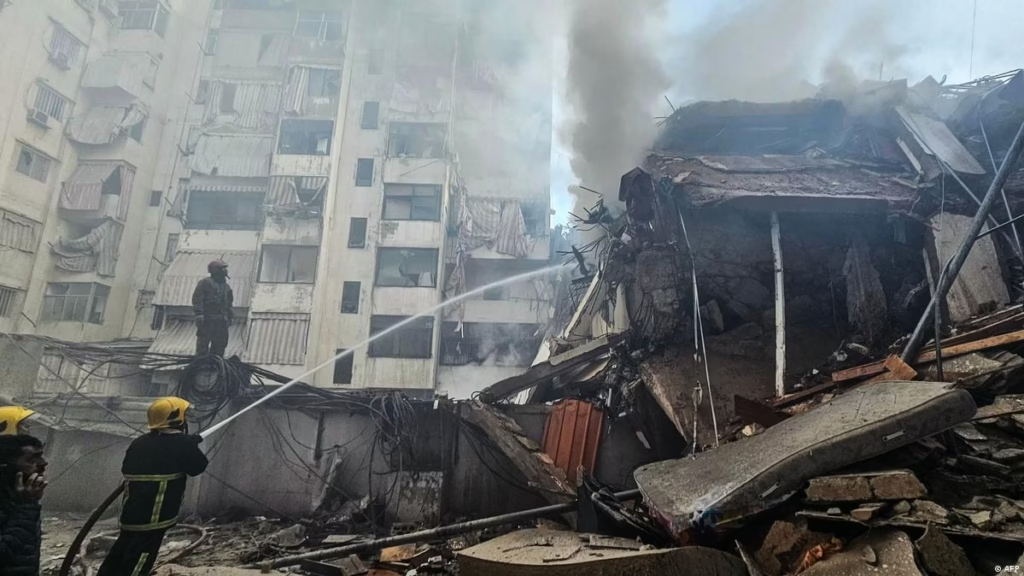
One of the war’s biggest unresolved questions remains the reported killing of Ali Larijani. Israel says it has assassinated Iran’s powerful national security chief, but Tehran has not confirmed his death.
Analysts say that, if confirmed, the loss would carry enormous political weight. One assessment described it as a “big loss” to Iran’s political establishment, while another said it would be a “major blow” for the Iranian establishment.
Sultan Barakat argued Larijani’s death “will strengthen the line of the hard-liners within the Iranian regime to start with, but also” diplomatic solutions will remain “slightly more remote at the moment”.
He added that Larijani was “very important” for maintaining a “balance of power” in Iran.
“He’s highly educated, he knew how to talk to the West, to the conservatives among the Iranians but also to the reformists. And if he is definitely dead, it’s a big loss for those calling for alternatives to military confrontation.”
From Tehran, another reporter noted there was still “no confirmation, no denial”, adding that this silence itself was feeding speculation. “If confirmed, we know that we are dealing with a very important, major blow when it comes to Iran’s political establishment.”
Israel, however, is treating the strike as a strategic victory. One report said it is being celebrated as “a win for Israel right now”, both militarily and politically, because Larijani was seen as central to any mediated effort to end the war.
Turkiye’s foreign minister condemned the reported killing, calling Israel’s actions “illegal”.
“Israel’s political assassinations, especially those targeting Iranian statesmen and politicians, are truly illegal activities outside the normal laws of war,”
Israeli Prime Minister Benjamin Netanyahu framed the strike in even broader terms.
“This morning, we eliminated Ali Larijani, the boss of the Revolutionary Guards, which is the gang of gangsters that actually runs Iran,”
He added that removing Iran’s rulers “will not happen all at once, it will not happen easily. But if we persist in this, we will give them a chance to take their fate into their own hands.”
Iran Signals A “New Phase” Of Strikes
Iran’s Revolutionary Guard said it had entered a new and heavier stage of military action. One commander declared that a “new phase of effective and heavy strikes across the region against the American-Zionist enemy” had begun.
“The backbone of arrogance will be broken in the streets and squares”
The IRGC later said it had completed its 59th wave of strikes, targeting Beit Shemesh, Tel Aviv and occupied Jerusalem, while also hitting US forces at Kuwait’s Ali al-Salem Air Base, the UAE’s Fujairah and Iraq’s Erbil.
Israel’s military repeatedly said missiles were incoming from Iran, with air defence systems activated and civilians instructed to take shelter.
Trump Rips NATO Again Over Hormuz
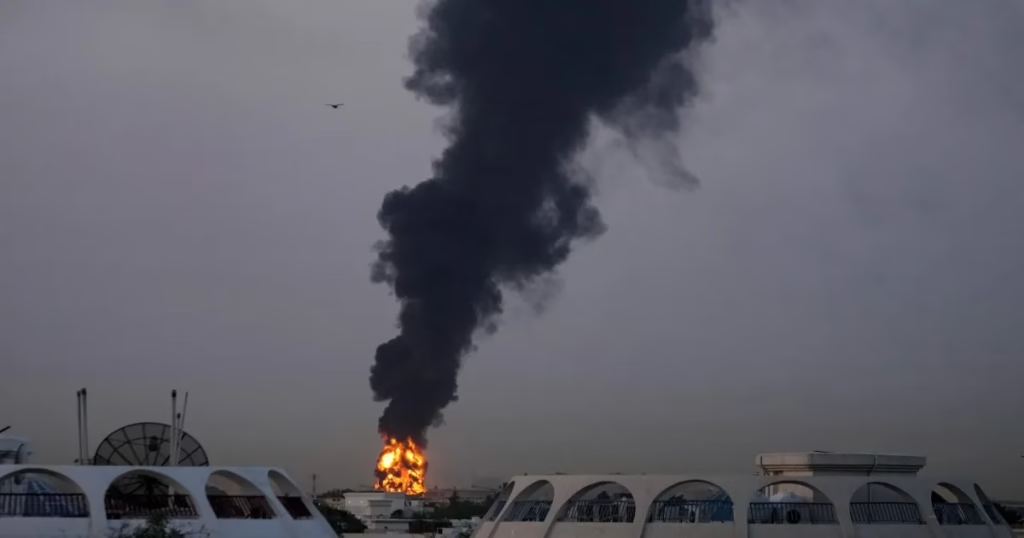
As fighting continued, Donald Trump returned to one of his favorite targets, NATO. Frustrated by allied resistance to joining US operations around the Strait of Hormuz, he lashed out again from the White House and on social media.
“They don’t want to help us, which is amazing, amazing,”
“We don’t need any help.”
“NATO’s making a very foolish mistake,”
He also wrote that the United States had been told by most NATO allies that “they don’t want to get involved with our Military Operation against the Terrorist Regime of Iran,” and complained: “We will protect them, but they will do nothing for us, in particular, in a time of need,”
Then came the familiar Trump flourish.
“Because of the fact that we have had such Military Success, we no longer ‘need,’ or desire, the NATO Countries’ assistance – WE NEVER DID!”
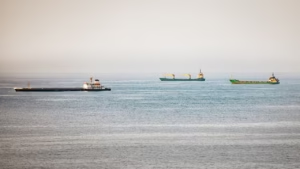
At the same time, Trump insisted shipping would soon move again through the strait.
“We’re knocking the hell out of the coast,”
“It won’t be too long.”
He added that “The Middle Eastern states, including Israel, by the way – who has been terrific – have been helping us a lot,”
Yet Europe remains cautious. Emmanuel Macron said France would not join any effort to reopen the waterway while active fighting continues.
“We are not party to the conflict, and therefore France will never take part in operations to open or liberate the Strait of Hormuz in the current context,”
Poland’s Donald Tusk also ruled out sending troops.
Lebanon Toll Climbs As Strikes Continue
Lebanon is sinking deeper into the conflict. The death toll from Israeli attacks since March 2 has risen to 912, with 2,221 wounded, according to the country’s Ministry of Public Health.
Israeli air strikes continued Tuesday, including one near Beirut airport and another on Beirut’s Airport Road that reportedly killed one person and wounded nine others. Two Lebanese soldiers were also killed in southern Lebanon, while another strike reportedly killed one person and wounded another near a school.
The Lebanese presidency said targeting the army undermines calls for the military to take a stronger role against Hezbollah. President Aoun warned that attacking soldiers “blatantly contradicts the calls by Lebanon and the international community to empower the army to extend state authority over all Lebanese territory and to confine weapons to the legitimate armed forces,”
A UN human rights assessment also raised the stakes, warning that attacks on healthcare workers and displaced civilians could amount to war crimes.
Meanwhile, Hezbollah said it had fired rockets at Israeli soldiers in southern Lebanon, while Israel claimed it had observed “increased preparations” for more rocket salvos in the coming hours.
Hunger, Oil, And Global Disruption Grow
Beyond the battlefield, the economic shock is spreading. The World Food Programme warned that another 45 million people could be pushed into acute hunger if the war continues and oil stays above $100 a barrel.
According to the agency, “almost 45 million more people could fall into acute food insecurity or worse”, on top of the millions already struggling worldwide.
Airlines are feeling it too. SAS announced short-term cancellations because of the “sharp and sudden increase in fuel prices”. Spain moved to release 11.5 million barrels from oil reserves, while governments across Europe and the Gulf scrambled to manage the fallout.
Trump, for his part, told Americans relief is coming.
“As soon as that war’s over – which will be soon – your prices are gonna drop like a rock,”
“You watch.”
His aides projected confidence, too. One White House official said, “We’re very confident we’re going to see a military resolution here in a four-to-six-week timeline”, while also promising “We’re going to continue doubling down on the policies that have worked over the past year, and make use of these short-term policies to mitigate the short-term disruptions we’re seeing right now”.
A Conflict Growing Wider By The Hour
The shape of this war is becoming clearer, and more alarming. Baghdad is under pressure. Lebanon is bleeding. Iran is signaling a broader offensive. Israel is targeting top Iranian figures. Washington is fighting not just a regional war, but an argument at home over why it started and how it ends.
And all the while, the number of moving pieces keeps rising.