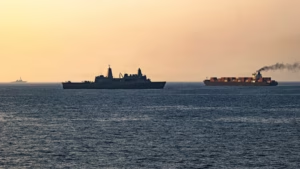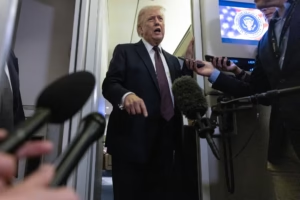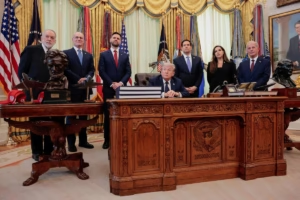

A fragile ceasefire meant to calm the region is already under intense strain, as violence surges across multiple fronts. Lebanon is reeling after one of the deadliest days in months, while world powers clash over what was actually agreed behind closed doors. Meanwhile, the Gulf simmers, Washington sends mixed signals, and diplomacy struggles to keep pace with escalating conflict.
Lebanon Reels From Deadly Airstrikes
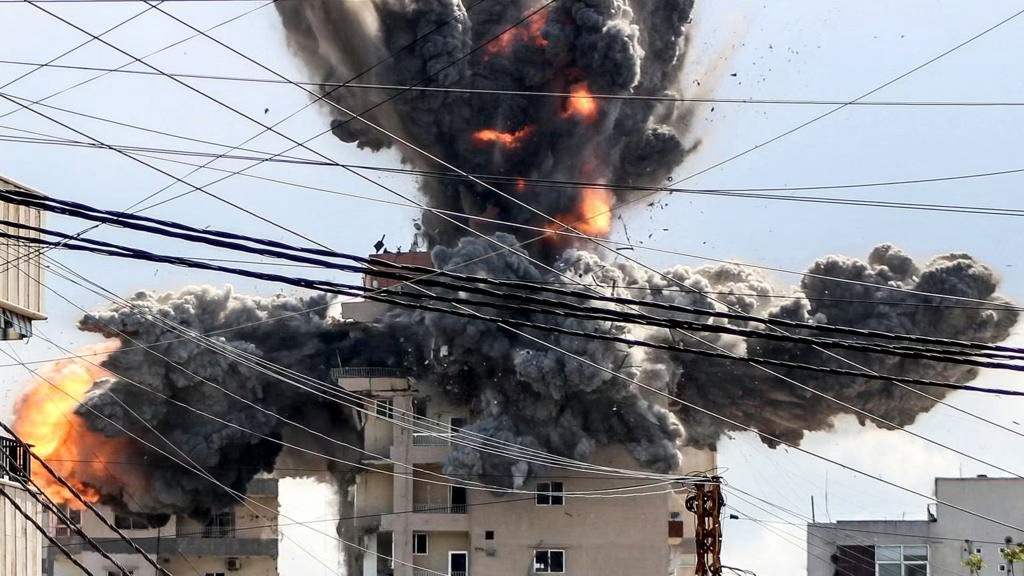
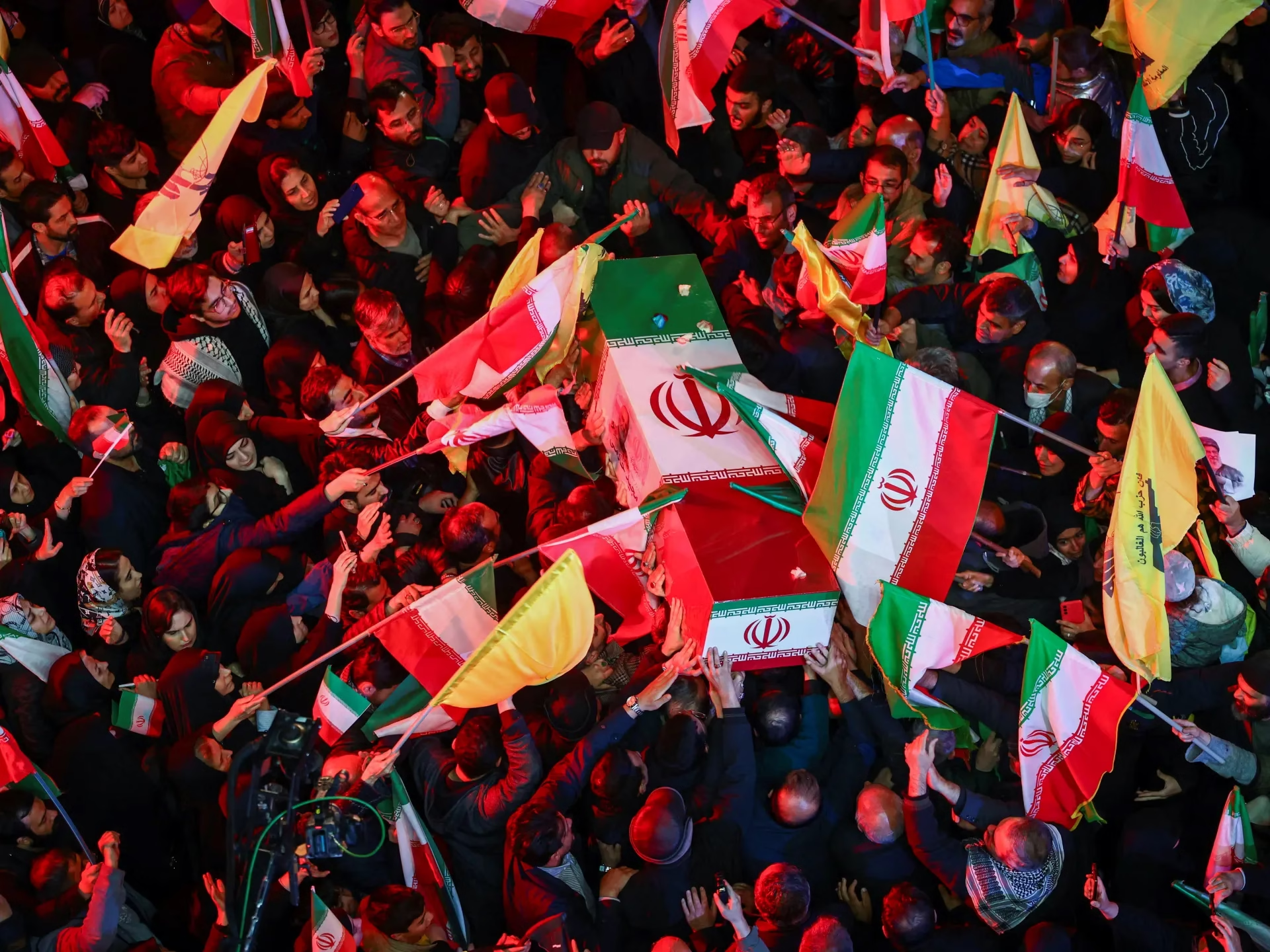
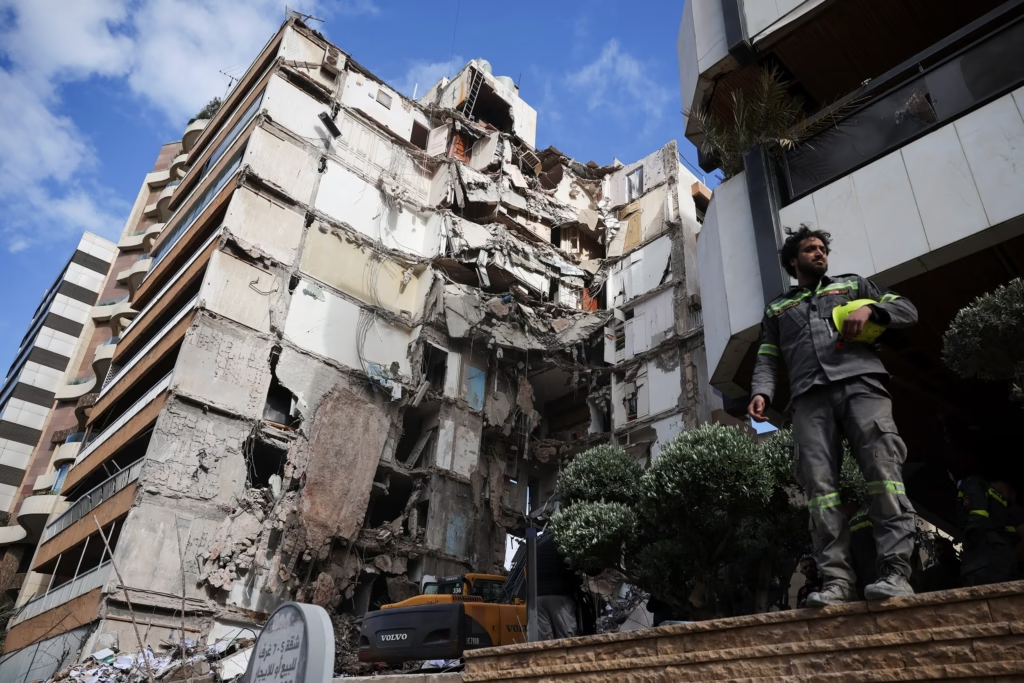
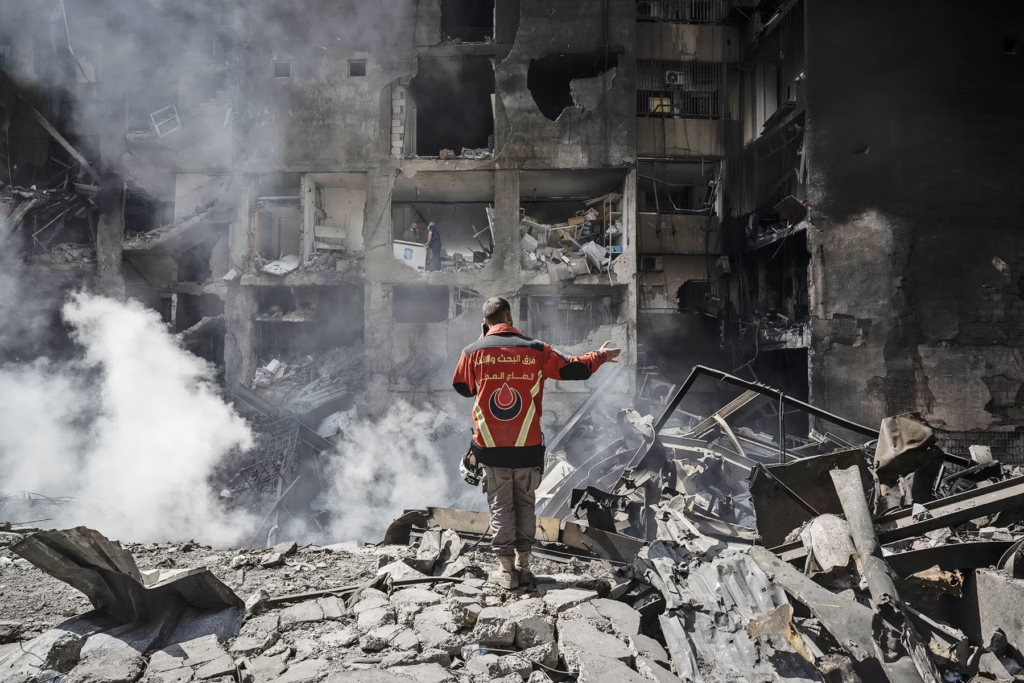
Lebanon has declared a national day of mourning after Israeli attacks killed at least 254 people and injured more than 1,165 in a single day.
Prime Minister Nawaf Salam said the government is mobilising “all of Lebanon’s political and diplomatic resources to stop the Israeli killing machine”.
The scale of devastation has shaken the country. Public institutions shut down, flags lowered, and grief spread across cities already strained by months of conflict.
Ceasefire Dispute Sparks Global Confusion
At the center of the crisis lies a critical question: does the ceasefire even apply to Lebanon?
Israeli Prime Minister Benjamin Netanyahu made his position clear, stating that Lebanon is not part of the agreement between the United States and Iran. That stance was reinforced by US Vice President JD Vance, who said: “We never made that promise.”
However, Pakistan’s Prime Minister Shehbaz Sharif, who helped mediate the deal alongside the army chief, had earlier insisted the ceasefire included Lebanon.
Iran pushed back strongly. Foreign Minister Abbas Araghchi quoted Sharif while stressing that the “terms are clear”, warning Washington must choose between a ceasefire or “continued war via Israel”. He added that “it cannot have both.”
The contradiction has left diplomats scrambling and raised fears that the agreement may already be unraveling.
Iran Sets Conditions, Questions Talks
Tehran is now tying any broader peace effort directly to Lebanon.
Iranian President Masoud Pezeshkian said halting Israeli attacks in Lebanon is a key condition in Iran’s 10-point roadmap to end the war.
Meanwhile, Iran’s parliament speaker Mohammad Bagher Ghalibaf cast doubt on negotiations altogether. He said ongoing violations, including attacks in Lebanon, a drone entering Iranian airspace, and restrictions on uranium enrichment, make talks “unreasonable”.
At the same time, confusion deepened after a US official dismissed Iran’s published ceasefire terms, stating: “The document being reported by media outlets is not the working framework.”
Diplomacy Intensifies As Pressure Mounts
Efforts to salvage peace are accelerating, but divisions remain sharp.
US Vice President JD Vance is set to lead upcoming talks with Iran in Islamabad, joined by Steve Witkoff and Jared Kushner. However, Iran has already signaled distrust toward both negotiators.
Across Europe, French President Emmanuel Macron is actively lobbying to include Lebanon in the ceasefire, calling it the “best path to peace”.
Global outrage is also growing. UN High Commissioner for Human Rights Volker Turk condemned the violence, saying: “The scale of the killing and destruction in Lebanon today is nothing short of horrific.” He added, “Such carnage, within hours of agreeing to a ceasefire with Iran, defies belief.”
Meanwhile, Lebanon continues its own diplomatic push, as regional powers like Oman and Qatar label the attacks as war crimes.
Gulf Region Faces Expanding Fallout
The conflict is no longer contained. It is spreading.
Kuwait reported “severe material damage” after drone strikes hit oil facilities, power stations, and desalination plants. Fires also broke out at key infrastructure sites.
In Abu Dhabi, debris from an intercepted attack injured three people and forced a temporary shutdown at the Habshan gas complex.
Qatar confirmed it intercepted seven incoming missiles and drones launched from Iran. Saudi Arabia and Bahrain also reported attacks, including strikes on critical energy routes.
The UAE has now demanded urgent clarity on the ceasefire terms, warning that ambiguity risks prolonging instability across the Gulf.
Washington Faces Internal Uncertainty
Back in the United States, confusion is just as intense.
Reports indicate deep divisions within the administration over what was actually agreed in the ceasefire deal. There is “no clarity whatsoever” on whether Lebanon was included, leaving policymakers and allies uncertain.
Still, officials including JD Vance and Press Secretary Karoline Leavitt maintain that Lebanon is excluded.
On the streets, frustration is boiling over. Hundreds of protesters gathered in New York’s Times Square, calling for an end to the war and an immediate halt to attacks on Lebanon.
Meanwhile, Reza Pahlavi dismissed claims of political transformation in Iran, rejecting the idea of a “very productive regime change” and warning that leadership remains “the same people”.
Israel Signals Readiness For Further Action
Despite the ceasefire, Israel is preparing for what may come next.
Prime Minister Benjamin Netanyahu stressed that military objectives remain unfinished. “Let me be clear: We still have objectives to complete, and we will achieve them, either through agreement or through renewed fighting,” Netanyahu said.
His message leaves little doubt. The pause in fighting may be temporary, and the region could slide back into full-scale conflict at any moment.
Iraq And Lebanon Brace For Wider Impact
The consequences are rippling outward.
In Iraq, authorities arrested suspects linked to a drone attack near Erbil that killed a French coalition officer. The incident underscores how quickly the conflict is crossing borders.
Meanwhile, leaders including Iraqi Prime Minister Mohammed Shia al-Sudani and Emmanuel Macron described the strikes on Lebanon as “painful attacks”, stressing the urgent need to protect civilians and restore stability.