
Tensions across the Middle East remained dangerously high on Sunday as the standoff in the Strait of Hormuz dragged on, oil prices climbed, and fresh violence erupted along the Israel-Lebanon border.
Diplomatic efforts continued behind closed doors, but hopes for a breakthrough appeared shaky after planned US talks in Pakistan were scrapped. Meanwhile, Iran signaled it would not accept a return to previous conditions in Hormuz, one of the world’s most critical shipping routes.
With global markets watching closely and regional powers scrambling to prevent a wider war, the crisis showed little sign of easing.
Oil Prices Jump as Hormuz Pressure Builds
Energy markets reacted sharply as shipping restrictions in the Strait of Hormuz continued and negotiations between Washington and Tehran remained stalled.
Brent crude futures rose $2.22, or 2.11 percent, to $107.55 a barrel by late trading.
US West Texas Intermediate also climbed, gaining $2.02, or 2.14 percent, to $96.42 a barrel.
The increases reflected growing concern that prolonged disruption in Hormuz could squeeze already fragile global supplies.
Iran Says Neighbors Come First
Iranian Foreign Minister Abbas Araghchi praised officials in Oman after regional discussions focused on maritime security and broader tensions.
He said there had been “important discussions on bilateral matters and regional developments”.
“As the only Hormuz littoral states, our focus included ways to ensure safe transit that is to the benefit of all dear neighbors and the world. Our neighbors are our priority,” he added.
Oman has emerged as a key diplomatic player as countries seek to calm the escalating confrontation.
Security Warning Over Strait of Hormuz
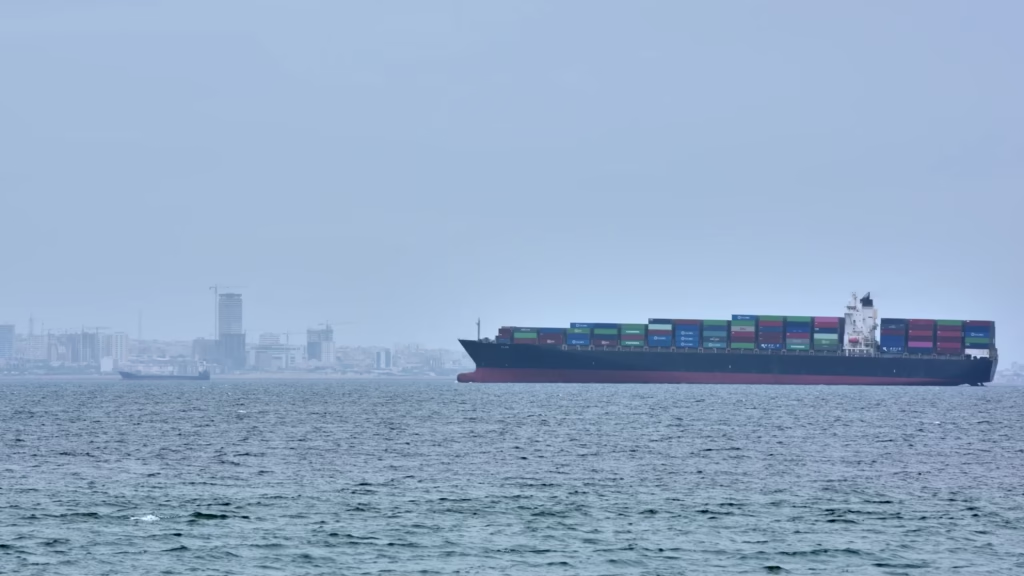
While no violent incidents were reported on Sunday, maritime officials warned that the area remains highly unstable.
“No incidents were reported across the Arabian Gulf and Gulf of Oman during the reporting period,” the United Kingdom Maritime Trade Operations said.
“The regional security environment remains volatile with ongoing military activity and continued threat to commercial shipping,” it added.
That warning is likely to keep nerves frayed across international shipping and energy markets.
Hezbollah Claims New Attacks on Israeli Forces
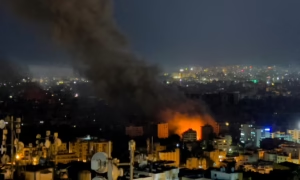
On the Lebanon front, Hezbollah said it launched multiple strikes targeting Israeli troops and military equipment in southern Lebanon.
The group claimed it hit artillery positions, troop gatherings, evacuation units, and a Merkava tank using drones and guided missiles.
Israel has continued strikes in southern Lebanon despite a three-week ceasefire, adding to fears that a second front could spiral further.
Putin to Meet Iran’s Foreign Minister
Iran’s IRNA news agency reported that Araghchi is set to meet Russian President Vladimir Putin in St Petersburg.
Russian Foreign Minister Sergey Lavrov is also expected to join talks centered on efforts to end the war involving the US, Israel, and Iran.
The meeting signals Moscow’s growing involvement as a diplomatic broker during the crisis.
Trump Says China Could Do More
President Donald Trump said Beijing has room to play a bigger role in reducing tensions.
“I don’t think much. I think maybe helping, but I don’t think much. They could help a lot more,” Trump said.
He added that he was not “overly disappointed” with China’s involvement.
Trump is expected to travel to Beijing next month for talks with President Xi Jinping.
Netanyahu Faces Political Pressure at Home
Inside Israel, two former prime ministers announced a new political alliance aimed at unseating Benjamin Netanyahu.
Naftali Bennett and Yair Lapid said they would merge their parties under the name Together.
“We are standing here together for the sake of our children. The state of Israel must change direction,” Lapid said.
Polls suggest Netanyahu could face a difficult election later this year as criticism mounts over the war’s economic and military toll.
Deadly Strikes in Lebanon Continue
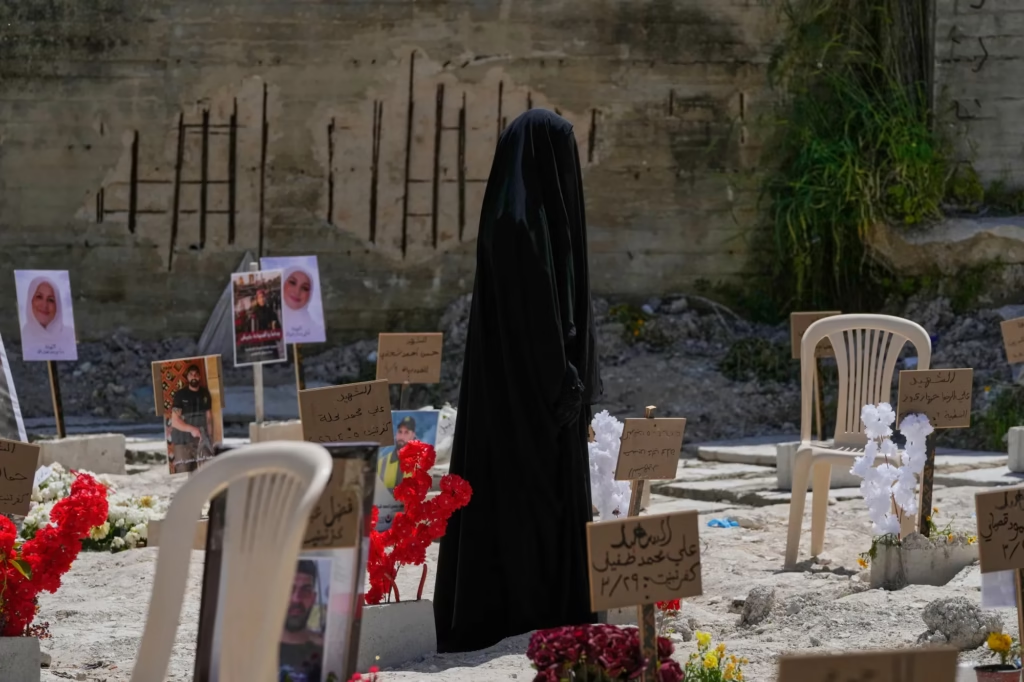
Lebanon’s Health Ministry said Israeli attacks killed 14 people on Sunday, including women and children, while dozens more were wounded.
Israel also reported one soldier killed in combat.
Defending ongoing military operations, Netanyahu said:
“This means freedom of action not only to respond to attacks … but also to pre-empt immediate threats and even emerging threats.”
The violence has cast further doubt over whether the ceasefire can survive.
Gulf States Push for De-Escalation
Qatar and Saudi Arabia also held discussions focused on lowering tensions between Washington and Tehran.
Officials said the talks centered on “efforts aimed at de-escalation that contribute to enhancing security and stability in the region”.
Qatar’s prime minister urged “all parties to respond to the ongoing mediation efforts in a way that opens the door to addressing the roots of the crisis”.
Regional powers fear another major war could devastate already strained economies.