
Tensions across the Middle East intensified Monday as the ongoing conflict involving Iran, the United States, and Israel continued to ripple through global politics, energy markets, and regional security. With missile strikes, drone attacks, and diplomatic stalemates dominating headlines, the situation shows little sign of slowing.
Meanwhile, US President Donald Trump ramped up pressure on allies, openly criticizing what he described as a lack of urgency in securing one of the world’s most critical oil routes.
Trump Pressures Allies Over Strait Of Hormuz
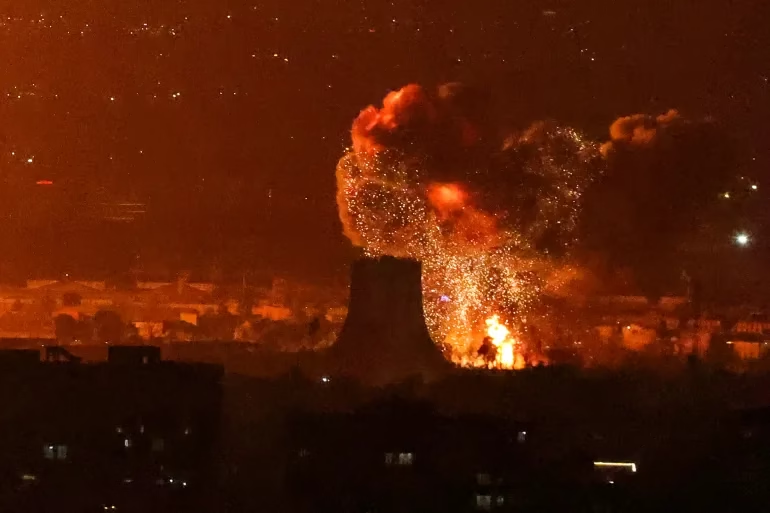
At the center of the latest controversy is the Strait of Hormuz, a narrow but vital waterway through which roughly one-fifth of global oil flows. As Iran escalates its response to US and Israeli strikes, the passage has effectively been disrupted.
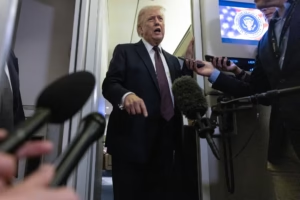
Trump did not hold back when addressing the international response.
“For 40 years, we’re protecting you, and you don’t want to get involved,” Trump told reporters. “We strongly encourage the other nations to get involved with us and get involved quickly and with great enthusiasm.”
Still, frustration was evident in his tone.
“Some are very enthusiastic about it, and some aren’t,” he said. “Some are countries that we’ve helped for many, many years. We’ve protected them from horrible outside sources, and they weren’t that enthusiastic. And the level of enthusiasm matters to me.”
However, several key allies, including European nations and Asian partners, have already signaled they will not deploy naval forces, fearing escalation into a broader war.
Gulf Under Fire As Conflict Spreads
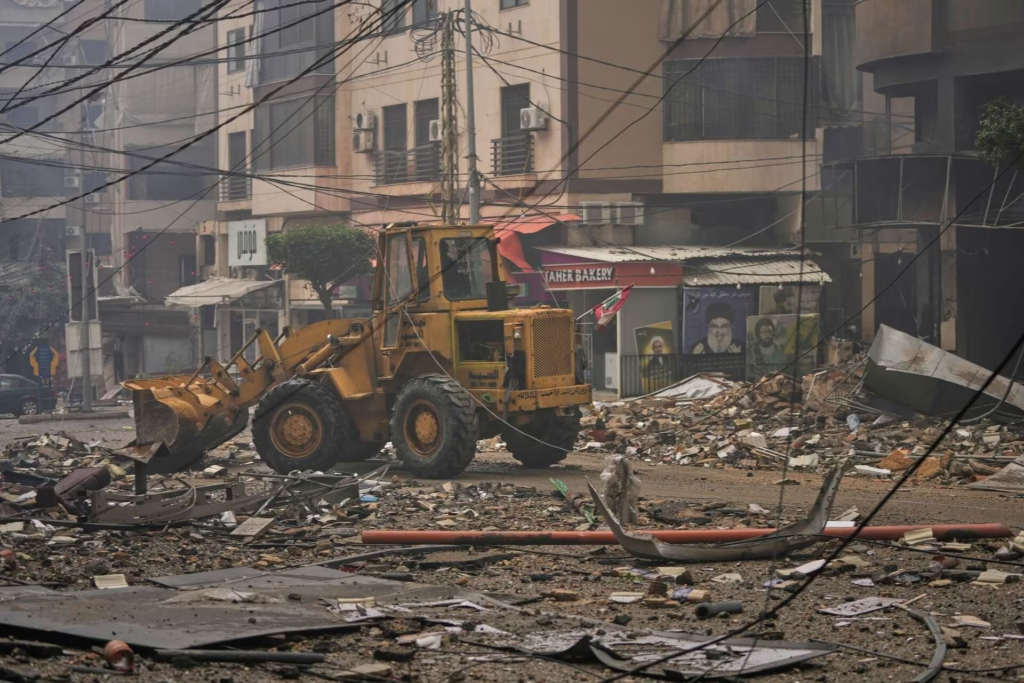
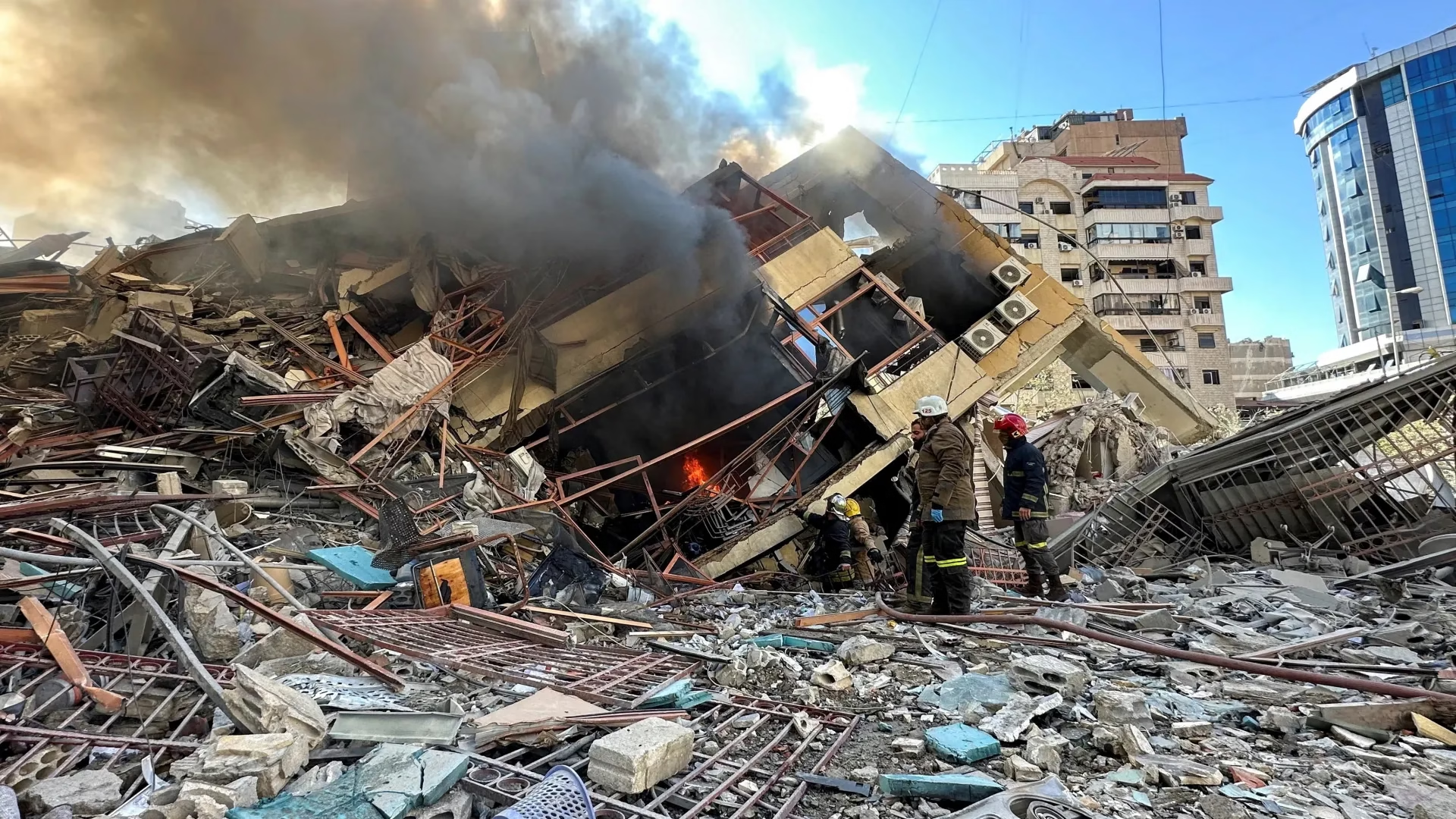
Across the region, the war’s impact is becoming increasingly visible. The UAE temporarily closed its airspace following a wave of Iranian missile and drone attacks, calling it “an exceptional precautionary measure.”
Air defense systems across Gulf states remain on high alert. Bahrain alone reported intercepting hundreds of missiles and drones since the conflict began, while Saudi Arabia confirmed multiple interceptions within hours.
In Iraq, authorities condemned a string of attacks targeting critical sites, including a Baghdad hotel and the US embassy. Officials warned these incidents threaten the country’s “security and stability.”
“These criminal acts have serious repercussions for our country, and undermine the government’s efforts towards reconstruction and prosperity,” a statement said.
Civilian Toll And Daily Fear
For civilians, the war is far more than geopolitics. It is a daily reality filled with fear, uncertainty, and disruption.
In Tehran, one father described how he shields his children from the trauma of airstrikes.
“Whenever a strike happens, I tell my child it’s just thunder, but they understand that I’m not telling the truth. When I say it’s thunder and the sound of the strike comes, they ask from the window, ‘Well, Dad, where’s the rain? Why isn’t it raining?’”
He added, “Their reaction is usually like this, but we don’t want to give the child too much stress in these conditions. And we don’t want the danger to leave a mark on their mind.”
Meanwhile, in Israel, civilians face relentless alarms and shelter runs.
They are caught in what one observer described as a “rinse and repeat” cycle, with sirens, interceptions, and brief moments of calm before the next wave.
Mounting Military And Economic Pressure
The scale of the conflict continues to grow. US Central Command confirmed that about 200 US troops have been injured during the war, including 10 who are “seriously wounded.”
At the same time, Iran’s Revolutionary Guard issued stark warnings, urging evacuation of US-linked industrial sites across the region ahead of potential strikes.
Energy markets are also feeling the strain. Oil exports from the Middle East have dropped sharply, while prices have surged, raising concerns about global economic fallout.
Even political leaders are beginning to feel the pressure. Rising fuel costs could complicate domestic agendas, particularly in the United States, where economic concerns often shape election outcomes.
Diplomacy Stalled As War Deepens
Despite growing calls for de-escalation, meaningful diplomatic progress remains elusive.
“Architecture for diplomacy exists, but nobody is yet walking through the door,” one analyst observed.
Iran insists it has not sought negotiations, while the White House has rejected repeated attempts by regional allies to initiate talks. On another front, potential negotiations between Lebanon and Israel remain stalled over ceasefire conditions.
So, for now, both sides appear entrenched.
A Conflict With No Clear Endgame
Questions are mounting about the long-term strategy behind the war. Analysts point to a lack of clarity in Washington’s objectives, particularly regarding Iran’s nuclear program and broader regional goals.
At the same time, Iran appears to be pursuing a strategy of endurance, aiming to stretch its adversaries militarily and economically.
The result is a dangerous stalemate.
As missiles continue to fly and alliances strain under pressure, one question looms larger than ever, how far can this conflict go before it pulls even more nations into its orbit?