
The 18th day of the war brought another surge of violence, another round of political shockwaves, and another reminder that this conflict is stretching far beyond Iran and Israel. Senior Iranian figures were reportedly killed, regional targets came under attack, and fresh doubts emerged over whether diplomacy still has any real path forward.
At the same time, Washington and its allies appear to be drifting further apart. While Israel presses ahead with strikes on top Iranian officials, Donald Trump is lashing out at partners who refuse to join efforts around the Strait of Hormuz. The war is widening, and so is the uncertainty around what comes next.
Israel Says It “Eliminates” More Iranian Leaders
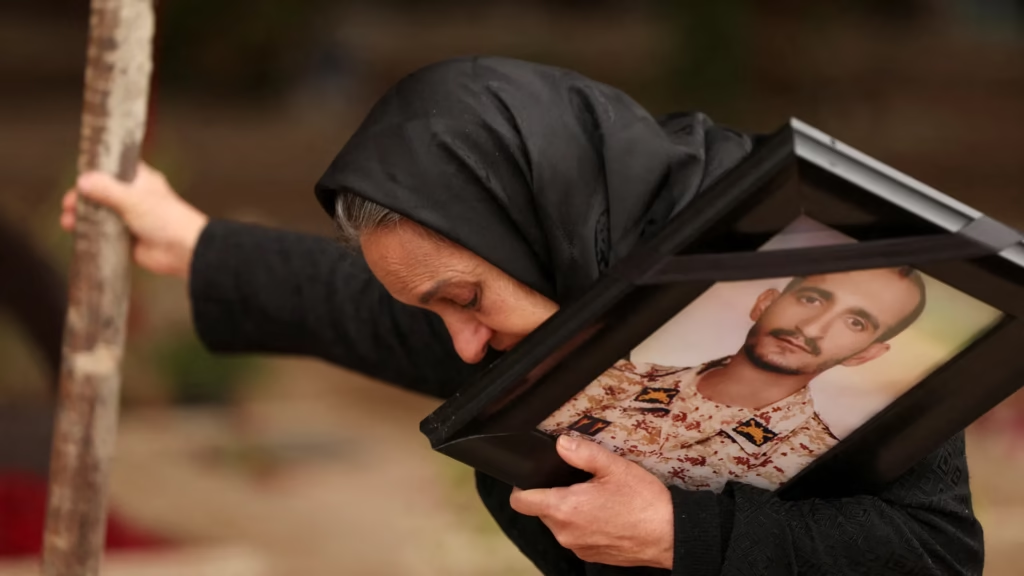
Israel says it killed Ali Larijani, Iran’s top security chief, in a strike on Tehran late Monday, marking one of the biggest blows yet to Iran’s senior leadership. Tehran has not publicly confirmed the claim, but the reported killing underscores Israel’s willingness to target even well-known insiders viewed by some as more pragmatic figures within the regime.
The message from Israel was unmistakable. Defense Minister Israel Katz said the military will “continue hunting” Iran’s leadership, a line that signals how determined Israel remains to keep pushing up the chain of command.
Soon after Larijani’s reported death, Israel also announced that it had killed Gholamreza Soleimani, the head of the Basij paramilitary force. The military described that strike as a “significant blow to the regime’s security command-and-control structures.” For Iran’s rulers, that is more than symbolic. It strikes at the machinery they rely on to maintain internal control.
Baghdad And The Gulf Face New Attacks
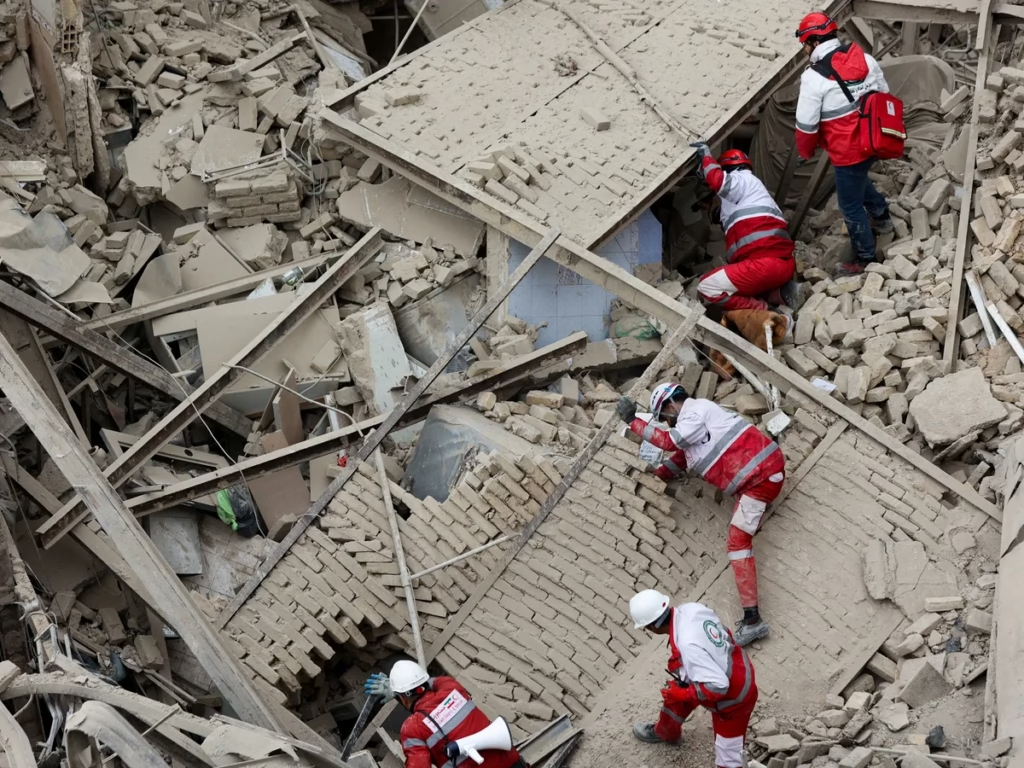
Meanwhile, the war’s fallout keeps spreading across the region. Early Tuesday, drones targeted the US Embassy and a hotel in Baghdad, while the Majnoon oil field in southern Iraq also came under attack, according to Iraqi officials.
The Gulf, too, remains under pressure. The United Arab Emirates temporarily shut its airspace after drone strikes sparked fires at the Fujairah oil zone and the Shah gas field. A tanker near Fujairah port was also hit by what officials called an unknown projectile, adding to the growing list of maritime incidents around the Arabian Gulf, the Strait of Hormuz, and the Gulf of Oman.
Later in the day, falling debris from an intercepted missile killed one person in Abu Dhabi. That grim detail captured the broader reality of this war. Even when defenses work, the danger does not disappear.
Trump Faces Blowback At Home
Not all of the resistance to this war is coming from abroad. In Washington, one of the sharpest breaks came from inside Trump’s own national security circle.
Joe Kent, a senior Trump-appointed intelligence official, resigned abruptly and left little room for doubt about why. In his resignation letter, he wrote: “I cannot in good conscience support the ongoing war in Iran. Iran posed no imminent threat to our nation, and it is clear that we started this war due to pressure from Israel and its powerful American lobby,”
That is not quiet bureaucratic disagreement. That is a direct challenge to the administration’s justification for war.
Trump brushed the resignation aside, calling it a “good thing” and saying Kent was “very weak on security.” Still, the resignation adds to a growing sense that even within the administration, consensus is fraying.
Diplomacy Looks Stalled And Strained
If there is a diplomatic off-ramp, it is getting harder to see.
Iranian officials have reportedly tried to reestablish contact with Trump’s Middle East envoy, hoping to reopen a negotiating channel. However, White House officials say Trump does not want talks right now. Part of the hesitation, according to one official, is uncertainty over whether Iran’s new supreme leader, Mojtaba Khamenei, “is actually in charge,”
That uncertainty is feeding paralysis. Iran’s foreign minister has denied recent contact with the envoy, while American officials insist outreach did happen. In a war already clouded by distrust, even the basic facts of diplomacy are disputed.
European allies are keeping their distance as well. Under the banner “Not NATO’s war”, EU foreign ministers decided against expanding naval operations around the Strait of Hormuz. Trump, furious at the reluctance of allies to help reopen the waterway, responded by declaring on social media that the United States no longer needs NATO’s help and “NEVER DID!”
Behind closed doors, frustration is growing. One European diplomat summed up the mood this way: “If there was more diplomatic engagement on the US side, they might be able to get a more positive outcome,”
Fighting Intensifies Across Iran, Israel, And Lebanon
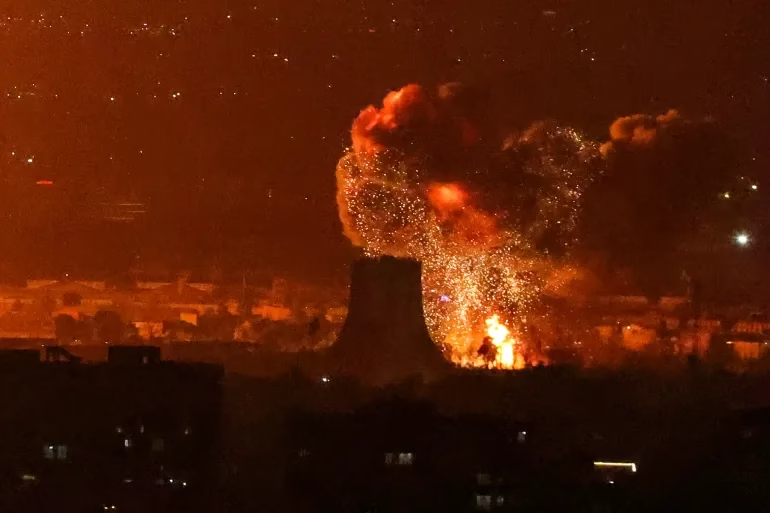
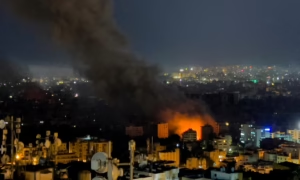
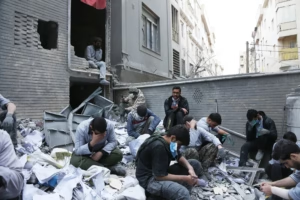
On the ground, the war remains relentless. Israel, Iran, and Hezbollah continued trading strikes, with northern Israel hit by rockets and drones that wounded four people. Israel, in turn, launched another wave of attacks on Tehran, where rescue workers were still trying to reach people trapped beneath rubble.
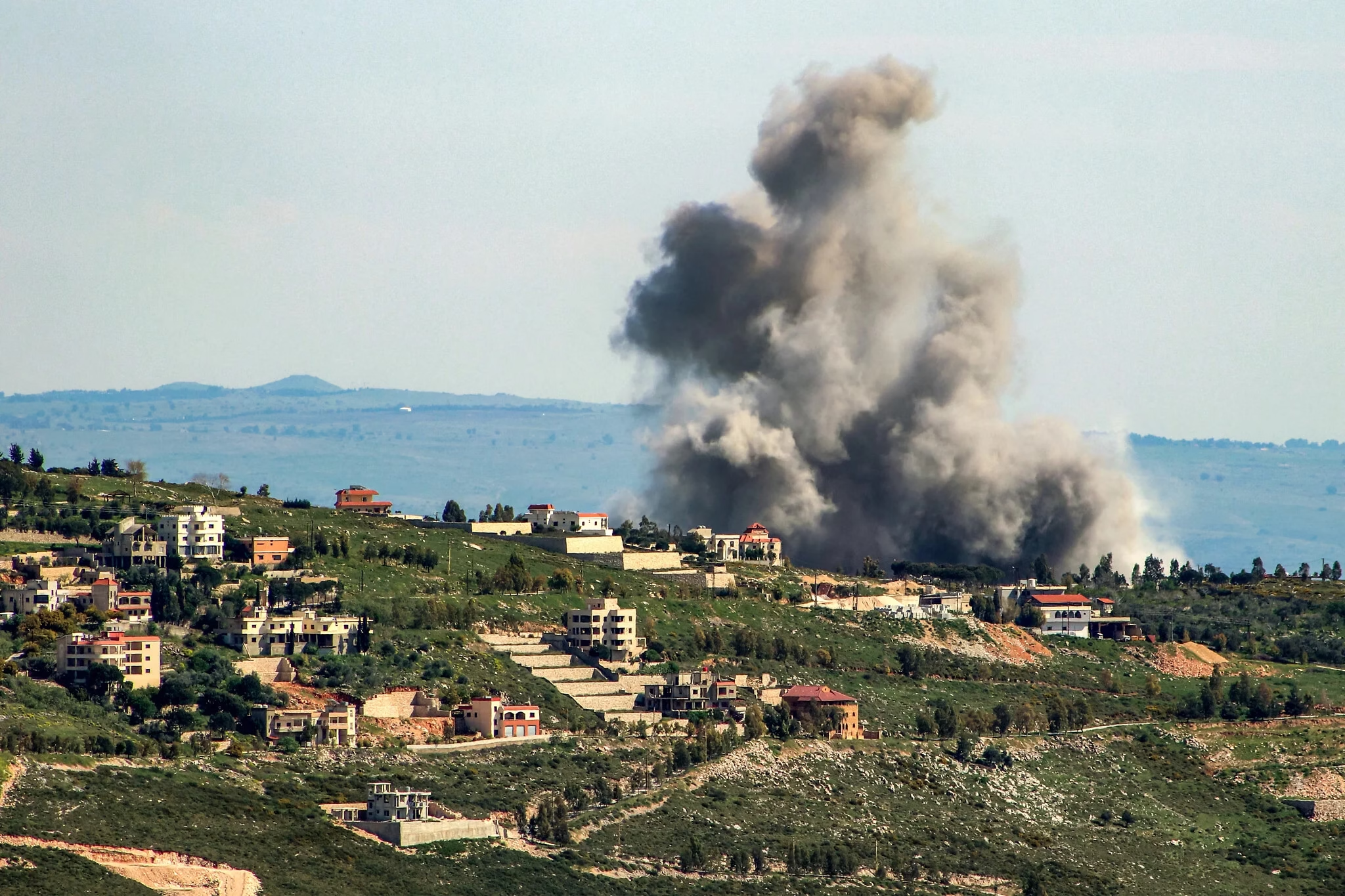
Lebanon is also becoming harder to separate from the broader conflict. Israeli airstrikes hit Beirut’s southern suburbs, and Israel says it is expanding “limited” ground operations there. That has triggered alarm among Western governments that fear the war could widen even further.
The leaders of Canada, France, Germany, Italy, and the United Kingdom said they were “gravely concerned” by the escalating violence in Lebanon. More pointedly, they warned that any Israeli invasion “must be averted.”
Those words matter, but so do the numbers. Lebanese authorities say more than 1 million people have been displaced internally, while at least 850 have been killed since the latest phase of fighting began. The humanitarian pressure is no longer a side effect of war. It is becoming one of its defining features.
A War Growing Wider, With No Clear End In Sight
Day 18 did not bring clarity. It brought more strikes, more warnings, and more evidence that this war is moving in several dangerous directions at once. Israel is hitting deeper into Iran’s leadership ranks. Iran and its allies are still capable of disrupting the region. The US is facing open dissent at home. And diplomacy, for now, looks bruised and stalled.
That leaves the war in a deeply unstable place. It is expanding geographically, hardening politically, and exacting a heavier toll on civilians with each passing day.