

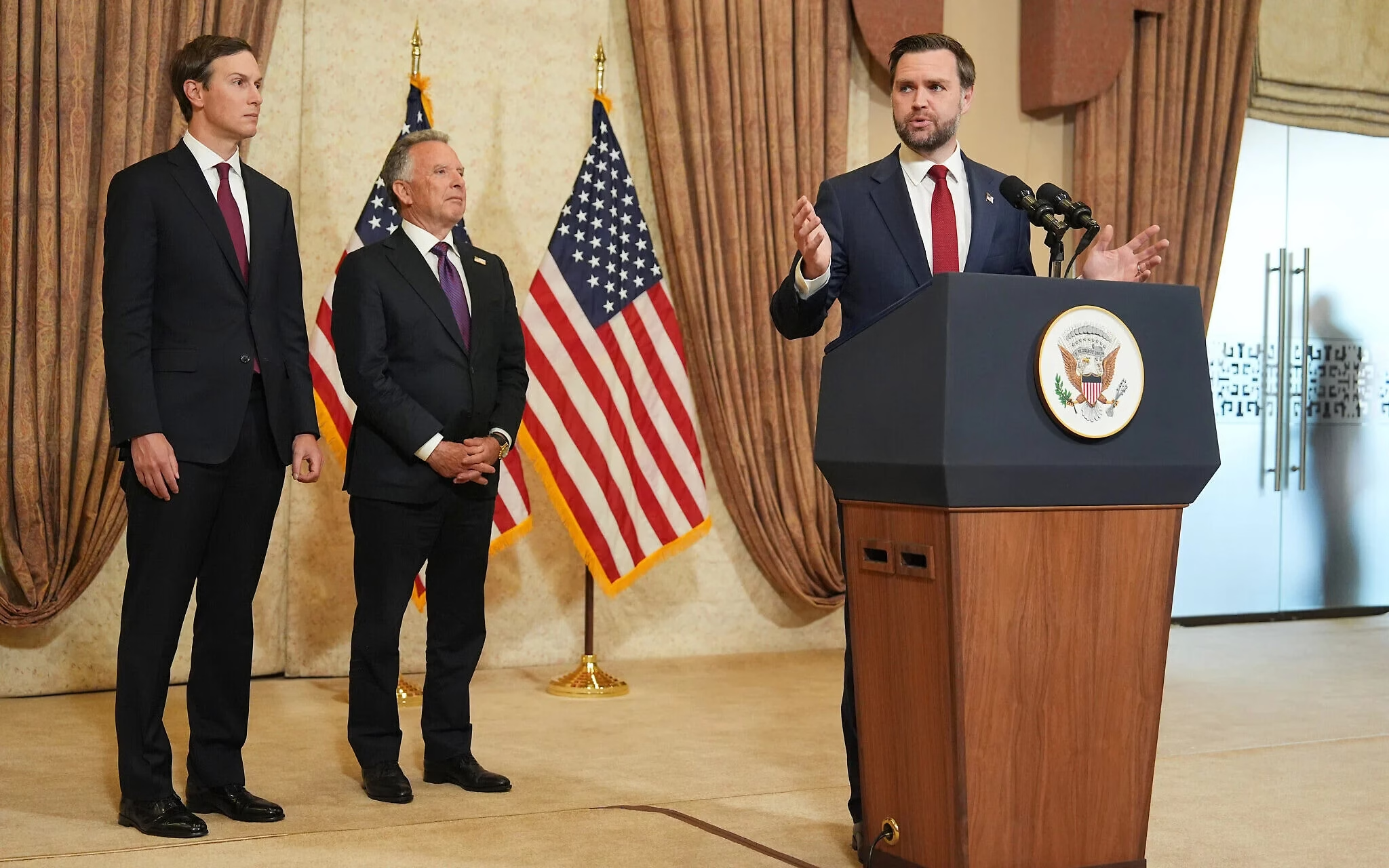
A high-stakes diplomatic push is now underway as Washington prepares to send a senior delegation to Pakistan for direct talks with Iran, signaling a possible shift from confrontation toward negotiation.
The move comes just days after a fragile ceasefire, with officials suggesting there may finally be a path toward de-escalation in a region long defined by tension and mistrust.
US Delegation Heads To Pakistan
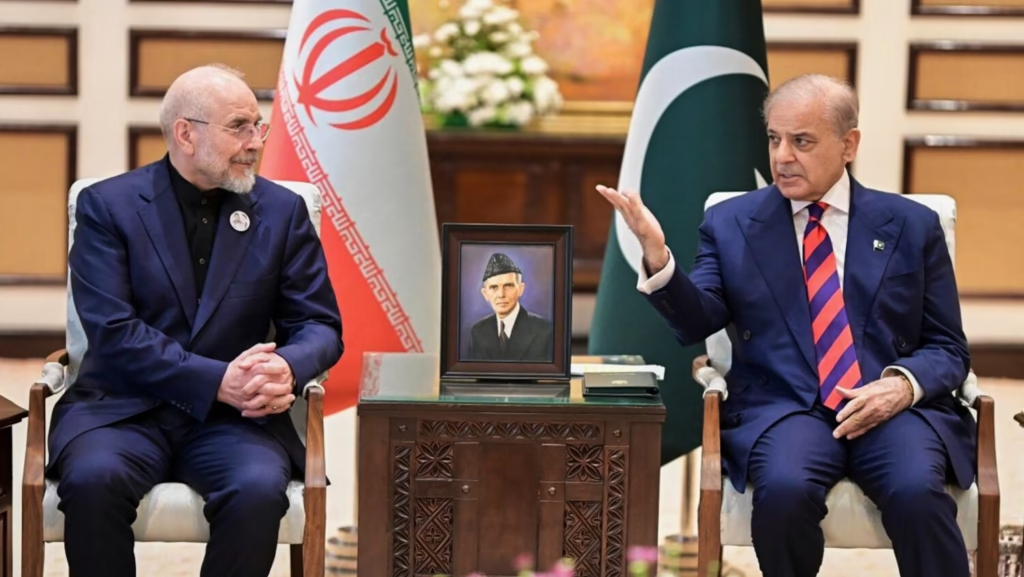
US Vice President JD Vance will lead a delegation in talks with Iran in Pakistan beginning on 11 April, according to White House Press Secretary Karoline Leavitt.
Meanwhile, the talks will include key figures such as special envoy Steve Witkoff and Jared Kushner, all expected to meet Iranian officials in Islamabad.
Leavitt framed the moment as a turning point, saying the ceasefire has created an “opening” that could pave the way for lasting peace.
Still, what exactly is on the table remains unclear.
Confusion Surrounds Peace Proposals
However, uncertainty continues to cloud the negotiations. Reports about proposed agreements remain inconsistent, and officials have yet to outline concrete terms.
Leavitt pushed back against speculation, dismissing reports of a 10-point Iranian proposal as inaccurate. She revealed that an initial offer from Tehran was rejected for being “fundamentally unserious”, before a revised version was presented.
At the same time, she made Washington’s stance unmistakably clear.
“The idea that President Trump would ever accept an Iranian wish list as a deal is completely absurd,” she said.
Strait Of Hormuz Tensions Persist
The situation in the Strait of Hormuz remains another major concern. The waterway is critical for global energy supplies, yet tensions there have escalated sharply.
Earlier, Iranian forces warned ships that they would be “destroyed” if they attempted to pass through without permission.
However, Leavitt suggested a different tone behind closed doors, noting that Iran’s public messaging does not fully reflect private discussions.
She also stated that Iran has agreed to reopen the passage, even as threats continue to circulate.
White House Declares Military Success
During the briefing, Leavitt declared an American “victory” following recent military operations.
According to her, Operation Epic Fury achieved its primary objectives, including dismantling Iran’s naval capabilities and weakening its drone and missile programs.
That said, questions remain about the long-term impact of these claims and whether they translate into lasting stability.
Trump’s Rhetoric Sparks Debate
The ceasefire itself followed a dramatic warning from President Trump, who posted that Iran’s “civilization will die” if it failed to reach a deal.
The statement quickly drew criticism across the political spectrum, with concerns raised about the humanitarian consequences of escalating military action.
Leavitt, however, stood firmly behind the president.
She argued that he maintains the “moral high ground” against Iran’s “rogue regime”, adding that his aggressive negotiating style has driven results.
“His very tough rhetoric and his tough negotiating style is what has led to the result you are all witnessing today,” she said.
NATO Rift Deepens
Meanwhile, tensions are also rising between Washington and its allies.
Trump is set to meet NATO Secretary-General Mark Rutte, with expectations of a tense discussion. Leavitt described the upcoming meeting as a “very frank and candid conversation”.
The president has openly criticized NATO, claiming it failed to support the US during the Iran conflict.
“Nato was tested and they failed,” Leavitt said, directly quoting a letter from President Trump.
She also revealed that Trump has “discussed” the possibility of leaving NATO, though no concrete steps have been outlined.
Growing Strains With Allies
In contrast, several NATO members have distanced themselves from the conflict, viewing it as unnecessary and risky.
Trump has previously stated that allies were unwilling to get involved, further straining relations.
Even before the latest crisis, disagreements were already brewing, particularly over Greenland, a Danish territory that Trump has repeatedly expressed interest in acquiring, despite strong opposition from European partners.
Now, with diplomacy underway in Pakistan, the stakes could not be higher. The coming days may determine whether this fragile pause turns into something more permanent, or collapses back into confrontation.