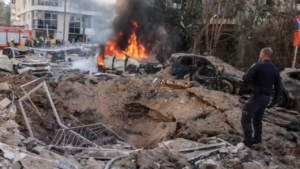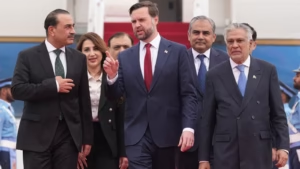

The war rhetoric around Iran took another sharp turn as the White House warned Tehran that President Trump is prepared to intensify the conflict if a peace agreement does not materialize. Even as Washington insists talks are still moving forward, Iranian officials and military figures are openly mocking the idea of serious negotiations. On the battlefield, Israel is expanding operations in Lebanon, Hezbollah is digging in, and global markets are swinging with every new headline.
White House Turns Up The Pressure
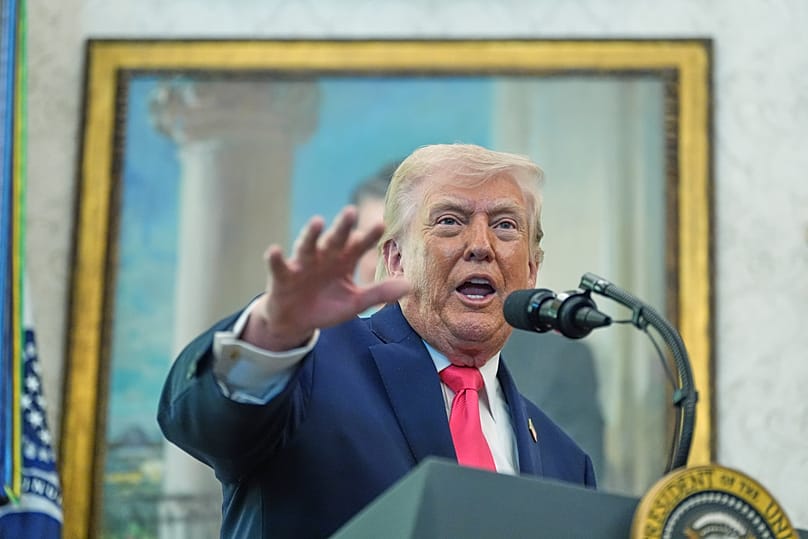
The most striking warning came from press secretary Karoline Leavitt, who made clear that the administration sees Iran as cornered and running out of room.
“If Iran fails to accept the reality of the current moment, if they fail to understand that they have been defeated militarily and will continue to be, President Trump will ensure they are hit harder than they have ever been hit before,” Leavitt said in a briefing.
“President Trump does not bluff and he is prepared to unleash hell,” Leavitt said. “Iran should not miscalculate again.”
At the same time, Leavitt insisted diplomacy has not collapsed.
“Talks continue. They are productive,” Leavitt said when asked about the Iranian report, adding that there were “elements of truth” to media reports on the details of a 15-point U.S. plan setting out demands on Tehran.
That public confidence from Washington came even after Iranian state media said Tehran had rejected the administration’s terms as unrealistic and detached from conditions on the ground.
Iran Rejects U.S. Terms And Mocks The Talks
Iran’s state-backed media described the U.S. proposals as unacceptable, and officials in Tehran signaled they would decide for themselves if and when the war ends.
According to Iranian reporting, the diplomatic terms passed through an intermediary were “excessive and disconnected from the reality of America’s failure on the battlefield.”
Iran’s leadership also insisted that any diplomatic settlement “will only occur on Tehran’s own terms and timeline.”
One unnamed official, cited by state media, went even further, saying Iran would not allow Washington to dictate the end of the conflict. The official reportedly said Iran will end the war when it chooses and when its own demands are met.
Those demands reportedly include a halt to killings of Iranian officials, guarantees against future war, reparations, an end to hostilities and Iran’s “exercise of sovereignty over the Strait of Hormuz.”
Iranian military spokesperson Lt. Col. Ebrahim Zolfaghari mocked the idea that Washington had gained leverage.
“The strategic power you used to talk about has turned into a strategic failure,” he said. “The one claiming to be a global superpower would have already gotten out of this mess if it could. Don’t dress up your defeat as an agreement. Your era of empty promises has come to an end.”
He also taunted the administration directly: “Have your internal conflicts reached the point where you are negotiating with yourselves?”
Then came perhaps the bluntest rejection of all: “Our first and last word has been the same from day one, and it will stay that way: Someone like us will never come to terms with someone like you,” Zolfaghari said. “Not now, not ever.”
Trump Says Iran Wants A Deal
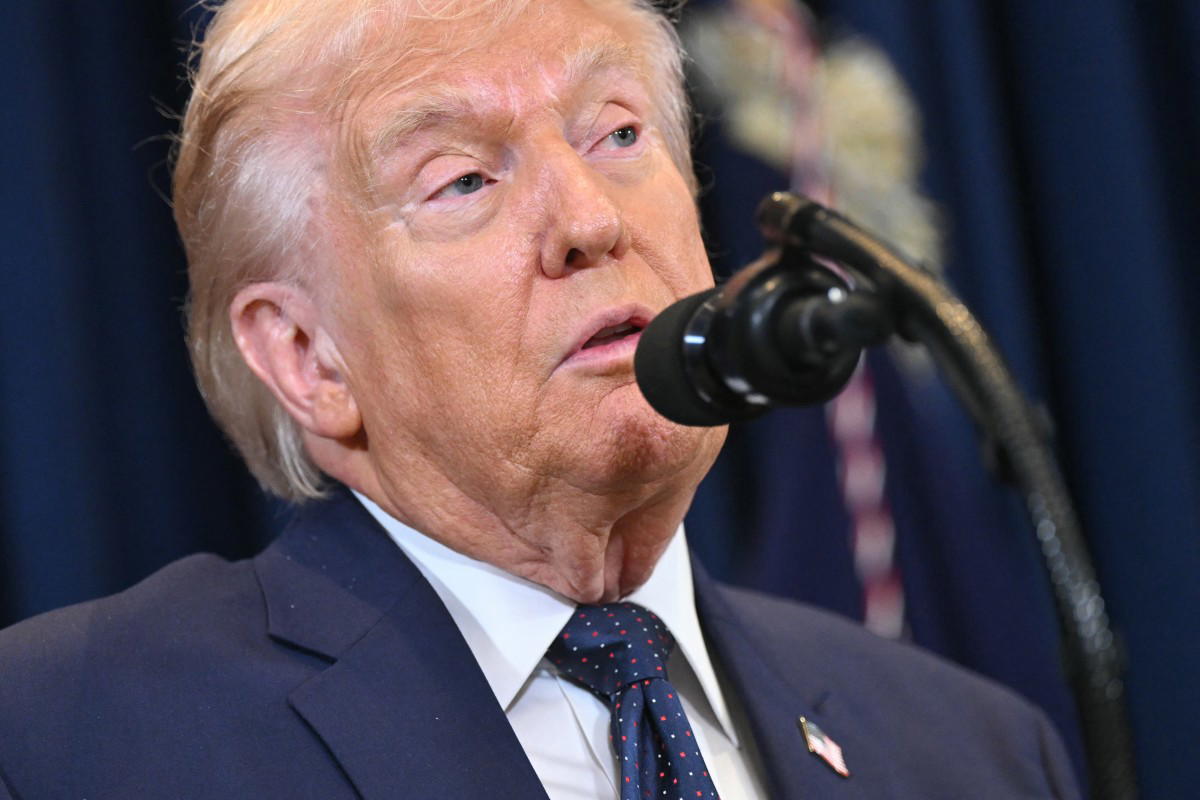
Despite Iran’s denials, Trump is still presenting a very different picture. He told Republican lawmakers that Tehran wants a settlement, even if its negotiators are too afraid to admit it publicly.
“They are negotiating, by the way, and they want to make a deal so badly. But they’re afraid to say it, because they figure they’ll be killed by their own people,” Mr. Trump told a dinner for Republican members of Congress.
Trump also kept insisting the military campaign had already achieved its core mission.
“This war has been won,” Mr. Trump said in the Oval Office. “The only one that likes to keep it going is the fake news.”
He described a relentless strike campaign against Iran’s leadership, saying: “We killed all their leadership,” he said when CBS News’ Ed O’Keefe asked which Iranians the U.S. was now negotiating with. “And then they met to choose new leaders and we killed all of them. And now we have a new group, and we can easily do that, but let’s see how they turn out.”
Trump then added, “It’s — we have, really, regime change,” the president said. “You know, this is a change in the regime, because the leaders are all very different than the ones that we started off with that created all those problems. So this was, I think we can say, Jason, this is regime change, right?”
When asked why he trusts Iran, Trump replied, “I don’t trust anybody,” Mr. Trump responded. “I don’t trust you.”
Pressed on why talks should continue at all, he gave a short answer: “Because they’re going to make a deal,” Mr. Trump said.
Is It A War Or A Military Operation?
Trump is also trying to manage the legal language around the conflict. Late Wednesday, he said he is deliberately avoiding the word “war” because Congress has not approved one.
“I won’t use the word ‘war’ because they say, if you use the word war, that’s maybe not a good thing to do,” the president said at an event for House Republicans’ fundraising arm. “They don’t like the word ‘war,’ because you’re supposed to get approval, so I’ll use the word military operation, which is really what it is.”
That explanation landed as Democrats continue accusing the administration of sidestepping Congress. Under the War Powers framework, presidents face limits on prolonged military action without authorization, and critics say this conflict is testing that boundary in real time.
Concern Grows On Capitol Hill
Even some Republicans are signaling frustration. After a classified briefing, House Armed Services Committee Chair Mike Rogers said lawmakers are still not getting the full picture from the Pentagon.
Rogers told reporters that members “want to know more about what’s going on, what the options are and why they’re being considered.”
He added that “we’re just not getting enough answers.”
Meanwhile, Democratic Rep. Gregory Meeks accused House Republicans of shielding the administration from scrutiny.
“Chairman Mast has refused to hold a single public hearing with top administration officials on Iran. Not as 13 U.S. servicemembers were killed and more wounded, and not as the administration prepares to ask American taxpayers for $200 billion to fund a war that President Trump has no plan to end,” Meeks said in a statement. “Instead, House Republicans have denied the American people the opportunity to hear directly why Trump’s diplomacy failed.”
He continued: “Chairman Mast’s belief that the committee doesn’t need to hear from these witnesses only confirms what is now undeniable: this House Majority is acting as a rubber stamp for the Trump administration, more interested in shielding it from scrutiny than conducting oversight,” he added. “If Republicans stand by this open-ended war, the administration’s everchanging and conflicting rationale for launching it, and the higher costs it is imposing on American families, then they should gladly defend their position in public. Their refusal to do so speaks for itself.”
Pentagon Says Campaign Is On Track
Military leaders, however, are projecting confidence. CENTCOM commander Adm. Brad Cooper said Operation Epic Fury remains “on plan or ahead of plan.”
He said U.S. forces have struck more than 10,000 military targets and claimed Iran’s naval power has been devastated.
“My operational assessment is they have now lost the ability to meaningfully project naval power and influence around the region and around the world,” he said.
House Speaker Mike Johnson painted a similarly optimistic picture, saying Operation Epic Fury is “almost done” and is “wrapping up.”
“The buildup of troops is very different than ‘on the ground,'” Johnson said at the U.S. Capitol on Wednesday. “We don’t have boots on the ground. I don’t think that’s the intention, but I think Iran should watch that buildup, and they need to take note of that.”
Johnson said the objectives of the operation “have been met,” but access to the Strait of Hormuz still needs to be “straightened out.” Johnson said that is a “giant project” that will require the aid of “international partners.”
He added that the operation will be “done in short order, and that’ll be right on schedule.”
Defense Secretary Pete Hegseth offered perhaps the clearest summary yet of the administration’s posture.
“The air campaign that we’ve conducted, that Israel’s conducted alongside us, was one for the history books, truly,” Hegseth said. “And it’s because we have a president of the United States that, when he sends his warfighters out to fight, he unties their hands to actually go out and close with and destroy the enemy as viciously as possible from moment one.
“And that’s why we see ourselves as part of this negotiation as well,” the defense secretary said. “We negotiate with bombs. You have a choice, as we loiter over the top of Tehran, as the president talked about, about your future.”
Hezbollah And Israel Dig In
The conflict is also widening beyond Iran itself. Hezbollah leader Naim Qassem rejected any attempt to negotiate with Israel while attacks continue.
“When negotiations with the Israeli enemy are proposed under fire, this is an imposition of surrender,” Qassem said, rejecting the Lebanese president’s initiative to start direct negotiations “with an enemy that occupies our land and carries out daily attacks.”
Later, he repeated the same core message, saying that negotiations under fire would amount to “surrender.”
Hezbollah also called for “national unity,” while Israel said it is expanding a security strip in Lebanon. Prime Minister Benjamin Netanyahu said the military had already “created a genuine security zone” and was pushing farther.
“We are simply creating a larger buffer zone” that could prevent a ground invasion of Israel and missile attacks, Netanyahu said in a video shared by his office.
Netanyahu also said the broader campaign remains “in full swing” and that “the issue of disarming Hezbollah is at the forefront of” Israel’s objectives in the Middle East. He added that Israel is “fully determined to do everything necessary to fundamentally change the situation in Lebanon.”
The Human And Global Cost Keeps Rising
While officials trade threats and declarations of victory, the toll keeps mounting. U.S. Central Command says 290 American service members have been wounded since the war began on Feb. 28. Of those, 255 have returned to duty, while 10 remain seriously wounded.
The United Nations is warning that the broader consequences are becoming impossible to ignore. Secretary-General António Guterres urged an immediate end to the fighting, especially as the Strait of Hormuz remains effectively closed.
“Across the region & beyond, civilians are enduring serious harm & living under profound insecurity,” Guterres wrote on social media. “The @UN is working to minimize the consequences of the war. And the best way to minimize those consequences is clear: End the war – immediately.”
Earlier, he issued an even starker warning.
“The war is out of control”
“The conflict has broken past the limits even leaders thought unimaginable,” he said.
“The world is staring down the barrel of a wider war, a rising tide of human suffering, and a deeper global economic shock,” Guterres said.
He also said “Hezbollah must stop launching attacks into Israel,” and “Israel must stop its military operations and strikes in Lebanon, which are hitting civilians the hardest.”
Finally, he stressed that diplomatic efforts now underway cannot fail. “they must succeed.”
“We need a way out of this disaster,” he said.
Markets Swing And Insider Trading Questions Emerge
Investors have been trying to read every signal from Washington and Tehran. At one stage, oil prices dropped sharply and stock markets climbed on hopes of de-escalation. Later, oil rose again and stocks turned mixed as the war and the diplomacy both looked unsettled.
There is also growing scrutiny over a spike in oil futures trading shortly before Trump posted that talks with Iran were underway. That sudden activity has prompted concerns from some financial experts about possible insider trading, especially because the president’s message sent oil lower and the Dow sharply higher.
For now, the battlefield, the diplomatic channel and the markets are all telling different stories. That is what makes this moment so volatile. Washington says talks are real. Tehran says the U.S. is deluding itself. Trump says Iran will make a deal. His White House says that if it does not, hell is waiting.