

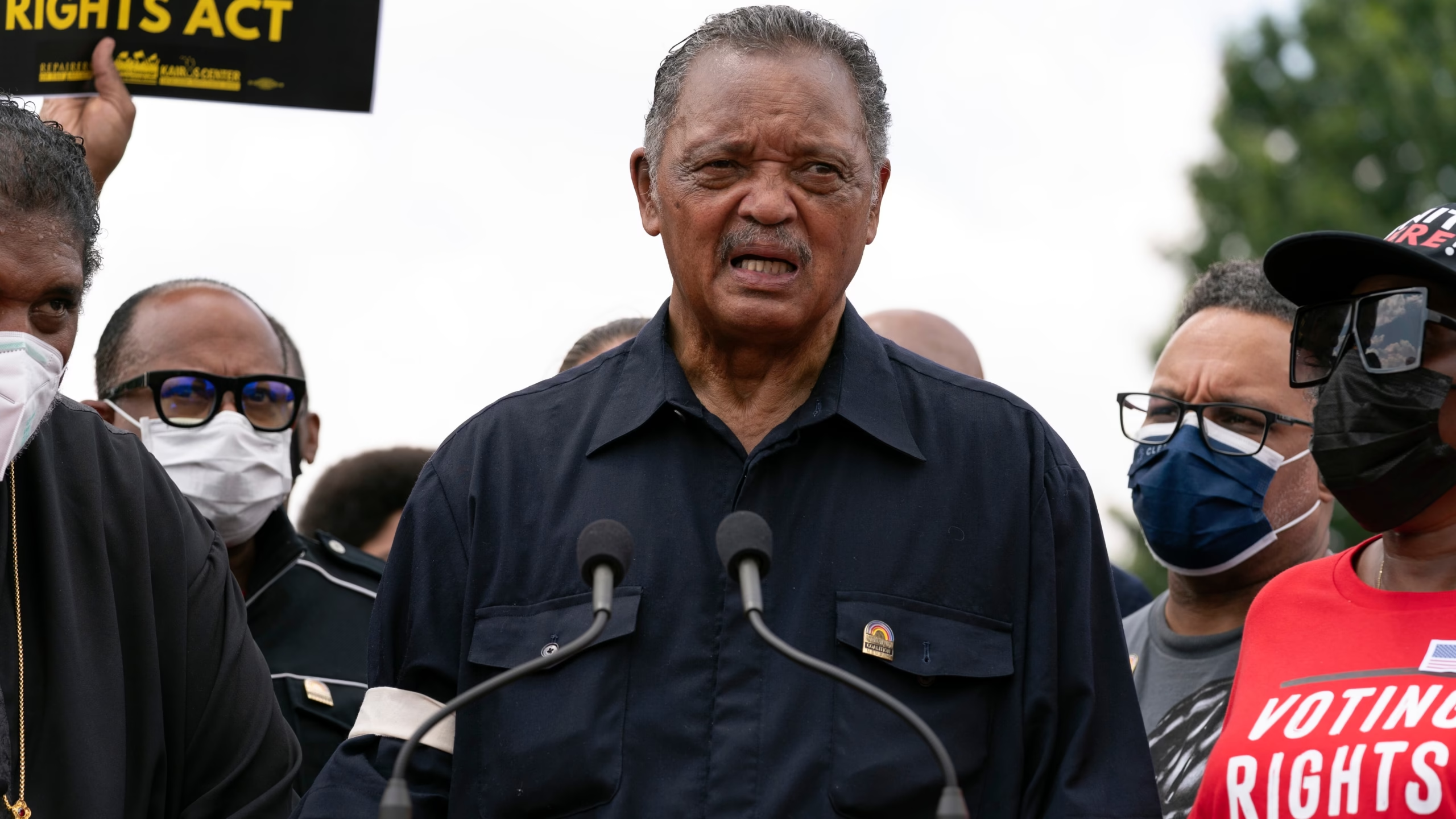
The Rev. Jesse Jackson, one of the most recognizable figures of the American civil rights movement and the founder of the Rainbow PUSH Coalition, has died at the age of 84. His family confirmed his passing Tuesday morning, marking the end of a decades-long career spent advocating for racial equality, voting rights, and economic justice.
Jackson’s influence stretched far beyond the civil rights era. He became a prominent national political voice, a presidential candidate, and a global advocate for marginalized communities. For many supporters, his life’s work symbolized the ongoing struggle for fairness and opportunity in American society.
Family Announces Death Of Civil Rights Icon
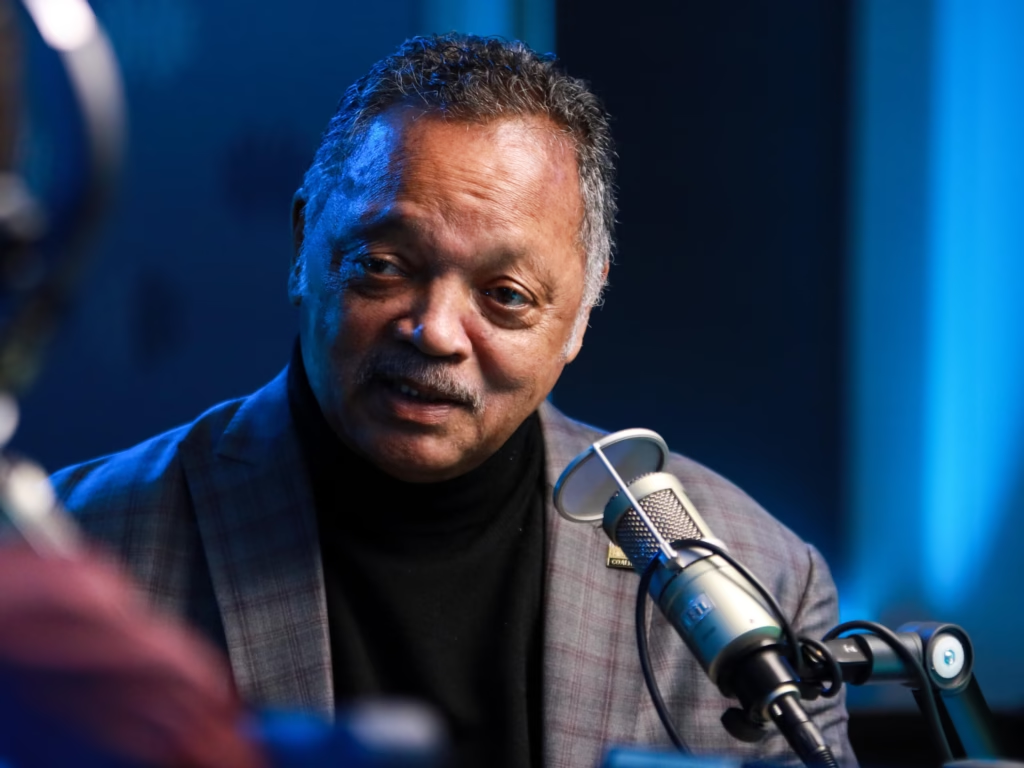
Jackson’s family confirmed the news of his passing in a statement released Tuesday morning.
“It is with profound sadness that we announce the passing of civil rights leader and founder of the Rainbow PUSH Coalition, the Honorable Reverend Jesse Louis Jackson Sr. He died peacefully on Tuesday morning, surrounded by his family,” the statement said.
Family members described him not only as a public figure but also as someone deeply committed to helping others.
“Our father was a servant leader — not only to our family, but to the oppressed, the voiceless, and the overlooked around the world,” the Jackson family said. “We shared him with the world, and in return, the world became part of our extended family. His unwavering belief in justice, equality, and love uplifted millions.”
A cause of death was not immediately disclosed.
Health Struggles In Later Years
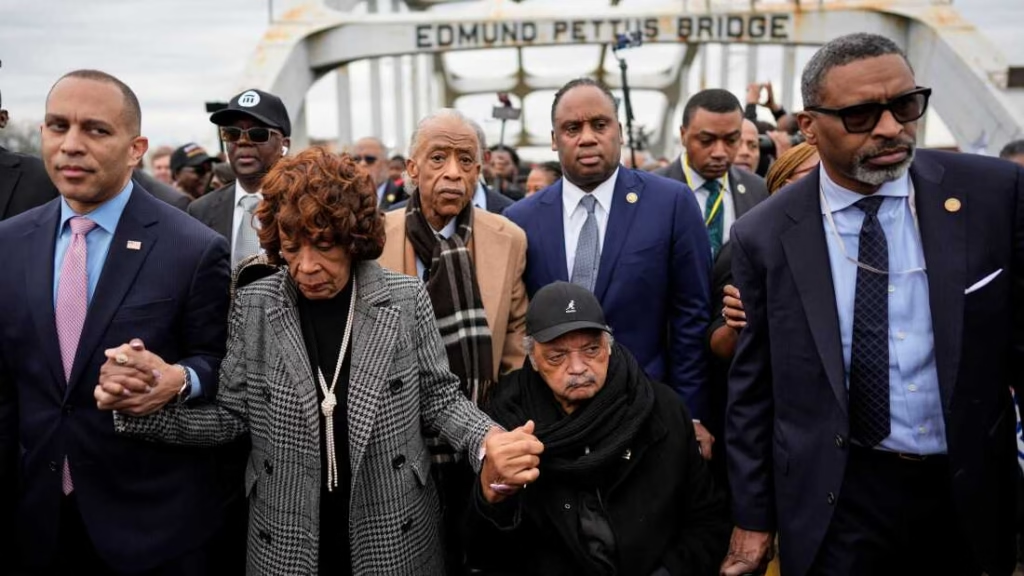
In recent years, Jackson had faced multiple health challenges. In 2017, he publicly revealed that he had been diagnosed with Parkinson’s disease.
Doctors also treated him for progressive supranuclear palsy, a rare neurological disorder that gradually affects movement and speech. Despite those health setbacks, Jackson continued to appear at events and remained involved in civil rights advocacy.
In 2021, he was arrested twice while participating in protests opposing the Senate filibuster rule, demonstrating that his activism continued even as his health declined.
Early Life In Segregated South
Jackson was born Oct. 8, 1941, in Greenville, South Carolina, during an era of legally enforced racial segregation in the United States.
As a young man, he excelled academically and athletically. He initially attended the University of Illinois on a football scholarship before transferring to North Carolina Agricultural and Technical College, where he graduated in 1964.
His activism began early. At just 18 years old, Jackson was arrested for taking part in a sit-in at a segregated public library. That moment marked the start of his lifelong involvement in the civil rights movement.
Working Alongside Martin Luther King Jr.
After graduating from college, Jackson left his studies at Chicago Theological Seminary to join the Rev. Dr. Martin Luther King Jr. in Selma, Alabama.
He later became a prominent leader within the Southern Christian Leadership Conference. With King’s backing, Jackson headed Operation Breadbasket in Chicago, a campaign designed to improve economic opportunities for Black Americans through employment and business initiatives.
Jackson was present in Memphis in 1968 when King was assassinated, a pivotal moment that reshaped the civil rights movement.
Founding The Rainbow PUSH Coalition
In the years that followed King’s death, Jackson founded an organization that would later become the Rainbow PUSH Coalition. The group focused on civil rights advocacy, voter registration, and economic empowerment.
Over the course of several decades, Jackson’s activism earned him widespread recognition. He received numerous honorary degrees and, in 2000, was awarded the Presidential Medal of Freedom by President Bill Clinton.
Even without holding elected office, Jackson remained a powerful voice in national politics and social justice movements.
Historic Presidential Campaigns
Jackson also made history with two bids for the Democratic presidential nomination.
In 1984, he captured 18 percent of the primary vote, becoming one of the most visible candidates in the race. However, his campaign was overshadowed by controversy following an antisemitic remark he made about New York’s Jewish community.
Four years later, Jackson mounted another presidential campaign that drew even stronger support.
In 1988, he won nearly 7 million votes, roughly 29 percent of the total, and finished first or second in several Super Tuesday contests. Massachusetts Gov. Michael Dukakis ultimately secured the Democratic nomination.
Continued Influence In Politics And Diplomacy
Although Jackson never won elected office, his influence remained significant for decades.
He pushed for expanded voter registration, advocated for Washington, D.C., statehood, and frequently served as an informal diplomatic envoy. In several cases, he helped negotiate the release of Americans held overseas.
His work made him one of the most recognizable figures in American civil rights leadership.
Personal Controversy Later In Life
Jackson’s long public career also included moments of personal controversy.
In 2001, he acknowledged publicly that he had fathered a daughter, Ashley, with a woman connected to his advocacy organization. Jackson later issued an apology.
Despite such controversies, his role in American political and civil rights history remained substantial.
For supporters and critics alike, Jackson’s life reflected the complexities of leadership during periods of profound social change.