
Tensions flared within hours of a newly announced ceasefire between Washington and Tehran, as both sides clashed over a critical question: does the agreement include Lebanon?
The disagreement has raised immediate concerns about the stability of the truce, especially as fresh strikes hit Lebanese territory soon after the deal was confirmed.
Confusion Over Ceasefire Scope
US President Donald Trump moved quickly to clarify Washington’s stance, insisting Lebanon was never part of the agreement.
He described the situation there as a “separate skirmish,” distancing it from the broader understanding reached with Iran.
At the same time, Trump confirmed he had agreed “to suspend the bombing and attack of Iran for a period of two weeks,” signaling a temporary halt in direct confrontation between the two countries.
However, that clarity from Washington has only deepened confusion globally, as Iran appears to be operating under a different interpretation.
Israel Launches Strikes After Deal
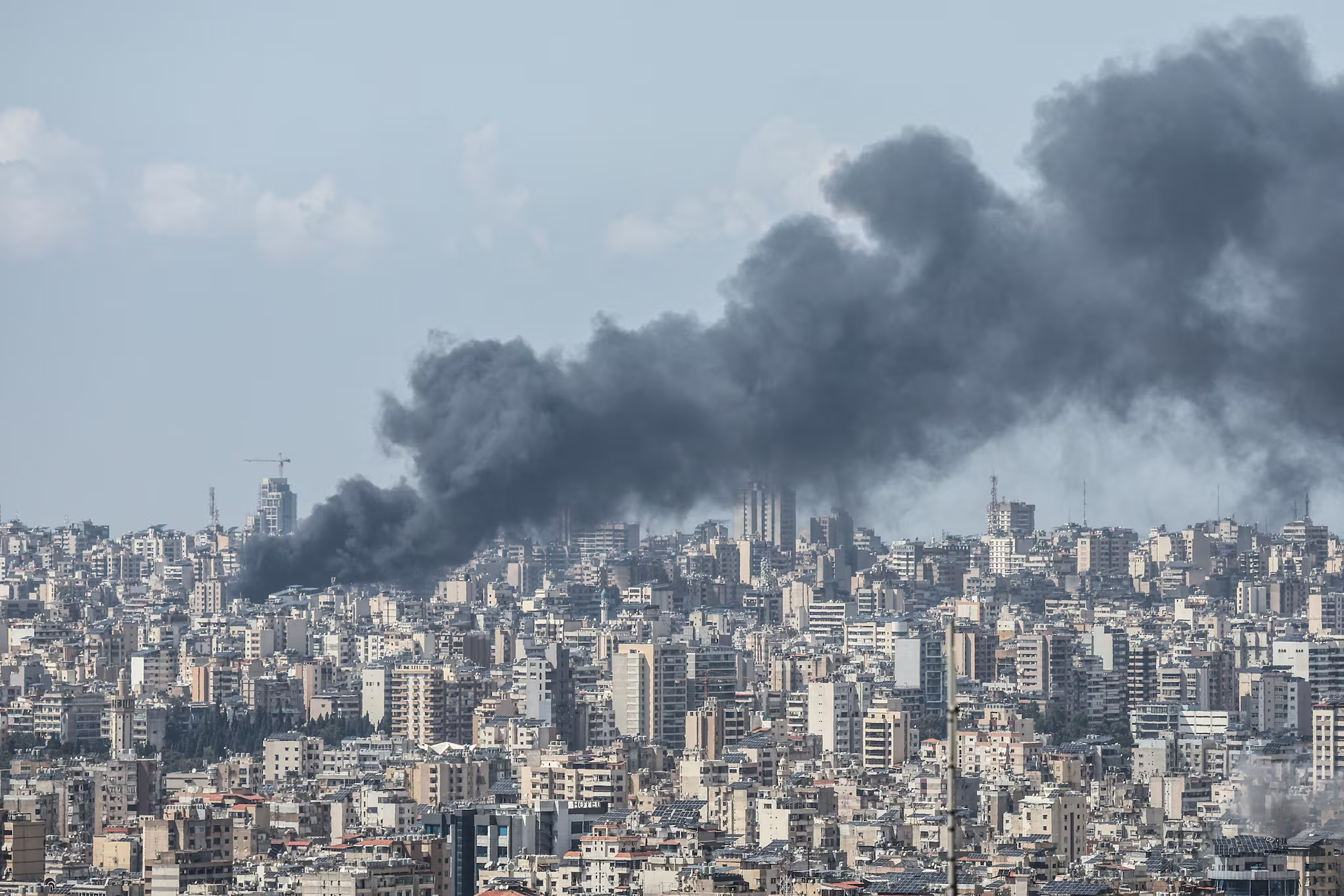
Despite hopes for calm, Israel carried out a large wave of strikes across Lebanon shortly after the ceasefire announcement.
The attacks targeted multiple areas, including Beirut and southern regions, shaking confidence in the deal’s effectiveness almost immediately.
Meanwhile, the timing of the strikes has fueled fears that the ceasefire may be too narrow or fragile to contain the wider conflict.
Iran Warns Of Ceasefire Collapse
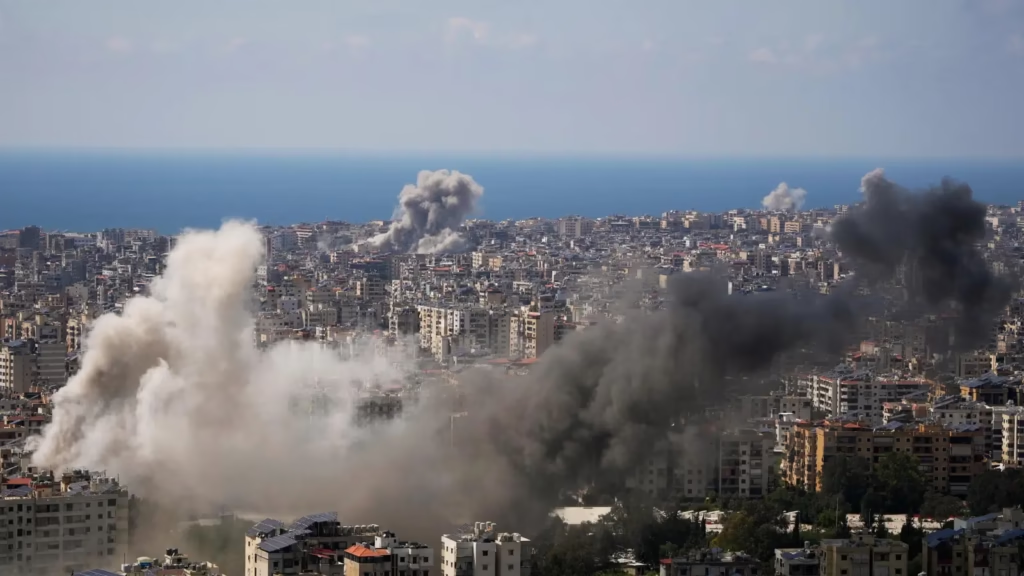
Iran responded firmly, warning that continued Israeli attacks on Lebanon could bring the ceasefire to an abrupt end.
Officials indicated that Tehran may unilaterally withdraw from the agreement if the strikes persist, effectively tying the truce’s survival to developments in Lebanon.
Iran’s Supreme National Security Council has reportedly accepted the two-week ceasefire. Still, its position suggests the agreement is conditional and extends beyond direct US-Iran engagement.
At the center of the deal is also the reopening of the Strait of Hormuz, a crucial global trade route, which remains a key factor in maintaining the truce.
Heavy Civilian Toll In Lebanon
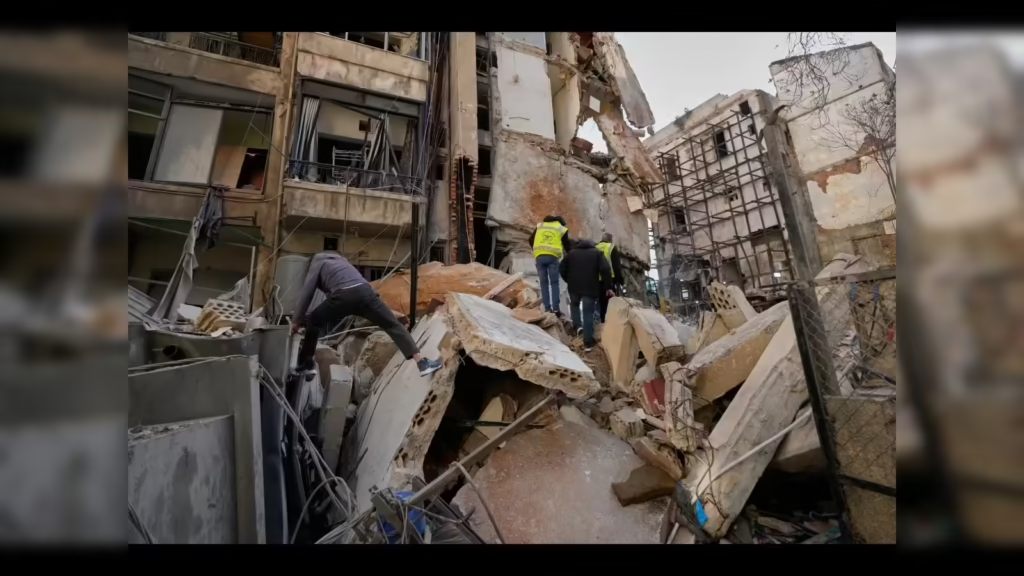
The humanitarian impact has been severe.
Lebanon’s Health Ministry reported that Israeli strikes killed 182 people in a single day, marking the highest daily death toll since the conflict began on March 2. Nearly 890 people were also injured.
Earlier estimates from civil defense officials had placed the death toll even higher, at 254.
Lebanese Prime Minister Nawaf Salam declared a national day of mourning, reflecting the scale of the loss and the growing national grief.
The International Committee of the Red Cross voiced strong concern over the situation.
“People across Lebanon were holding their breath for a ceasefire agreement, but a wave of deadly strikes plunged the country into panic and chaos,” said Agnes Dhur, the ICRC’s head of delegation in Lebanon.
“Many who had begun thinking of the moment when they might return to their homes have been rushing to streets and hospitals, searching for missing loved ones or seeking a safety that feels increasingly out of reach.”
Global Reaction And Diplomatic Pressure
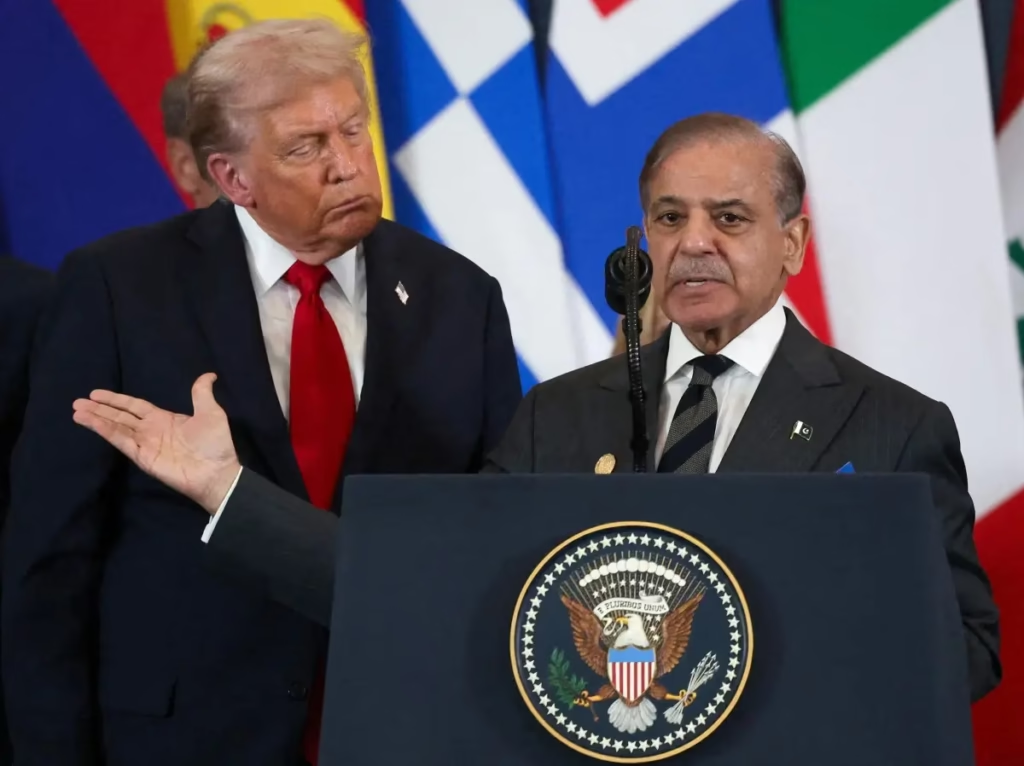
World leaders initially welcomed news of the ceasefire, hoping it would ease tensions in an already volatile region.
However, continued violence in Lebanon has complicated those expectations.
French President Emmanuel Macron called for Lebanon to be explicitly included in the ceasefire framework.
He described the agreement as “the best possible” decision but stressed it must apply “across all areas of confrontation,” including Lebanon, to remain credible.
“This is a necessary condition for the ceasefire to be credible and lasting,” he said.
Political Fallout Inside Iran
The developments have also sparked debate about the broader impact of recent US actions inside Iran.
Reza Pahlavi rejected claims that Washington had achieved regime change.
“What regime change? They’re the same people — even if maybe weakened,” he said.
“We still have the same person heading parliament. The same people are still in the judiciary. It’s Khamenei’s son who has replaced him. For us, this is not a regime change.”
He emphasized that internal change remains the responsibility of the Iranian people.
“What remains constant in our struggle as Iranians is to free ourselves of this regime,” he said.
Fragile Truce Faces Early Test
For now, the ceasefire stands on uncertain ground.
While Washington and Tehran appear aligned on pausing direct conflict, their disagreement over Lebanon risks undermining the entire agreement.
With ongoing strikes, rising casualties, and mounting diplomatic pressure, the coming days will be critical in determining whether the truce holds or unravels.