

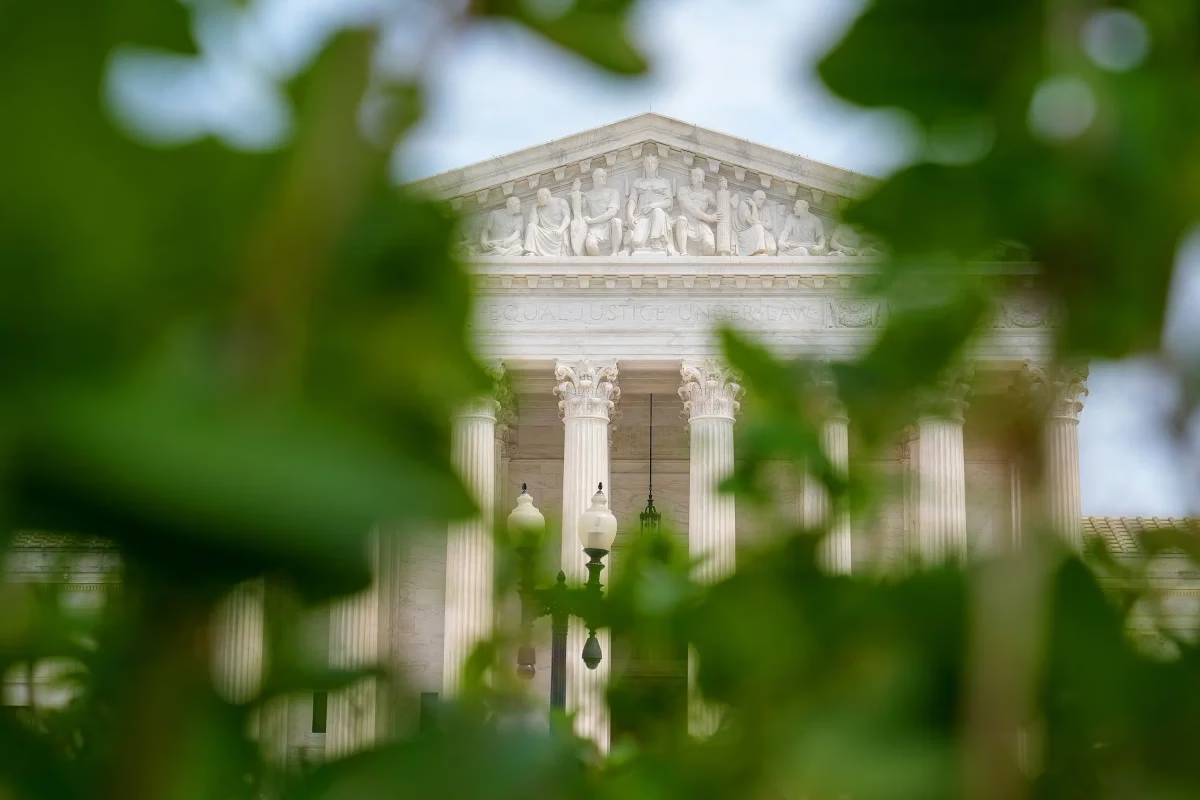
The Supreme Court stepped back into America’s abortion debate Monday, temporarily restoring nationwide access to the abortion pill mifepristone through telehealth appointments and mail delivery while justices review an emergency appeal tied to the drug’s future.
The move does not settle the legal battle. Instead, it freezes a lower court ruling that threatened to immediately reshape how millions of women access medication abortions across the country.
For now, patients can continue receiving the drug by mail, avoiding what abortion-rights advocates warned could have triggered widespread confusion and canceled appointments within days.
Supreme Court Hits Pause On Lower Court Order
Justice Samuel Alito issued an “administrative stay” that temporarily blocks a decision from the conservative 5th U.S. Circuit Court of Appeals.
That lower court ruling would have reinstated an in-person requirement for obtaining mifepristone, effectively ending telehealth prescriptions and mail delivery nationwide.
The temporary order remains in place through May 11 while the Supreme Court reviews emergency appeals filed by Danco Laboratories and GenBioPro. Alito also requested responses in the cases by Thursday.
The legal dispute once again thrusts abortion access back before the nation’s highest court, less than two years after the justices rejected a previous challenge involving the same medication.
Drugmakers Warned Of Immediate Disruption
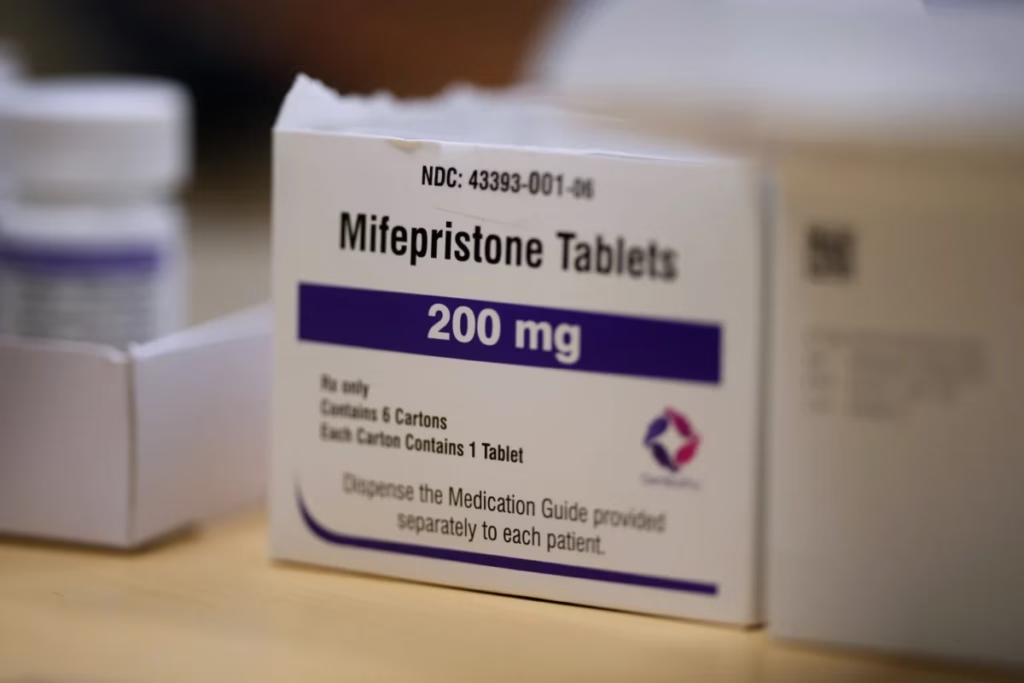
Danco Laboratories argued that allowing the appeals court decision to take effect would create instant turmoil for patients and healthcare providers.
The company told the court the ruling “injects immediate confusion and upheaval into highly time-sensitive medical decisions.”
Meanwhile, GenBioPro warned the decision risked “abruptly cutting off access for patients nationwide.”
The stakes are enormous because medication abortions now make up the majority of abortions performed in the United States. Since the Supreme Court overturned Roe v. Wade, access to clinic abortions has narrowed sharply in several conservative-led states.
As a result, abortion pills have become increasingly central to reproductive healthcare nationwide.
Telehealth Access Expanded After Pandemic
Women have been able to obtain mifepristone through telehealth appointments since changes introduced during the Covid-19 pandemic.
The U.S. Food and Drug Administration later finalized rules in 2023 ending the long-standing requirement for an in-person doctor’s visit to receive the medication.
That policy shift came one year after the Supreme Court overturned Roe v. Wade, reshaping abortion laws across the country and triggering bans or major restrictions in several states.
According to research from the Guttmacher Institute, medication abortions accounted for more than 60% of abortions in the United States in 2023.
A separate analysis of mifepristone data found the drug has a strong safety record, with fewer reported side effects than medications such as Viagra or penicillin.
Louisiana Challenge Reignites Court Battle
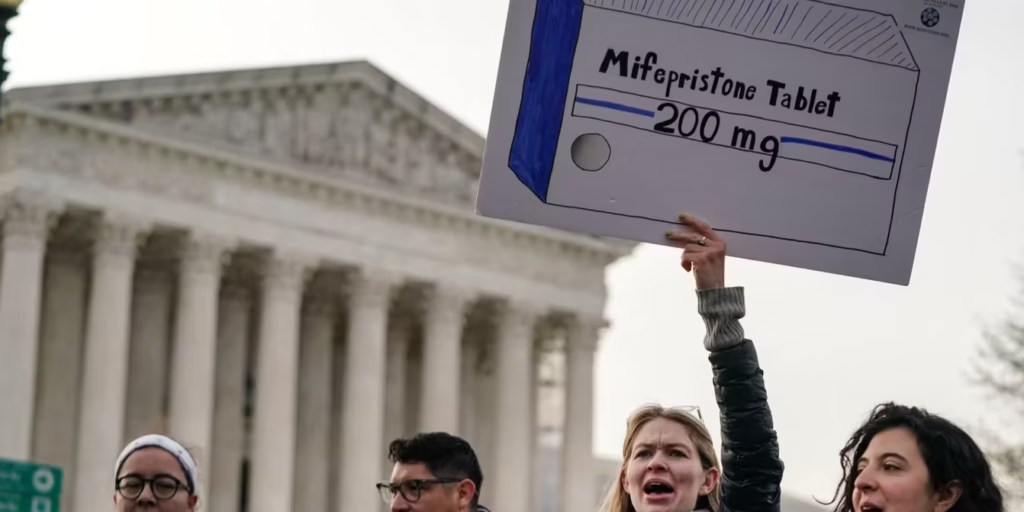 The current legal fight began after Louisiana sued last year, arguing that federal rules allowing mail delivery of abortion pills undermined the state’s abortion restrictions.
A federal district court in April declined to restrict access to the drug while the FDA completed an updated safety review.
Still, Louisiana Attorney General Liz Murrill sharply criticized the emergency request filed by the drugmakers.
“Big abortion pharma claims they need an emergency stay because they will lose massive amounts of money if they can’t kill more babies quickly and efficiently by mail without medical oversight,” Louisiana Attorney General Liz Murrill said in a statement Monday. “The administrative stay is temporary, and I am confident life and the law will win in the end.”
High Court Revisits Familiar Legal Ground
The Supreme Court already addressed mifepristone once before in 2024.
At the time, the justices unanimously rejected a lawsuit targeting the FDA’s abortion pill regulations. However, the court avoided ruling directly on the merits of the policy itself.
Instead, the justices concluded that the doctors and anti-abortion groups challenging the rules lacked legal standing to sue.
That narrow decision left the door open for future cases, making another Supreme Court showdown almost inevitable.
Now, with abortion politics once again colliding with federal drug regulations, the battle over mifepristone appears headed toward another major constitutional and political confrontation.