
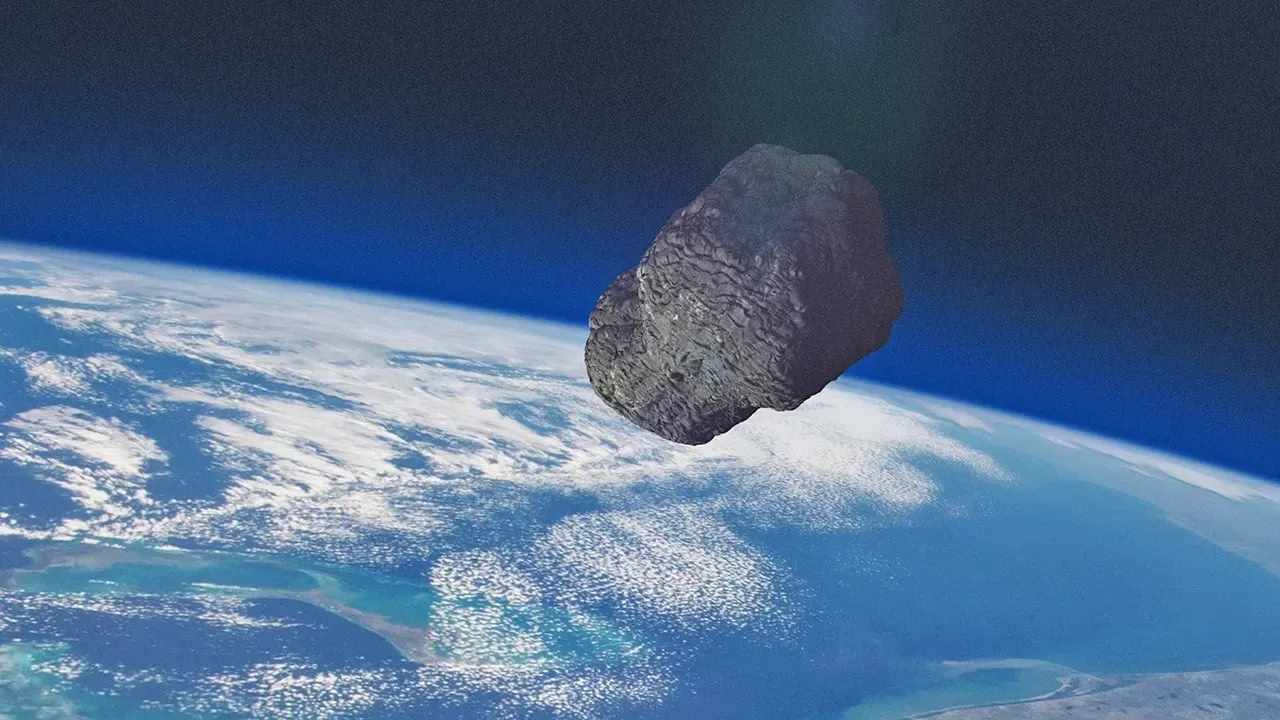
A massive space rock comparable in size to a skyscraper is racing toward Earth at an astonishing speed of more than 24,000 miles per hour. While the headline may sound alarming, scientists say there is no reason to panic. The asteroid will safely pass the planet, giving astronomers a rare opportunity to observe a large near-Earth object up close.
Researchers confirmed the object, known as 2025 FA22, will make its closest approach in the early hours of Sept. 18 before continuing on its orbit around the sun.
Scientists Track Massive Asteroid Near Earth
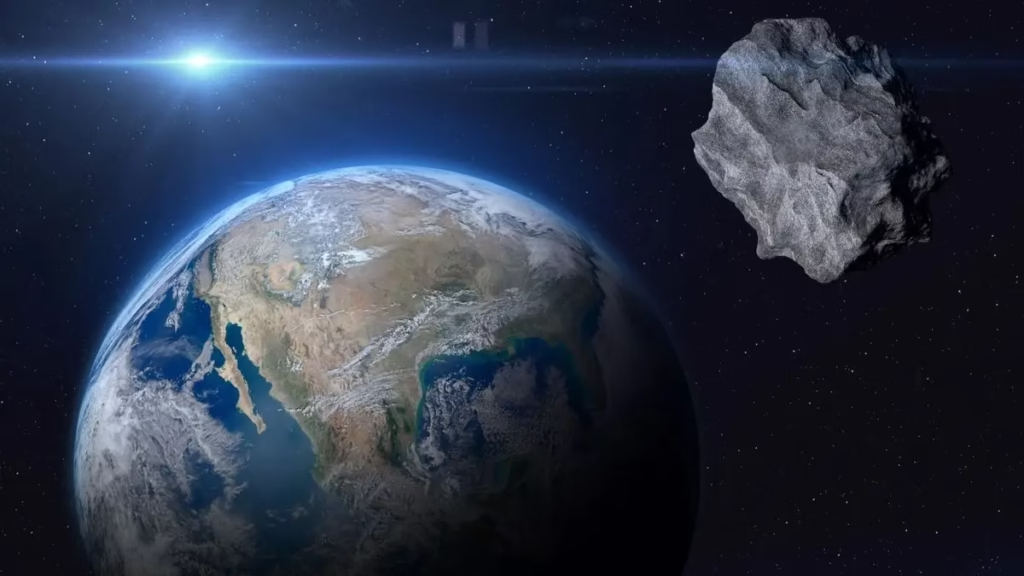
Astronomers say the asteroid, officially labeled 2025 FA22, measures between 427 and 951 feet across. That makes it roughly comparable to the height of a large urban skyscraper.
Traveling at more than 24,000 miles per hour, the asteroid will streak past Earth before continuing its path through space. According to scientists, it will make additional passes near Earth again in the years 2089 and 2173.
Despite the dramatic speed and size, scientists stress that the object poses no danger to the planet.
NASA And ESA Rule Out Impact Risk
Both NASA and the European Space Agency closely tracked the asteroid after its discovery earlier this year.
Initial observations placed the object on monitoring lists used to track potentially dangerous near-Earth objects. However, more precise measurements allowed scientists to refine its trajectory and confirm that it will not collide with Earth.
“Impacts on this scale are rare, but the consequences would be catastrophic,” ESA researchers said, with the pass Thursday morning offering a rare opportunity to study a skyscraper-sized asteroid up close.
As a result, the asteroid has now been removed from risk tables that track possible future impacts.
Discovery Of Asteroid 2025 FA22
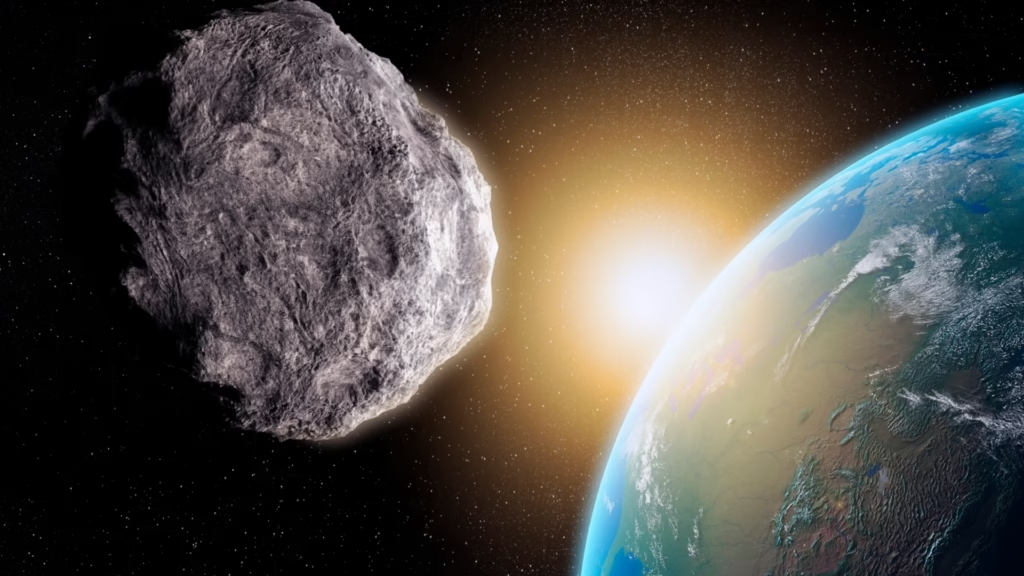
Astronomers first identified the asteroid in March using a specialized telescope in Hawaii designed to detect near-Earth objects.
Because of its size and relatively close flyby distance, scientists briefly included it on ESA’s watch list of asteroids that require careful monitoring.
However, as additional observations improved the accuracy of its orbital path, experts confirmed that the asteroid will safely pass by the planet.
Why Large Asteroids Still Concern Scientists
Even though 2025 FA22 will miss Earth, its size explains why astronomers pay close attention to objects like it.
If an asteroid of this scale were to strike the planet, the damage could be devastating. A collision could destroy a major city and potentially trigger widespread fires or tsunamis.
That possibility is precisely why scientists track these objects carefully and continually refine their predictions.
Can People See The Asteroid From Earth
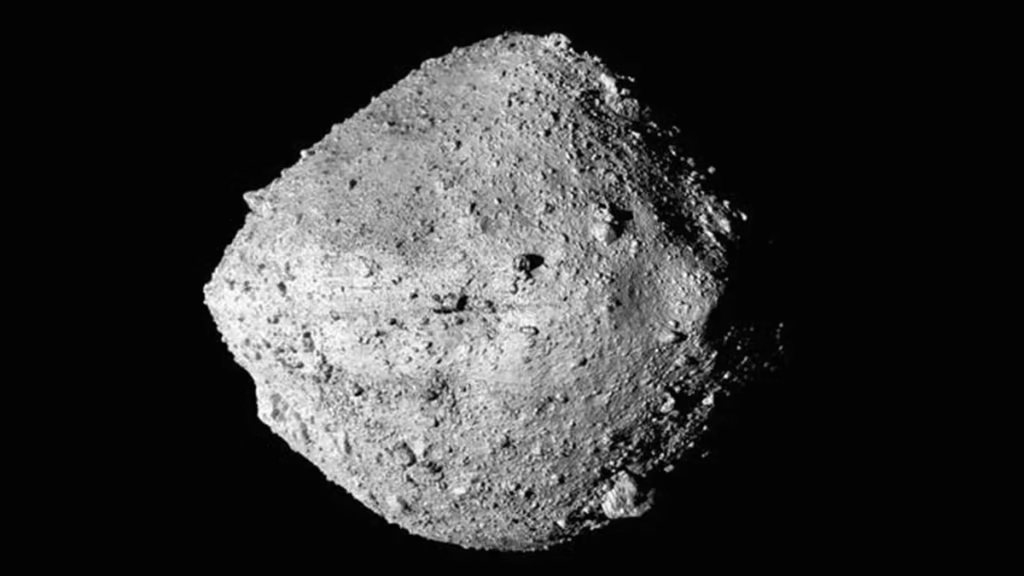
Most people will not be able to see the asteroid as it passes Earth. However, astronomers equipped with powerful telescopes or high-quality binoculars may be able to detect it as a faint point of light moving across the sky.
Experts say the best chance to spot the asteroid will be around 3:40 a.m. ET on Sept. 18, when it passes closest to Earth.
Even then, it will appear only as a dim speck against the backdrop of stars.
Understanding Near Earth Asteroids
Asteroids are rocky remnants left over from the formation of the solar system billions of years ago. They orbit the sun and vary widely in size, from small rocks to massive objects hundreds of miles across.
NASA estimates that more than 1.3 million asteroids exist in the solar system. Of those, more than 30,000 are classified as near-Earth objects because their orbits bring them relatively close to our planet.
NASA’s Asteroid Watch program constantly monitors any object that comes within about 4.6 million miles of Earth.
Objects larger than 492 feet that pass within that distance are classified as potentially hazardous, which triggers additional monitoring from scientists worldwide.