
A fresh delivery is about to reach orbit, and all eyes are on the skies today. NASA is preparing to broadcast a live view of a crucial resupply mission as a cargo spacecraft closes in on the International Space Station.
The mission, powered by a partnership between SpaceX and Northrop Grumman, carries essential supplies, experiments, and equipment for astronauts currently living and working in orbit.
Cygnus XL Nears Space Station Arrival
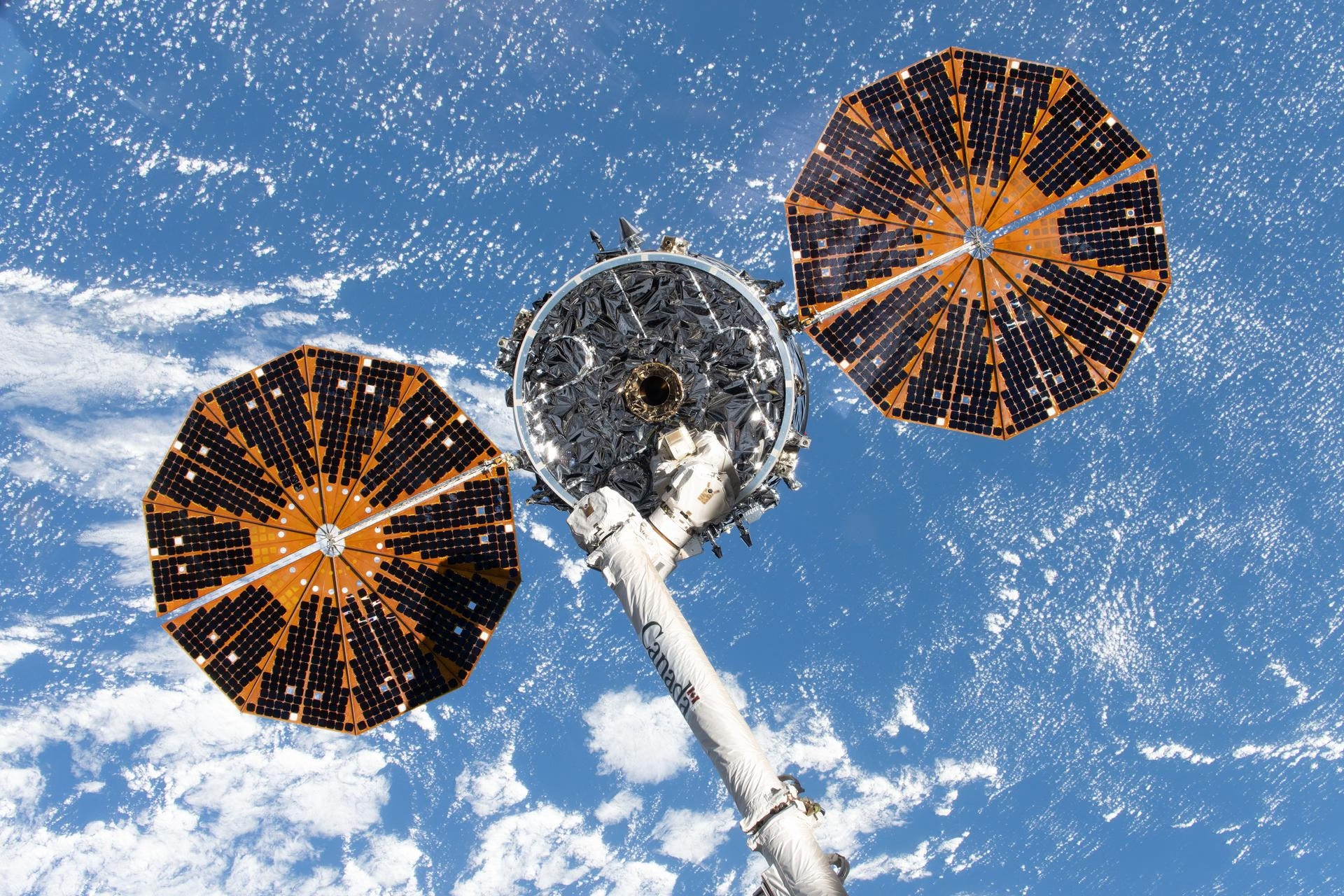
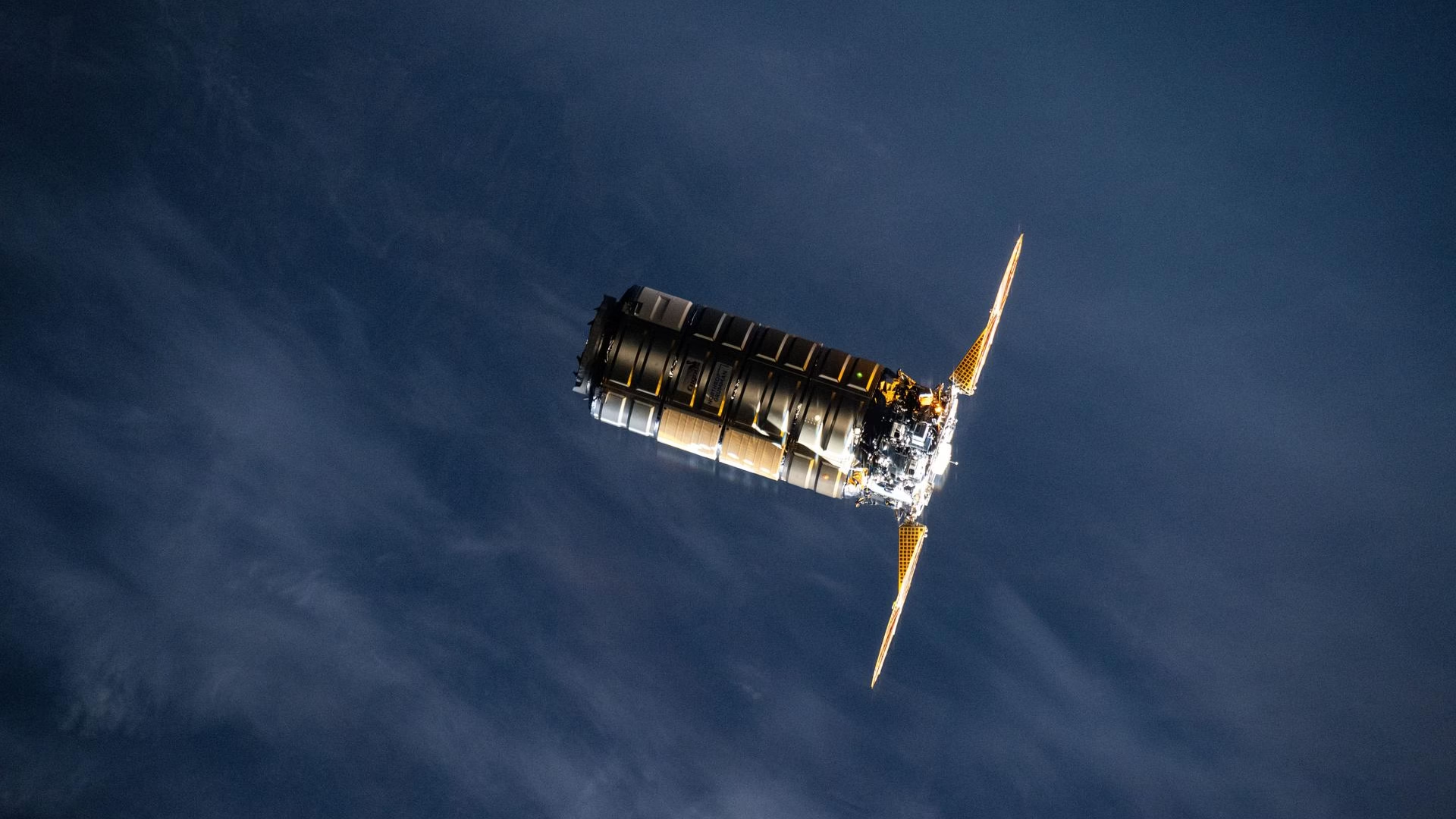
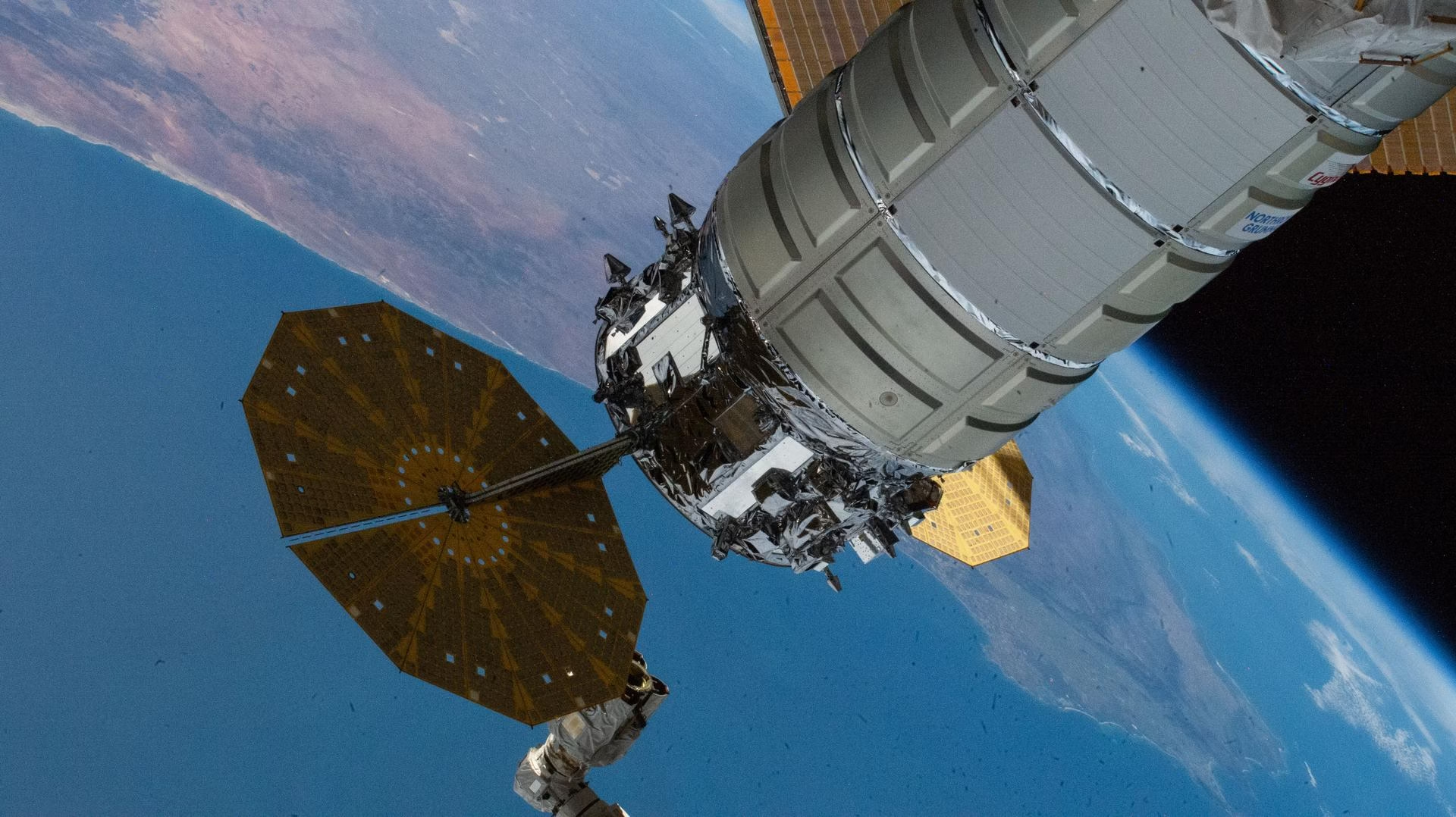
After launching just two days ago, the Cygnus XL spacecraft is now approaching its final destination. The cargo craft rode into space aboard a Falcon 9 rocket from Cape Canaveral and is expected to arrive around midday.
This isn’t just another routine docking. Every resupply mission plays a critical role in sustaining life and advancing science aboard the ISS. From food and equipment to cutting-edge experiments, each delivery keeps the station running smoothly.
When And Where To Watch The Livestream
If you’re planning to watch the action unfold, timing is everything.
NASA will begin live coverage at noon Eastern Time on its NASA+ platform and official YouTube channel. The agency is also running a countdown clock on its website, building anticipation for the moment of capture.
The key event is expected shortly after.
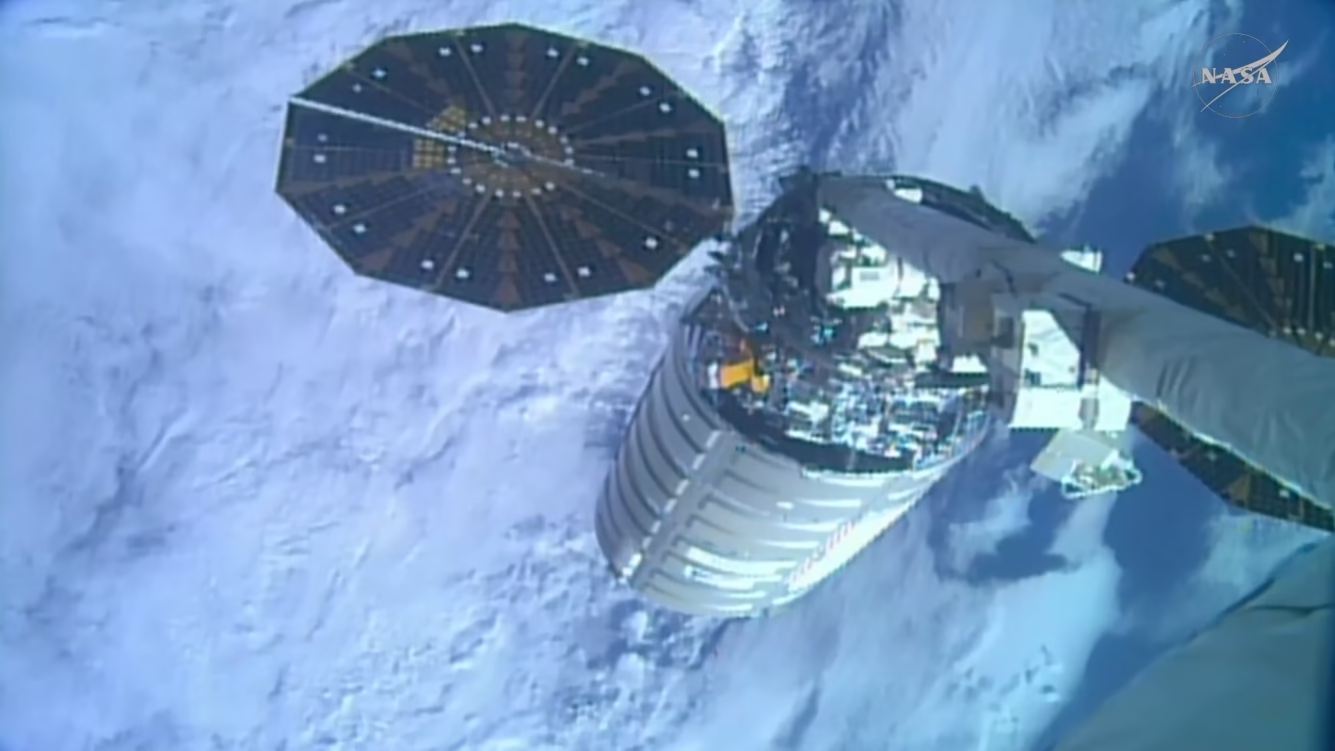
“Cygnus XL is scheduled to be captured at 12:50 p.m. by the station’s Canadarm2 robotic arm, operated by NASA astronauts Jack Hathaway and Chris Williams,” NASA says.
“After capture, the spacecraft will be installed on the Unity module’s Earth-facing port for cargo unloading.”
That precise maneuver, carried out using the station’s robotic arm, requires coordination, patience, and absolute accuracy. One small misstep could delay the entire operation.
What Happens After Capture
Once secured, the spacecraft will be attached to the Unity module, where astronauts will begin unloading its contents. Inside are vital supplies that support both daily life and ongoing research in microgravity.
However, the mission doesn’t end there.
“Cygnus XL is scheduled to remain at the orbiting laboratory until October, before it departs and disposes of thousands of pounds of trash through its re-entry into Earth’s atmosphere, where it will harmlessly burn up,” NASA says.
In other words, the spacecraft not only delivers but also helps clean up, carrying waste away from the station before burning up safely in Earth’s atmosphere.
How To Watch NASA+ Across Devices
Watching the mission is easier than ever. NASA+ is available across multiple platforms, including desktop, mobile apps, and smart TVs.
Even more convenient, viewers can access NASA content through Prime Video without needing a subscription. The stream is part of a free, ad-supported channel lineup, making it widely accessible.
Simply head to the Live TV section within the app, and you’re ready to go.
What’s Next For Florida Launches
Meanwhile, the launch schedule doesn’t slow down.
Another SpaceX Falcon 9 mission is set for early Tuesday morning, aiming to send a new batch of Starlink satellites into low-Earth orbit.
The launch window opens at 2:13 a.m. and runs through 6:13 a.m. Eastern Time, with liftoff planned from Cape Canaveral. Notably, no sonic booms are expected, and coverage will begin well ahead of launch.
Why This Mission Matters
Resupply missions might not always grab headlines like crewed launches, but they are the backbone of space operations. Without them, long-term habitation aboard the ISS would simply not be possible.
So, as Cygnus XL approaches its final moments before capture, the question becomes simple. Will everything go exactly as planned, or will space once again remind us how unpredictable it can be?