
A new image from deep space is drawing comparisons to one of the most famous photographs ever taken. Nearly six decades after NASA astronauts captured Earth rising over the Moon, a fresh perspective now shows the planet slipping away into darkness, and once again, it is leaving people in awe.
A Historic View, Then And Now
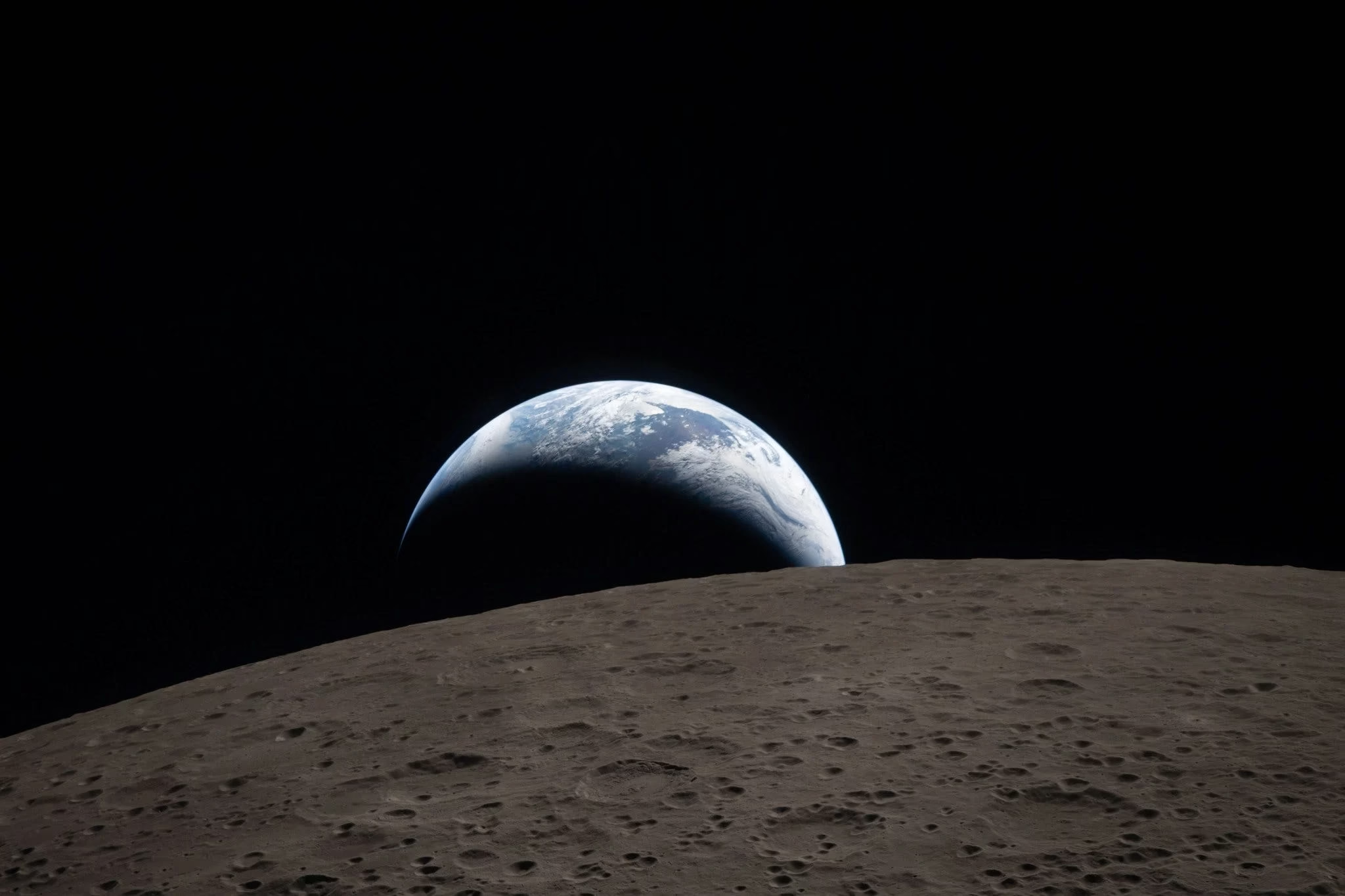
Back in 1968, astronaut Bill Anders snapped what would become one of humanity’s most defining images. The “Earthrise” photo, taken during the Apollo 8 mission, revealed Earth emerging above the Moon’s horizon for the first time.
That moment reshaped how people saw their place in the universe. It was not just a photograph, it was perspective.
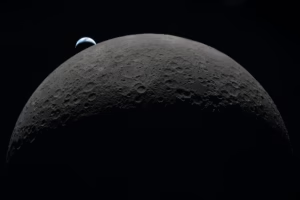
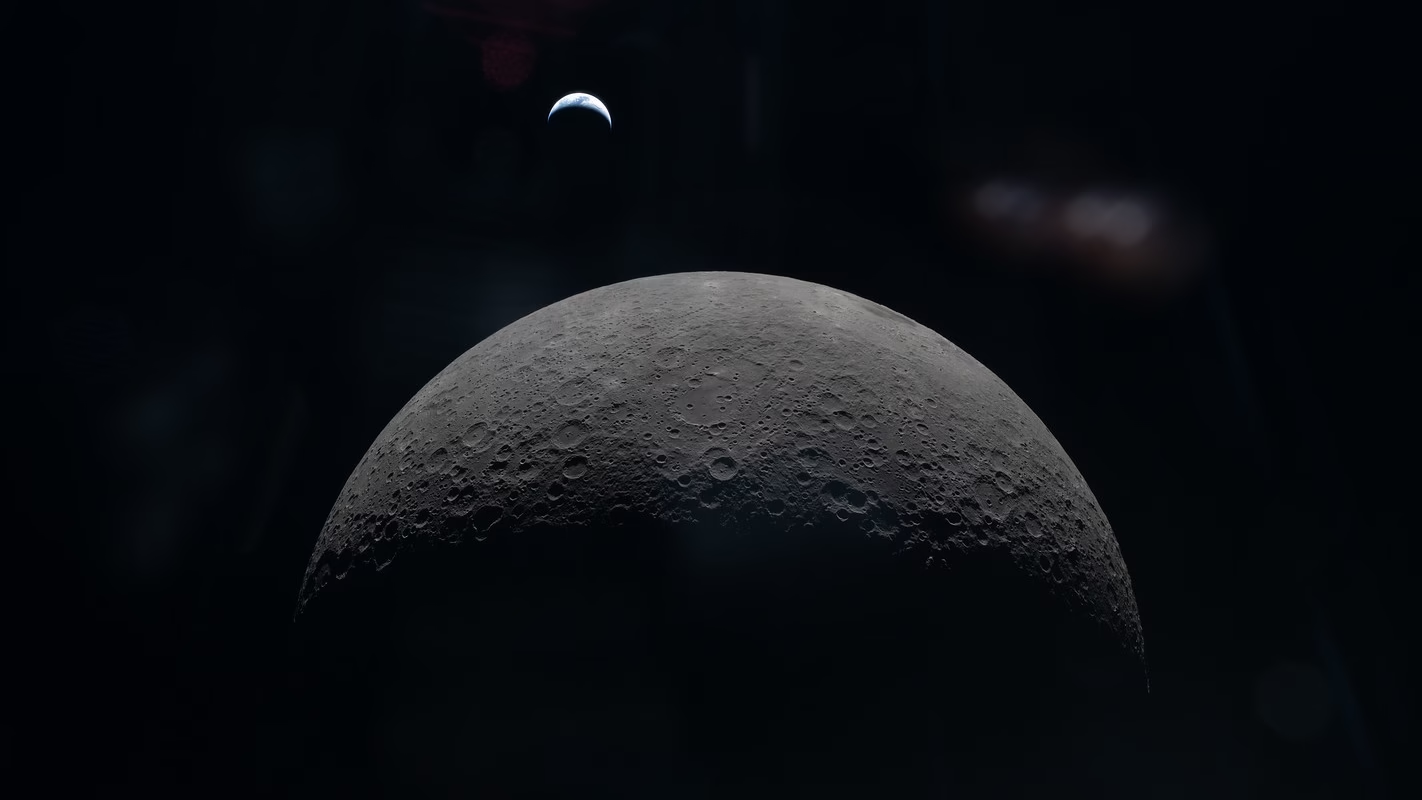
Fast forward to April 2026. Aboard Artemis II, astronauts captured something strikingly similar, yet different. Instead of Earth rising, the crew photographed an “Earthset” on April 6, showing the planet gradually disappearing beyond the lunar edge.
The contrast is poetic. One image symbolized discovery. The other suggests distance and progress.
Artemis II’s Record-Breaking Journey
The Artemis II mission did more than recreate a visual moment. It pushed human exploration further than ever before.
The crew, including NASA astronauts Reid Wiseman, Victor Glover, Christina Koch, and Canadian astronaut Jeremy Hansen, traveled a staggering 252,756 miles from Earth. That is the farthest distance any human has ever ventured into space.
At one point, they were just 4,070 miles from the Moon’s surface, offering a rare and powerful vantage point.
Over the course of the 10-day mission, the spacecraft covered a total of 694,481 miles before safely splashing down in the Pacific Ocean near San Diego.
It was not just a journey. It was a statement of capability.
Earthrise Vs Earthset: What Sets Them Apart?
Both images, separated by nearly 60 years, carry deep meaning. Yet they reflect different eras of space exploration.
The Apollo 8 “Earthrise” image captured a moment of firsts. It was humanity’s first time orbiting the Moon, and the photo symbolized curiosity and bold ambition.
Meanwhile, Artemis II’s “Earthset” reflects continuity. It shows how far space programs have come, both technologically and operationally.
There is also a subtle emotional shift. Earthrise felt like discovery. Earthset feels like reflection.
And yet, both images share one undeniable truth: Earth remains a small, fragile sphere in an immense universe.
Missions Built For The Moon

Neither mission was designed to land on the Moon, but both were essential steps toward that goal.
The Apollo program followed a clear path. After Apollo 8, two additional missions paved the way before Neil Armstrong and Buzz Aldrin walked on the lunar surface during Apollo 11 in July 1969.
Similarly, Artemis II serves as a critical test mission. It validates systems, crew operations, and deep space travel capabilities before future landings.
However, plans for the Artemis program have shifted. A Moon landing is now expected later in the sequence, with Artemis 3 targeting a docking operation in Earth orbit with lunar landers developed by Blue Origin and SpaceX.
The actual landing is currently planned for Artemis 4, expected in 2028.
A New Chapter In Space Exploration

So what does this all mean?
It means history is repeating itself, but on a much larger scale.
The Apollo missions proved that humans could reach the Moon. The Artemis program is proving that humans can go farther, stay longer, and prepare for even deeper exploration.
And once again, it is the images that capture the world’s attention.
Because sometimes, one photograph is enough to remind humanity where it stands.