

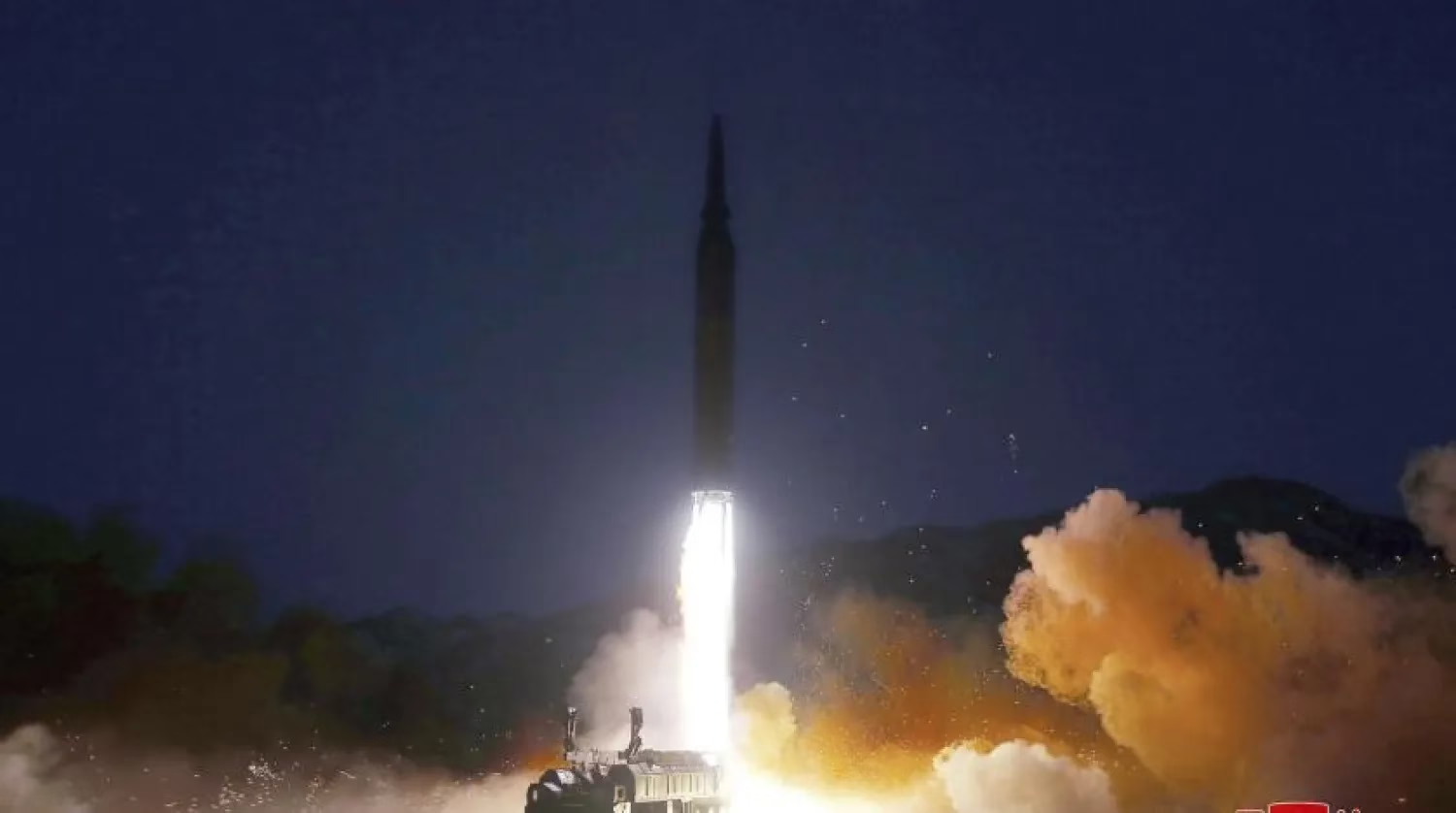
Tensions on the Korean Peninsula surged again this week as North Korea revealed new details about its latest weapons tests. The country claims it has successfully tested ballistic missiles equipped with cluster-bomb warheads, signaling a sharper and more aggressive military posture toward South Korea.
The announcement follows a series of launches that have already rattled regional security observers. Now, with fresh claims about advanced weapon capabilities, concerns are intensifying.
Multi-Day Weapons Tests Unveiled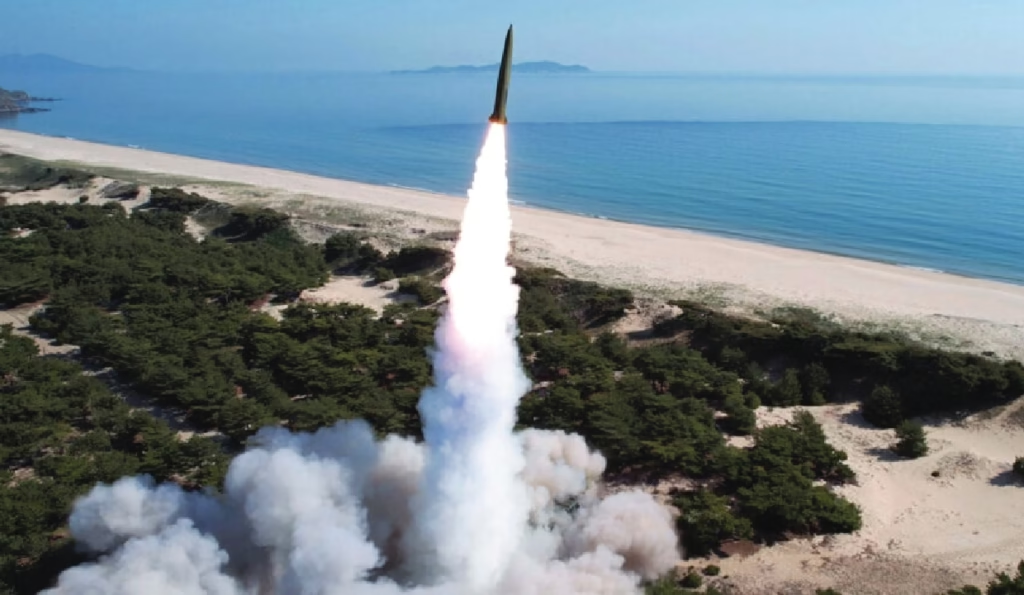
North Korea said its recent testing campaign stretched over three days, beginning Monday. According to state media, the drills were not limited to missile launches. Instead, they showcased a range of evolving military technologies.
These included anti-aircraft systems, electromagnetic weapons, and carbon-fiber bombs. However, the biggest concern centers on ballistic missiles armed with cluster munitions.
Meanwhile, South Korea’s military confirmed it detected multiple launches during this period. Missiles fired Wednesday reportedly traveled between 240 and 700 kilometers before landing in the sea. At least one additional projectile was spotted a day earlier near Pyongyang.
Cluster-Bomb Capability Raises Stakes
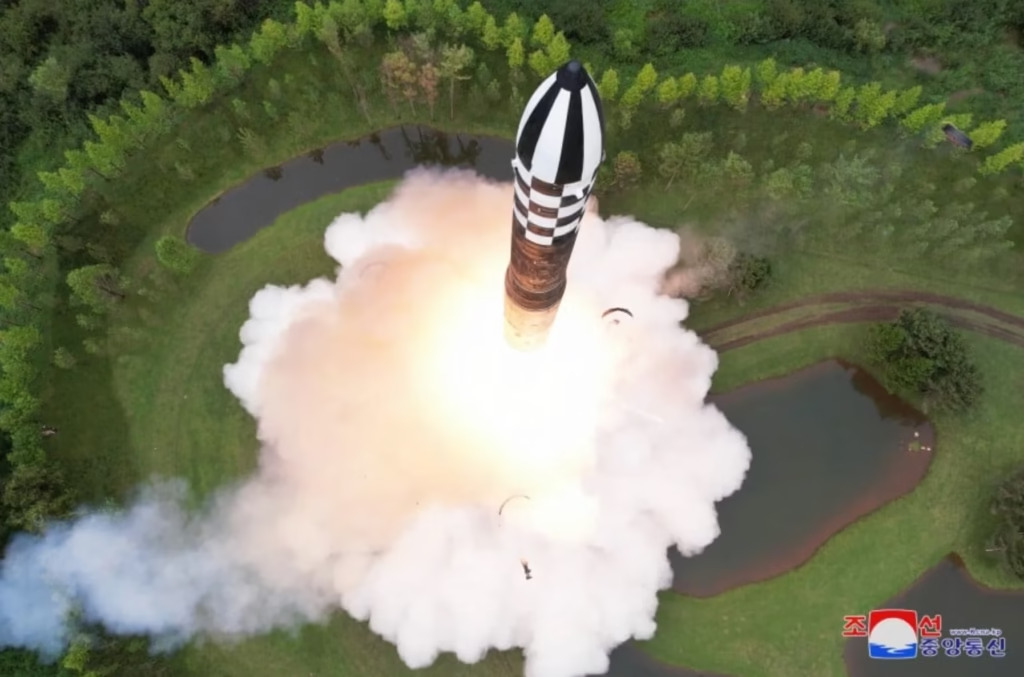
The most striking claim involves the use of cluster-munition warheads mounted on short-range ballistic missiles. These missiles, identified as Hwasong-11, are believed to resemble Russia’s Iskander systems.
Their design allows for low-altitude, maneuverable flight, making them harder to intercept. That alone raises serious defense challenges. Still, it is the destructive potential of the warheads that has drawn global attention.
North Korea stated the system “can reduce to ashes any target covering an area of 6.5-7 hectares (16 to 17.2 acres) with the highest-density power.”
Such weapons, if accurately deployed, could cause widespread damage over large areas in a single strike.
Seoul Yet To Respond To Claims
Despite the bold assertions, South Korea’s military has not immediately verified or responded to the specific claims about cluster-bomb warheads.
However, the launches themselves were confirmed. And while details remain under scrutiny, the pattern is clear. North Korea continues to expand its arsenal at a steady pace.
That said, these developments come at a time when Seoul had been hoping for improved relations. Those hopes now appear increasingly fragile.
Harsh Rhetoric Signals Deepening Divide
Beyond the weapons tests, North Korea’s tone toward South Korea remains openly hostile. A senior official issued a sharp statement rejecting any possibility of reconciliation.
South Korea, the official said, would always remain the North’s “most hostile enemy state.” The same statement mocked Seoul’s leadership, describing its officials as “world-startling fools.”
Such language reflects a widening diplomatic gap. It also signals that dialogue is unlikely to resume anytime soon.
Nuclear Program Continues To Advance
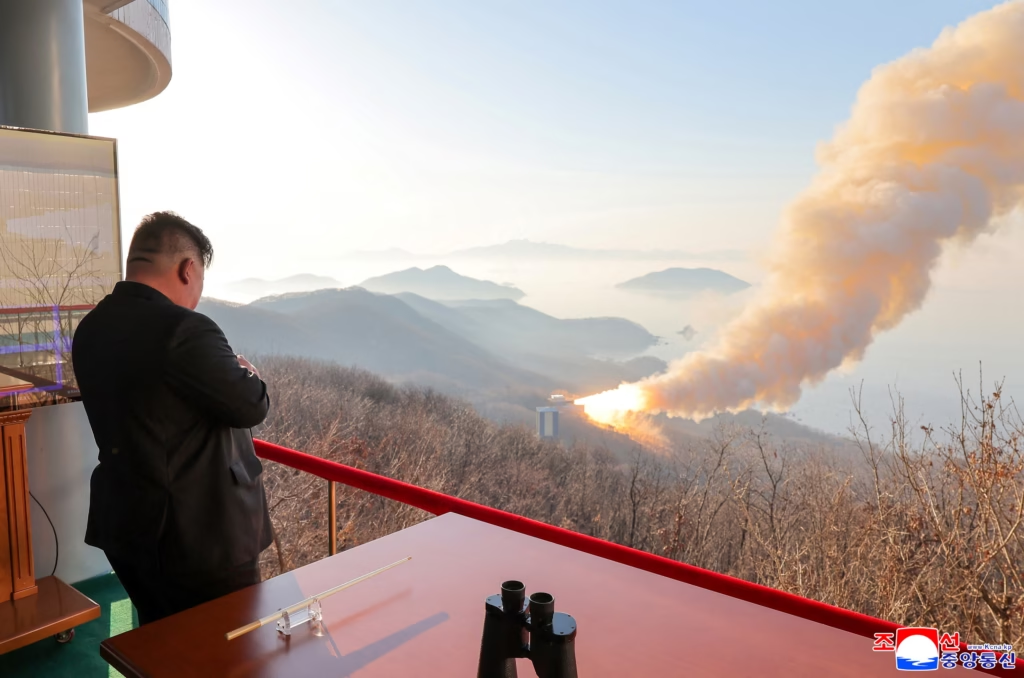
North Korean leader Kim Jong Un has largely stepped away from diplomacy since talks with then U.S. President Donald Trump collapsed in 2019. Since then, the country has doubled down on weapons development.
Its focus remains on building nuclear-capable systems that can threaten not only South Korea, but also U.S. allies across Asia and even the American mainland.
Meanwhile, North Korea is strengthening ties with countries that share tensions with Washington. Closer cooperation with Russia and China appears to be part of a broader strategy to reduce isolation and increase influence.
In fact, Chinese Foreign Minister Wang Yi is expected to arrive in North Korea for a two-day visit, marking another step in ongoing diplomatic engagement between the two countries.
Rising Concerns Across The Region
With each new test, concerns continue to grow. The introduction of cluster-munition warheads adds another layer of complexity to an already volatile situation.
While some details remain unverified, the message from Pyongyang is unmistakable. Its weapons program is advancing, and it is not slowing down.
For now, the region watches closely, aware that even small escalations could carry serious consequences.