
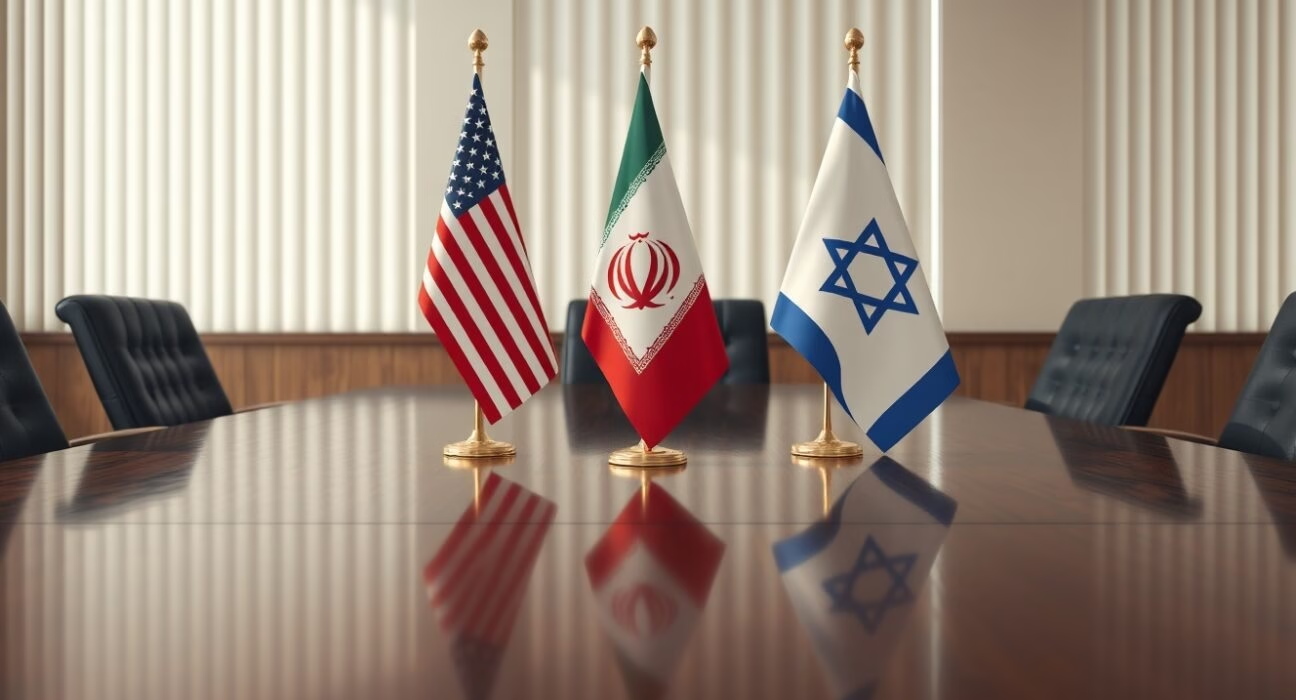
After weeks of mounting tension and global concern, a sudden diplomatic breakthrough has shifted the course of events. The United States and Iran have agreed to a temporary ceasefire, offering a narrow window for negotiations and a possible path away from further conflict.
The deal came just in time. With less than two hours remaining before a deadline set by President Donald Trump, both sides stepped back, avoiding what many feared could escalate into a far broader crisis.
Ceasefire Reached At The Brink

The two-week ceasefire follows nearly six weeks of intensifying conflict that disrupted the Middle East and shook global oil markets. At its peak, the standoff appeared dangerously close to spiraling out of control.
Trump had previously warned he could wipe out a “whole civilization” if Iran failed to meet his demands. Critics argued such a move could constitute a war crime. However, the last-minute agreement has, for now, prevented that scenario.
Still, both nations are presenting the outcome as a victory. However, deep divisions remain, and the ceasefire is only a starting point, not a solution.
Washington Frames Deal As Strategic Win
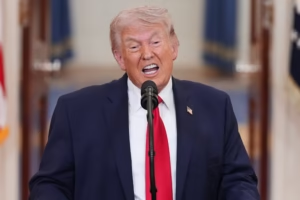
Trump announced the agreement on Truth Social, stating it was contingent on Iran reopening the Strait of Hormuz, a crucial route that carries about one-fifth of the world’s oil supply.
He also revealed that Pakistan’s leadership helped mediate the agreement and noted that Iran had presented a proposal the US considers “a workable basis on which to negotiate.”
In an interview with AFP, Trump described the outcome as “total and complete victory.” Yet when asked whether he would carry out earlier threats against Iran’s infrastructure if the deal collapses, he responded cautiously: “You’re going to have to see.”
Later, he added that the United States would be “helping with the traffic buildup in the Strait of Hormuz,” and remarked: “Big money will be made.”
Behind the scenes, US officials are preparing for possible in-person talks, likely in Islamabad, following an invitation from Pakistan’s prime minister.
Meanwhile, Israel has agreed to pause its strikes against Iran as part of the ceasefire. However, uncertainty remains over whether Lebanon is included, with conflicting statements creating confusion.
Iran Signals Strength While Opening Door To Talks
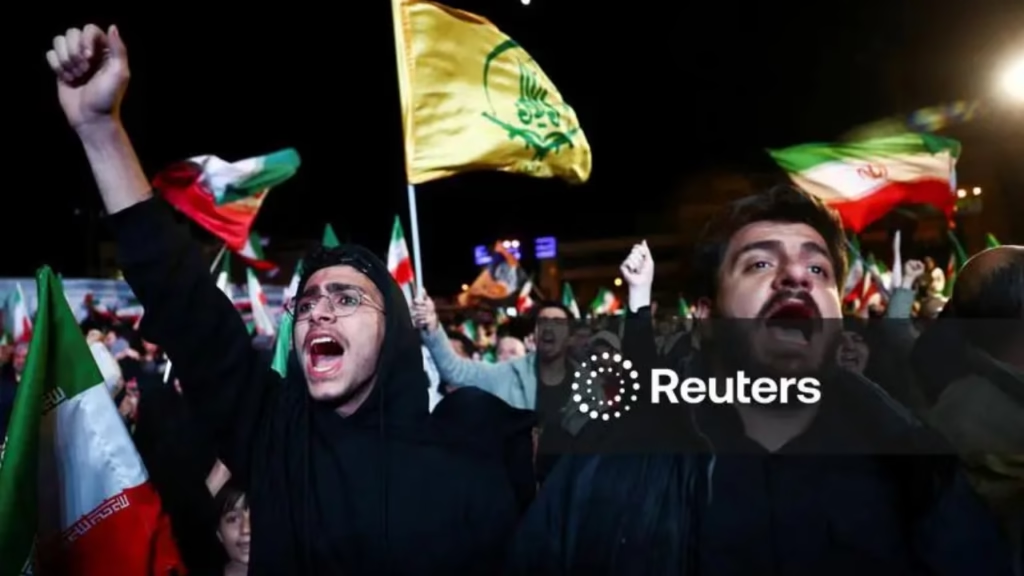
Iranian officials responded with a firm yet calculated tone.
Foreign Minister Abbas Araghchi stated that Iran would halt its military operations if attacks against the country stop. He also confirmed that Iran would coordinate safe passage through the Strait of Hormuz during the ceasefire.
Reports from Iranian media suggest that Iran and Oman may introduce transit fees for ships passing through the strait, with the funds intended for reconstruction efforts.
At the same time, Iran’s Supreme National Security Council framed the ceasefire as an “enduring defeat” for the United States. It also issued a warning, stating that “should the slightest error be committed by the enemy, it shall be met with full force.”
The message was unmistakable. Iran is willing to negotiate, but it is not stepping back from its position.
Competing Proposals Shape The Next Phase
The ceasefire has opened the door to negotiations, but the path forward remains complex.
Iran has put forward a 10-point proposal that reportedly includes regulating movement through the Strait of Hormuz, ending attacks on Iran and its regional allies, withdrawing US forces from the region, providing compensation, lifting sanctions, and securing a binding UN resolution for peace.
Some versions of the proposal also indicate that the United States has agreed in principle to accept Iran’s right to nuclear enrichment, though this remains disputed.
On the other side, the US has outlined a 15-point framework believed to include a commitment from Iran to abandon nuclear weapons, transfer enriched uranium, limit its defense capabilities, end support for regional proxy groups, and reopen key trade routes.
Iran had previously rejected these terms, with one official describing them as “largely excessive, unrealistic and unreasonable.”
Despite these differences, both sides appear willing to continue discussions, suggesting that diplomacy, at least for now, remains on the table.
A Critical Two Week Window
The coming days will be decisive. The two-week ceasefire is intended to give both sides time to negotiate a more permanent agreement.
However, major challenges remain. Trust between the two nations is low, expectations are high, and the stakes extend far beyond the region.
For now, the fighting has paused. But whether this ceasefire leads to lasting peace or simply delays further conflict remains uncertain.