
Oil markets took a sharp turn on Wednesday, sliding below the $100 mark after a dramatic geopolitical shift signaled a possible pause in escalating tensions between the United States and Iran. The sudden announcement of a temporary ceasefire sent shockwaves through global energy markets, easing fears that had driven prices sharply higher in recent weeks.
Brent crude and U.S. West Texas Intermediate both recorded steep declines, reflecting renewed optimism that supply disruptions could ease, at least for now.
Oil Prices Drop As Ceasefire Calms Markets
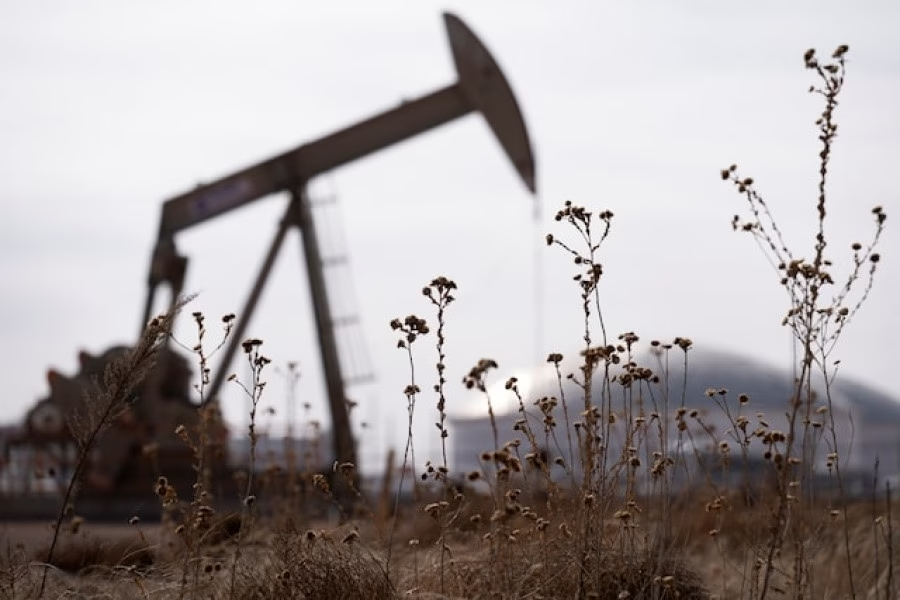
Brent futures plunged $15.02, or 13.8%, settling at $94.25 a barrel by 0805 GMT. Meanwhile, WTI crude dropped even further, falling $17.43, or 15.4%, to $95.52 a barrel.
The decline comes after weeks of heightened volatility, as fears over disruptions in the Strait of Hormuz pushed prices to historic highs. That said, markets reacted swiftly to signs of de-escalation, with traders reassessing immediate supply risks.
European diesel prices also mirrored the downturn, shedding $271.50, or 17.8%, to $1,256.25 per metric ton.
Trump Signals Sudden Shift In Strategy
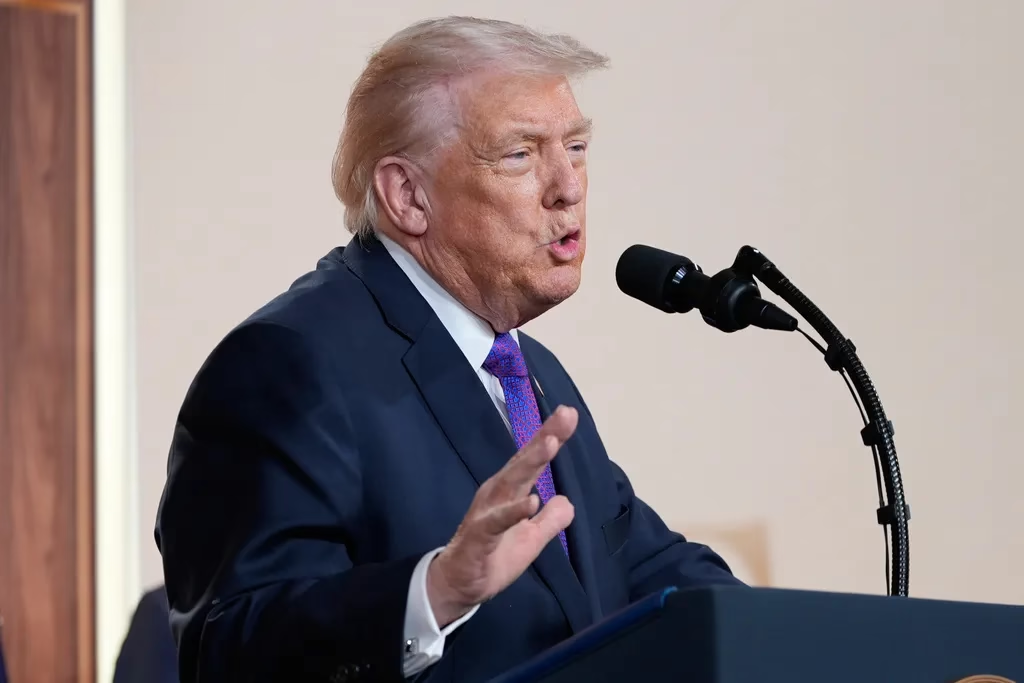
The turning point came after U.S. President Donald Trump announced a two-week ceasefire agreement tied to the reopening of the Strait of Hormuz, a critical chokepoint through which roughly 20% of global oil supply flows.
“This will be a double sided CEASEFIRE!” he wrote on social media, marking a stark contrast to his earlier warning that “a whole civilization will die tonight” if demands were not met.
The shift in tone suggests urgent diplomatic efforts behind the scenes, as both sides appear to test the waters for a broader agreement.
Iran Offers Conditional Pause And Safe Passage
Iran responded by signaling it would halt its own attacks, but only if reciprocal actions were taken. Importantly, Tehran also indicated that safe transit through the Strait of Hormuz would be allowed for a limited period.
According to a statement from Foreign Minister Abbas Araqchi, coordination with Iranian armed forces would ensure passage for oil shipments over the next two weeks.
This development immediately eased concerns about stranded supply, particularly as millions of barrels remained effectively trapped behind the strategic waterway.
Analysts See Supply Returning, But Risks Remain
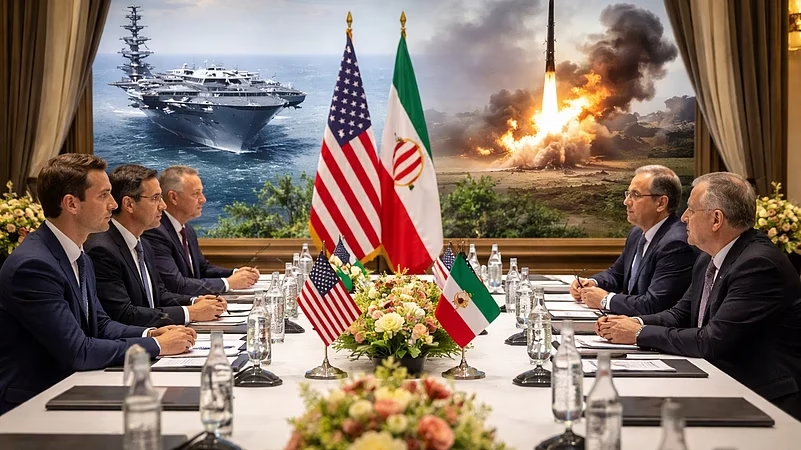
Market analysts quickly weighed in on the potential impact of the ceasefire. Some believe the reopening of the Strait could release a significant volume of oil back into global markets.
“In theory, the 10–13 [million barrels per day] of crude oil and product supply stranded behind the Strait should now be gradually released,” said Tamas Varga, analyst at brokerage PVM Oil. “Whether the pre-March status quo will be re-established depends entirely on whether the truce can be turned into a permanent peace during the negotiations in Pakistan.”
However, not everyone is convinced the risks have fully subsided. While supply may resume, the underlying tensions remain far from resolved.
“Even with a peace deal, Iran may be emboldened to threaten the Strait of Hormuz more frequently in the future, and the market will price in heightened risk to the Strait of Hormuz going forward,” MST Marquee analyst Saul Kavonic said.
War Impact And Economic Ripples
The broader conflict has already left a deep mark on global energy markets. The U.S.-Israeli war involving Iran triggered the steepest monthly oil price surge on record, with prices climbing more than 50%.
Meanwhile, economic data indicates that Europe is already feeling the strain, highlighting how deeply interconnected global markets remain.
Geopolitical Premium Still In Play
Despite the ceasefire, analysts caution that oil prices may continue to reflect a built-in geopolitical risk premium.
“There is still scope for a significant geopolitical premium being entrenched for the foreseeable future based on the details of the comprehensive agreement,” said Commonwealth Bank analyst Vivek Dhar in a note.
Similarly, doubts persist over whether the temporary pause can evolve into lasting peace.
“It’s a good start and could pave the way to a more permanent reopening – but lots of ‘ifs’ still to work out,” IG analyst Tony Sycamore said.
Fragile Calm Or Lasting Peace?
Trump also revealed that the U.S. had received a 10-point proposal from Iran, describing it as a workable foundation for negotiations. He added that both sides were progressing toward a more permanent resolution.
Still, the situation remains fluid. Markets may have breathed a sigh of relief, but the question lingers, can a two-week truce truly reset one of the world’s most volatile flashpoints?
For now, oil prices tell a story of cautious optimism, tempered by the reality that peace, especially in such a complex region, is never guaranteed.