
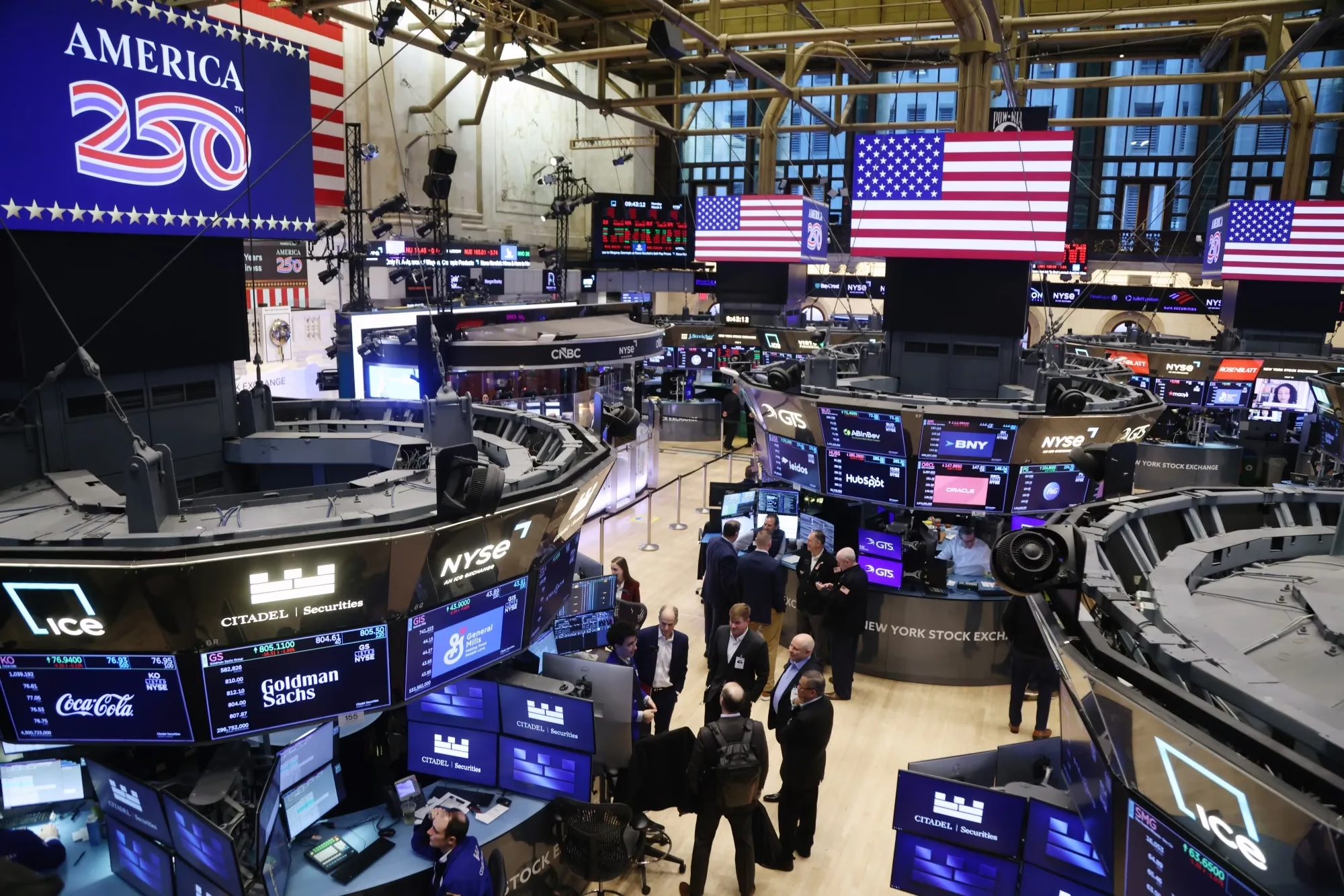
Stocks swung wildly on Thursday as investors struggled to make sense of a deepening Middle East conflict and a lack of clarity from Washington. Oil surged, markets wobbled, and uncertainty hung heavy over global trading floors.
The turbulence followed President Donald Trump’s latest remarks, which signaled a prolonged war with Iran but offered little detail on how or when it might end.
Markets Whipsaw As War Uncertainty Deepens
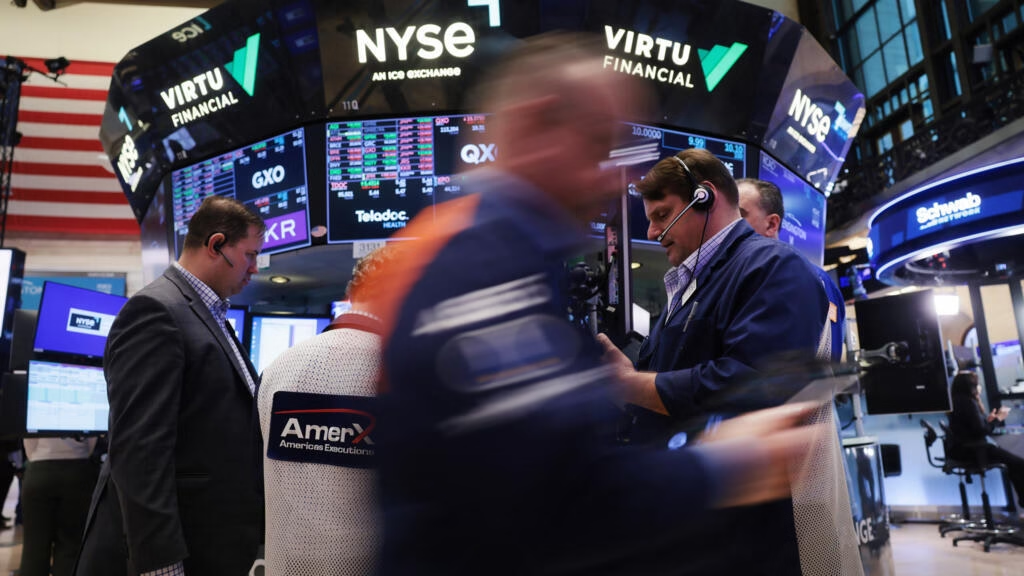
Trading opened on a shaky note, with stocks sliding sharply before clawing back losses later in the day. The Dow Jones Industrial Average dropped 61 points, or 0.13%, after plunging more than 650 points earlier. Meanwhile, the S&P 500 edged up 0.11%, and the Nasdaq rose 0.18%, both recovering from earlier declines of over 1.5%.
Investors appeared caught between fear and cautious optimism. On one hand, escalating tensions raised concerns about prolonged disruption. On the other, reports hinted at possible movement in one of the world’s most critical oil routes.
Strait Of Hormuz Becomes Market Flashpoint
Attention quickly shifted to the Strait of Hormuz, a vital artery for global oil shipments. Reports from Iran’s semi-official news agencies suggested that Iran and Oman are working on a protocol to maintain traffic through the strait.
That development offered a flicker of hope. However, traders remain laser-focused on whether oil will continue flowing smoothly or face further disruption.
The stakes are enormous. The strait handles roughly one-fifth of the world’s oil supply, making any interruption a major global concern.
Oil Prices Surge As Supply Fears Intensify
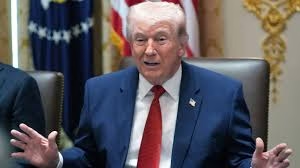
Meanwhile, oil prices soared as fears of supply shortages grew. Trump’s April 1 address did little to calm nerves, offering no clear roadmap for ending the conflict or reopening the strait fully.
Brent crude jumped 7.8% to $109.03 per barrel, while West Texas Intermediate surged 11.41% to $111.54. Notably, WTI traded above Brent, an unusual move driven by near-term supply fears.
Investors rushed into short-term contracts, betting that disruptions will hit immediately rather than later. That urgency reflects how fragile the situation has become.
Analysts Warn Of Prolonged Market Stress
“The fog of war remains thick and crude flows are still too low to sound the all-clear,” Felix Vezina-Poirier, chief strategist at BCA Research, said in a note.
His warning captures the broader mood. Uncertainty is not just lingering, it is intensifying.
At the same time, Trump indicated the conflict could last “two to three more weeks” and even hinted at targeting Iran’s oil infrastructure. That possibility alone has rattled investors, raising fears of deeper supply shocks.
Global Markets Slide As Pressure Builds
Across the globe, markets mirrored the anxiety. Japan’s Nikkei 225 fell 2.38%, while South Korea’s Kospi plunged 4.47%. In Europe, Germany’s DAX dropped 0.78%, recovering slightly after steeper losses earlier in the session.
The ripple effects are unmistakable. Energy prices are climbing, and economies are beginning to feel the strain.
Americans Feel The Pain At The Pump
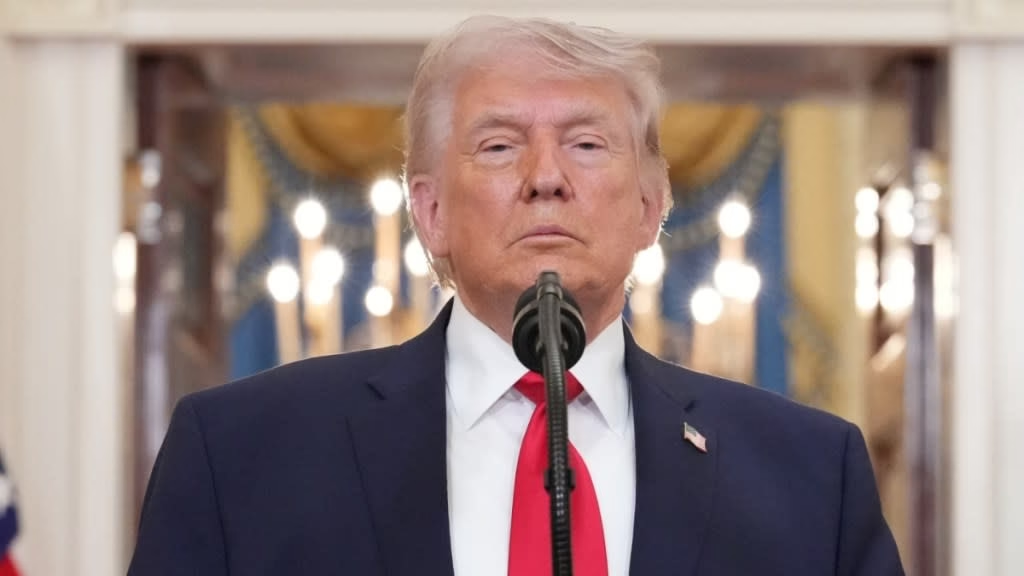
Back home, rising oil prices are hitting consumers directly. US gas prices have jumped 37% since the war began, with the national average reaching $4.08 per gallon, according to AAA.
For many households, the impact is immediate and painful. Higher fuel costs are driving up prices across the board, from groceries to airfare. Some families now face difficult financial choices as everyday expenses climb.
Inflation Fears Shake Economic Outlook
Higher energy costs are feeding into broader concerns about inflation and economic slowdown. As oil prices rise, businesses face higher operating costs, which often get passed on to consumers.
Meanwhile, the stock market has already taken a hit. The Dow and S&P 500 recently posted their worst quarterly performances since September 2022. The Nasdaq, for its part, just logged its worst month in a year.
Earlier this week, markets briefly rallied on hopes of a diplomatic breakthrough. However, Trump’s latest comments quickly erased that optimism.
Recovery Hinges On Energy Stability
“Markets will only recover in a true and sustainable way once global energy markets begin to normalize,” Kyle Rodda, senior financial market analyst at Capital.com, said in a note.
That normalization feels distant for now. Investors are watching every headline, every signal, and every movement in oil flows.
Bond Market Signals Growing Concern
In the bond market, yields fluctuated throughout the day, initially rising before pulling back. Even so, yields remain higher than before the conflict began, signaling increased borrowing costs across the economy.
Investors have been selling bonds in anticipation of persistent inflation and the likelihood that the Federal Reserve may keep interest rates elevated for longer.
Markets Close Week On Edge
Thursday marked the final trading day of the week, with US markets set to close Friday for the Good Friday holiday.
As the week ends, one question dominates: how long can markets endure this level of uncertainty?
For now, the answer remains as unclear as the conflict itself.