
The streets of Islamabad fell unusually quiet this week. A sudden two-day public holiday emptied the capital, while behind tight security barriers, high-stakes diplomacy surged forward.
At the center of it all, Pakistan now finds itself hosting rare, direct talks between Washington and Tehran. The goal is clear, stop a weeks-long war that has already claimed thousands of lives and rattled global stability.
For a country long associated with security challenges and economic struggles, this moment marks a striking shift.
Islamabad Becomes The Diplomatic Stage
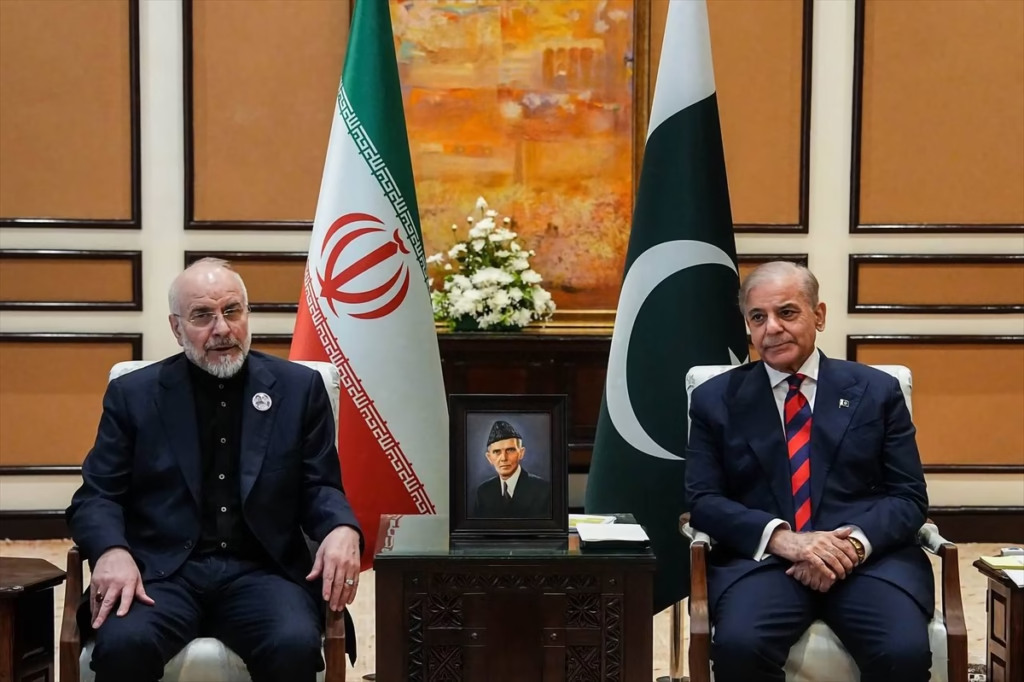
Pakistan is hosting what could be the most critical ceasefire talks in years between the United States and Iran. The discussions arrive at a time when tensions are dangerously high and the world is watching closely.
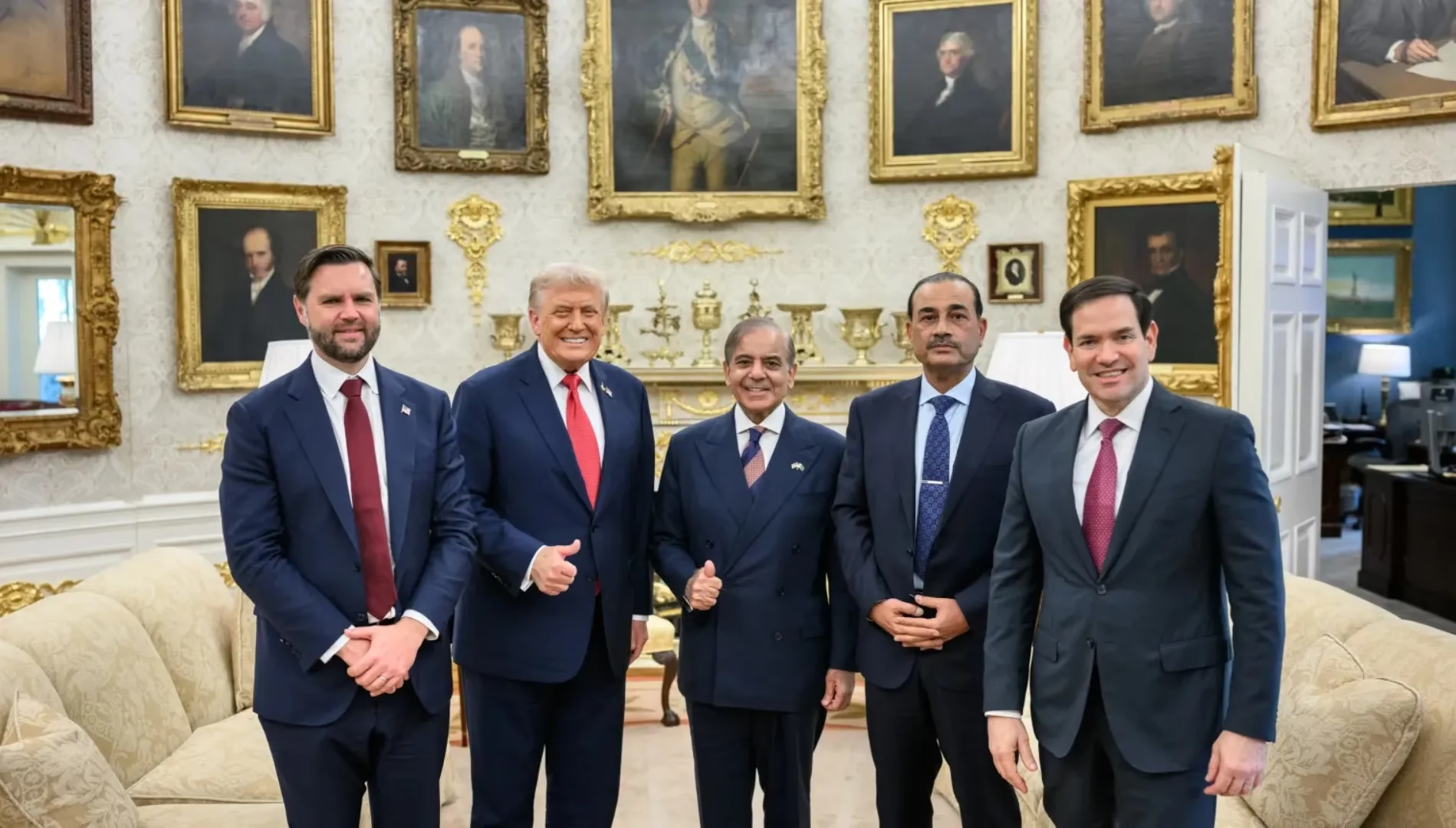
Senior US officials, including Vice President JD Vance, are expected to attend. His visit alone signals how seriously Washington is treating this diplomatic opening. In fact, he is the most senior US official to visit Pakistan in over a decade.
Analysts say this is not accidental. Geography, timing, and careful diplomacy have placed Islamabad in a rare position of influence.
“The fact that Pakistan was able to pull this diplomatic breakthrough at the last minute definitely earns it a lot of credibility,” said Farwa Aamer, director of South Asia Initiatives at the Asia Policy Institute.
“Pakistan’s proactive facilitation efforts and success puts it on the map as a player who is showing agency,” Aamer said, establishing Islamabad as “an active stakeholder in how the future of the broader region will look like.”
From Distrust To Strategic Relevance
It was not long ago that relations between Pakistan and the United States were strained. Years of mistrust, particularly during the Afghanistan war, had left Islamabad labeled as unreliable in Washington’s eyes.
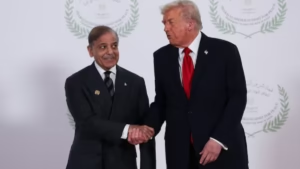
The 2011 operation that killed Osama Bin Laden near a major Pakistani military academy deepened that distrust. Criticism from US leaders followed, including sharp remarks from Donald Trump.
“Pakistan was really a sort of pariah state,” said political scientist Aqil Shah, from the Edmund A. Walsh School of Foreign Service at Georgetown University. “The Biden administration didn’t really engage it; there was no concrete strategic interest.”
However, shifting global dynamics have reshaped priorities. Washington’s approach has evolved, and Pakistan has adapted quickly.
“I think there was a very real desire in Pakistan to try and broaden the relationship with Washington,” said Fahd Humayun, an assistant professor of political science at Tufts University. “Pakistan came out of (the conflict with India) slightly more restrained because it very publicly acknowledged it was in favor of deescalation, and acknowledged the Trump administration’s role in doing that.”
Why Pakistan Has Skin In The Game
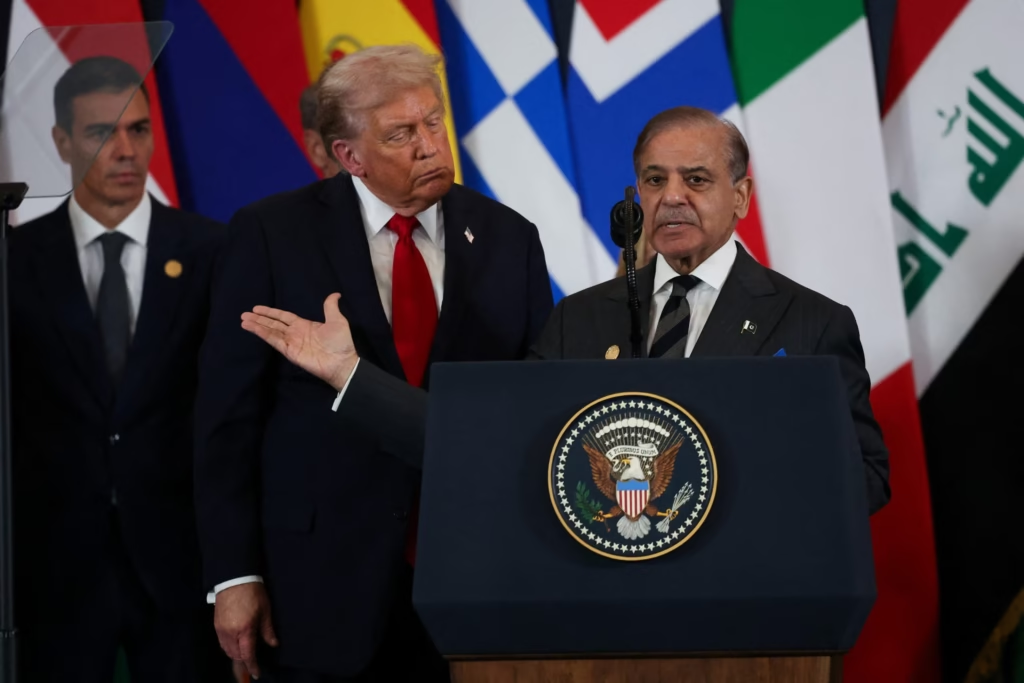
Pakistan’s role is not just about diplomacy, it is also about necessity.
The country relies heavily on energy imports from the Middle East. Iran’s control over the Strait of Hormuz has already disrupted supply routes, creating pressure on Pakistan’s economy.
Additionally, Islamabad signed a defense agreement with Saudi Arabia last year. Any further escalation could have forced Pakistan into a broader regional conflict.
“I think Pakistan had enormous stakes, probably more stakes than any other country east of Iran in this particular conflict,” Humayun said. “And the other thing to keep in mind is that Pakistan was never really part of the anti-Iranian coalition that had begun to coalesce.”
A Delicate Balance Between Rivals
Pakistan’s position is unique, and fragile.
It shares a long and often tense border with Iran. At the same time, it maintains working ties with Washington. Unlike Gulf nations, Pakistan does not host US military bases and has avoided direct targeting by Iran.
“Pakistan found itself in a unique spot with good ties with both Tehran and Washington,” said Aamer from the Asia Society Policy Institute.
That balancing act extends further. Pakistan’s close relationship with China adds another layer of influence.
“I think one thing that probably made an impact was that Pakistan also established a conduit with the with China,” said Humayun, adding the confluence of Pakistan’s back-and-forth and China’s buy-in “must have made a difference for the Iranians.”
Ceasefire Talks Under Pressure
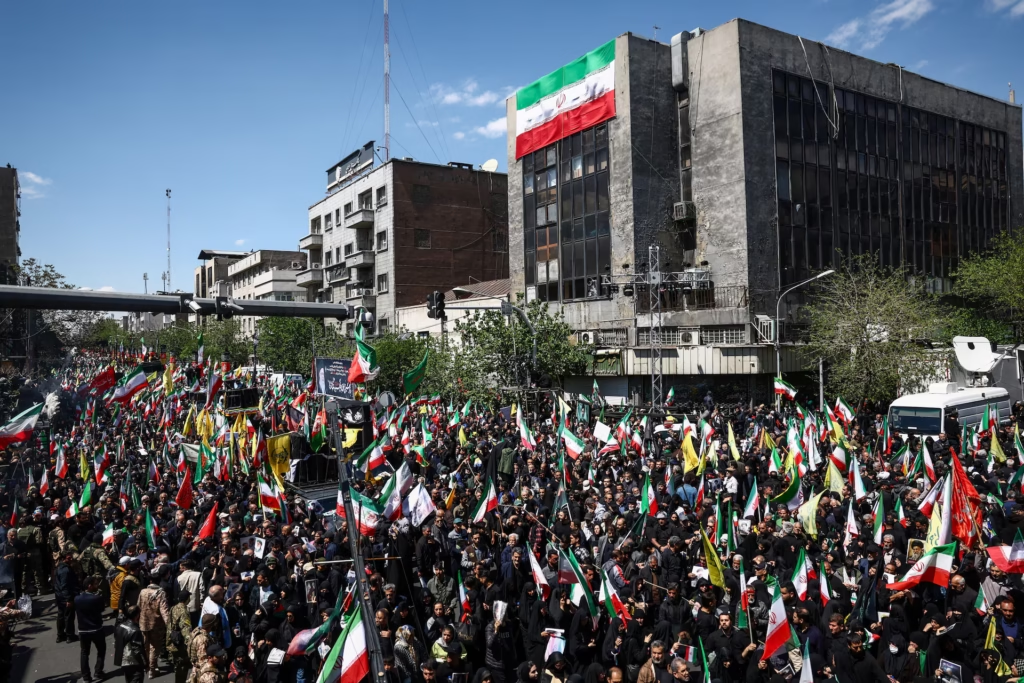
Even as preparations intensify in Islamabad, the situation remains volatile.
Security across the capital has been tightened. Key venues have been cleared and reserved for diplomatic use. Hotels are filling rapidly as journalists arrive to cover what could become a historic moment.
Yet the ceasefire itself is already being tested.
Iran’s Islamic Revolutionary Guard Corps has claimed disruptions in shipping through the Strait of Hormuz following what it described as an Israeli violation of the ceasefire in Lebanon.
Pakistan has responded strongly. “The Israeli actions undermine international efforts to establish peace and stability in the region,” prime minister Shehbaz Sharif said in a statement.
A Defining Moment For Pakistan
So why now, and why Pakistan?
The answer lies in a rare alignment of opportunity, geography, and intent.
“All of these things just align in a way that made it possible for Pakistan to position itself very strategically at this moment,” Humayun said.
If the talks succeed, Pakistan’s global standing could shift dramatically. If they fail, the risks are equally high.
Either way, Islamabad is no longer on the sidelines. It is now at the center of one of the most critical diplomatic efforts in the world.