
President Donald Trump has sharply escalated tensions with Western allies, declaring the United States no longer needs their support as the Iran conflict deepens. His comments come at a critical moment, with global markets rattled and military activity intensifying across the Middle East.
In a fiery statement, Trump made clear he sees little value in Nato backing, even as the war strains international alliances and diplomatic ties.
Trump Doubles Down On Nato Criticism
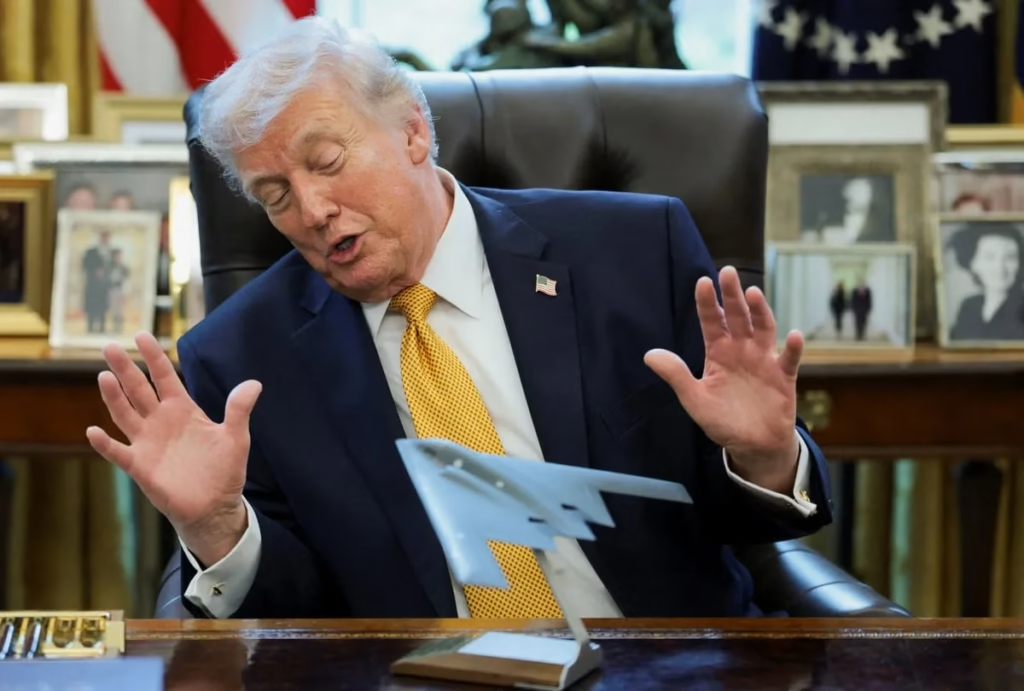
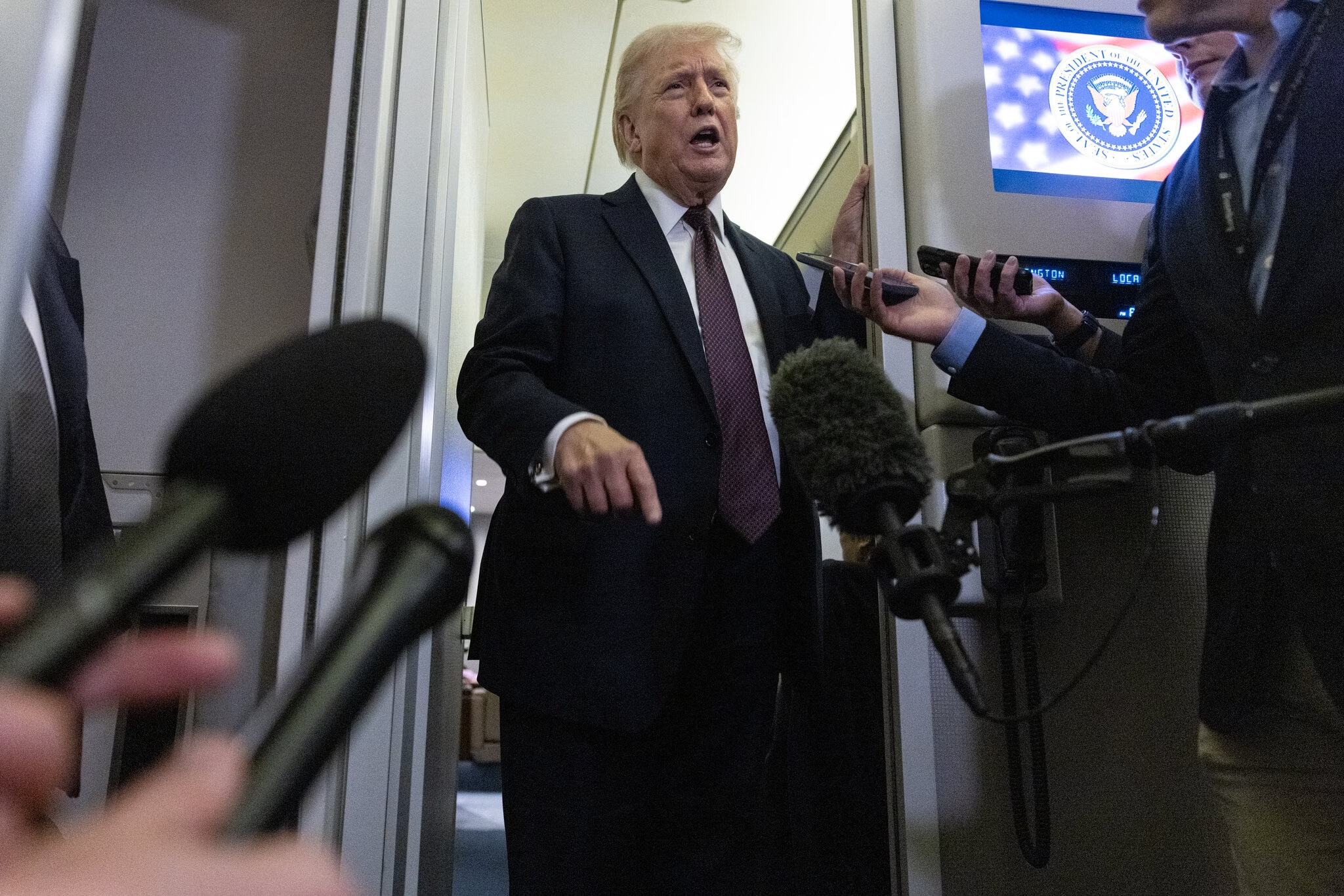
Trump did not hold back. In remarks from the Oval Office and a separate post online, he openly criticized Nato countries for refusing to support US operations tied to the Iran conflict.
He said allies were making “a foolish mistake” by staying out of efforts to secure the Strait of Hormuz, a vital route for global oil shipments.
Meanwhile, Trump insisted the United States could handle the situation alone. “Well we don’t need any help,” he said, before adding, “We don’t need them but they should’ve been there.”
His rhetoric intensified further in a social media post, where he wrote: “Because of the fact that we have had such Military Success, we no longer ‘need,’ or desire, the NATO Countries’ assistance — WE NEVER DID! Likewise, Japan, Australia, or South Korea.”
He doubled down again, declaring: “In fact, speaking as President of the United States of America, by far the Most Powerful Country Anywhere in the World, WE DO NOT NEED THE HELP OF ANYONE!”
Allies Refuse To Join Growing Conflict
Despite US pressure, several key allies have declined to take part in military operations or escort missions in the Strait of Hormuz.
France signaled it would only consider involvement once conditions stabilize. President Emmanuel Macron stressed that any future role must come after hostilities ease and remain separate from ongoing combat.
However, Trump appeared unimpressed by such caution. He repeated frustration with European leaders, even taking aim at the UK prime minister, saying he was “no Winston Churchill.”
Still, the lack of support raises a pressing question. Can the US sustain this campaign without broader international backing?
Internal Divisions Surface In Washington
Back home, the conflict is also exposing fractures within the US government and political landscape.
A major development came with the resignation of a senior counterterrorism official. In his departure, he stated plainly that “Iran posed no imminent threat to our nation.”
That claim directly contradicts the administration’s justification for military action.
Trump pushed back forcefully. “I always thought he was a nice guy but I always thought he was weak on security, very weak on security.”
He continued: “I didn’t know him well … But when I read his statement I realised that it’s a good thing that he’s out, because he said Iran was not a threat.”
Then, emphasizing his position, Trump added: “Iran was a threat, every country realised what a threat Iran was.”
Meanwhile, officials at the White House defended the decision to act, saying intelligence pointed to a serious and immediate danger.
Fighting Intensifies Across The Region
On the ground, the conflict shows no signs of slowing.
Israeli forces reported ongoing strikes targeting Hezbollah infrastructure in Lebanon, while rockets were launched toward Israeli territory. “rocket projectiles” were fired, according to military officials, as fighting escalated on multiple fronts.
In parallel with interception efforts, Israeli forces said they are striking launch sites and infrastructure, vowing they will “respond forcefully to every threat to the State of Israel”.
Elsewhere, Iran acknowledged the death of a senior Basij militia commander, describing it as a “cowardly assassination” and underscoring the group’s importance in its ongoing “battle” against the US and Israel.
Civilians across the region are increasingly caught in the crossfire. Human Rights Watch warned that many Iranian strikes have hit civilian areas, including residential buildings and airports.
The organization said casualties include “at least 11 civilian deaths and at least 268 injuries”.
Fear, Anger And Uncertainty Among Civilians
Amid the violence, ordinary people are feeling the toll.
One Iranian described the situation bluntly, saying the war is “really destroying my nerves”.
At border crossings, reactions to reports of key figures being killed have been mixed. Some expressed relief, others disbelief, reflecting deep divisions within Iranian society.
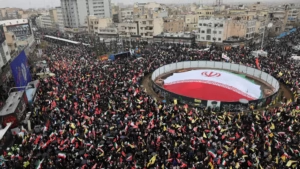
Still, across cities like Tehran and Beirut, images of destruction and displacement tell a stark story. Families are fleeing, buildings lie in rubble, and uncertainty dominates daily life.
Strait Of Hormuz Remains A Flashpoint
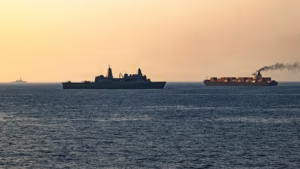
The Strait of Hormuz continues to sit at the center of the crisis.
While not fully closed, Iran has tightened control over the waterway, allowing select ships to pass under certain conditions. This selective blockade has disrupted global oil flows and heightened economic fears worldwide.
Trump’s push for allied support in securing the route has so far fallen flat. Instead, his latest remarks risk widening the gap between the US and its traditional partners.
What Comes Next?
Trump suggested the US will not remain in the conflict indefinitely, saying, “But we’re not ready to leave yet. But we will be leaving in the near future, we’ll be leaving in pretty much the very near future.”
That timeline, however, remains unclear.
For now, the war continues, alliances are under strain, and the world watches closely as tensions rise. The big question remains, will this conflict pull more nations in, or push them further away?