
The Iran war has entered a volatile new phase, with fresh claims of high-level assassinations, growing internal divisions in Washington, and rising fears of a wider regional fallout. As day 18 unfolds, conflicting narratives, political pressure, and escalating military actions are shaping a conflict that shows no clear path to resolution.
Tehran Confirms Death Of Senior Commander
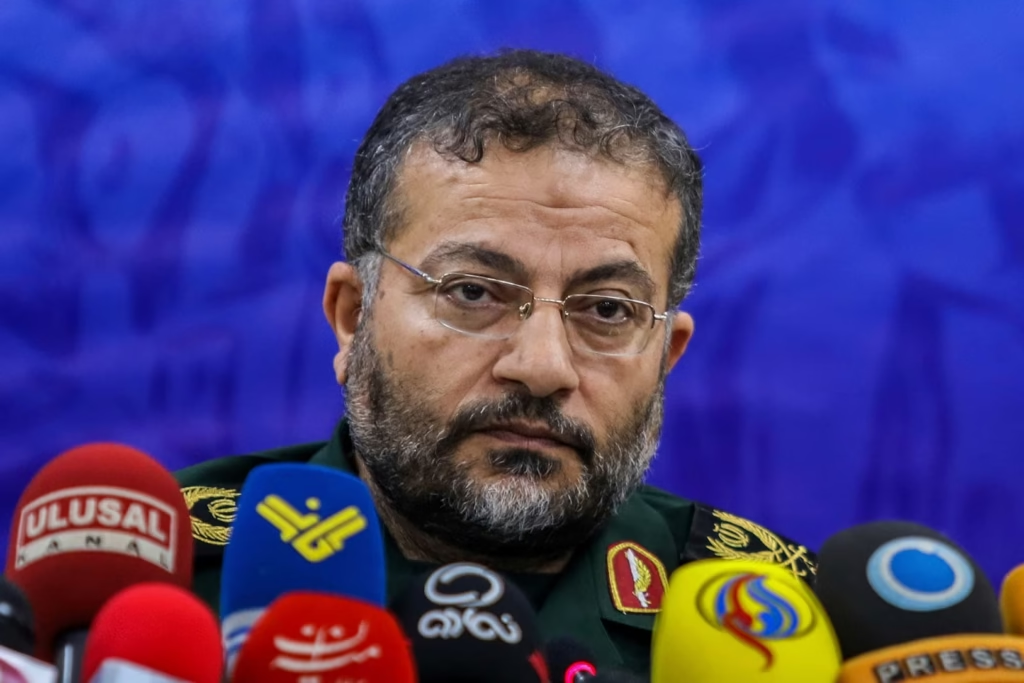
Iranian state media has acknowledged the death of a key military figure, confirming that Gholamreza Soleimani, commander of the Basij paramilitary force, has been killed. This marks one of the most significant admissions from Tehran since the war began.
Meanwhile, Israel claims it also eliminated Ali Larijani, one of Iran’s most powerful security figures, in an overnight strike. However, Iran has pushed back, releasing what it says is a handwritten note from Larijani to dispute the report.
Still, the broader pattern is clear. One by one, senior Iranian officials are being targeted. The question now is simple, how long can the leadership structure withstand this pressure?
Trump Shrugs Off Fear And Signals Continued Presence
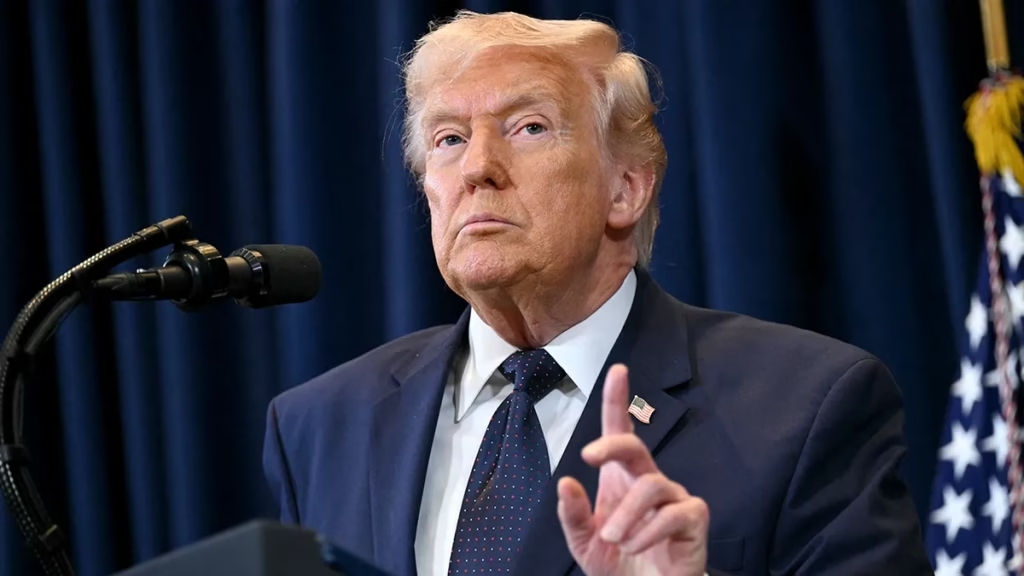
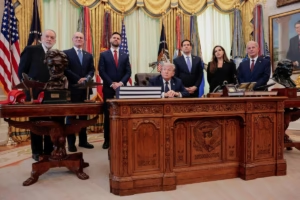
As tensions escalate, Donald Trump has struck a defiant tone. Responding to warnings about potential consequences, Donald Trump said, “I’m really not afraid of anything.”
His stance reflects a broader commitment to the ongoing campaign. He added the US is “not ready to leave yet” but will “in the near future”, leaving observers questioning the exact timeline of American involvement.
At the same time, Trump dismissed concerns about dissent within his administration. Reacting to a high-profile resignation, he called it “a good thing”, arguing that those who downplayed Iran’s threat were not fit for the role.
Shock Resignation Exposes Internal Fractures
The war is not only being fought overseas. It is also creating cracks inside the US government.
A senior counterterrorism official stepped down, citing concerns about the direction of the conflict and alleged external pressure. His exit has triggered alarm among analysts, who see it as a potential turning point.
One former diplomat described the move as a “powerful message”, warning that if more officials follow, political pressure on the administration could intensify rapidly.
Meanwhile, the White House has pushed back strongly, with officials insisting the decision to engage Iran was based on credible intelligence and not influenced by outside forces.
Strait Of Hormuz Emerges As Global Flashpoint
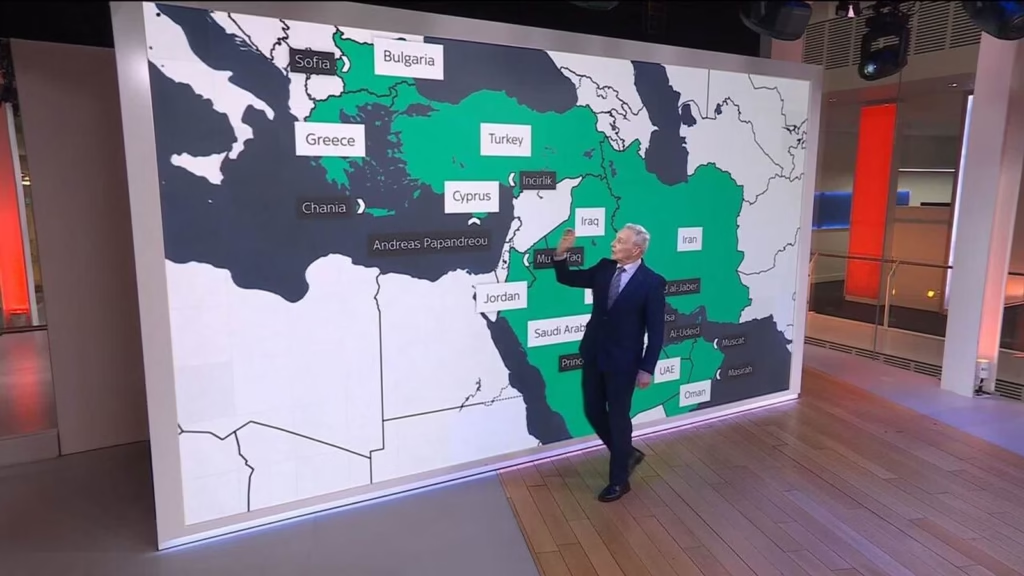
Beyond the battlefield, attention is shifting to the Strait of Hormuz, a narrow but vital النفط route that carries a significant portion of the world’s oil supply.
Iran has warned the situation “won’t return to its pre-war status”, raising fears of long-term disruption. The waterway, already under threat, has become a central concern for global markets.
Oil prices remain above $100, and pressure is mounting on allies to step in. However, Trump has sent mixed signals, at one point urging support, then declaring the US does not need NATO assistance and “never did”.
Missile Strikes And Regional Escalation Intensify
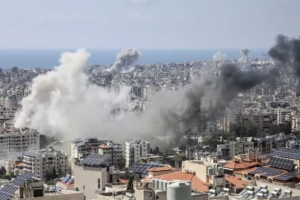
On the ground, the conflict continues to widen. Iran has launched waves of missiles targeting Israeli forces near Lebanon, while Israel has expanded operations into Lebanese territory.
At the same time, attacks on US-linked sites have increased. The American embassy in Baghdad has come under repeated drone and rocket fire, triggering alarms and defensive responses.
Elsewhere, the UAE briefly shut its airspace amid fears of incoming drones and missiles, highlighting how quickly the conflict is spilling across borders.
Russia Deepens Support For Tehran
As the war drags on, new reports suggest Russia is stepping up its involvement behind the scenes.
According to sources, Moscow has been providing satellite intelligence and advanced drone technology to assist Iran’s targeting efforts. This growing cooperation signals a deeper alignment between the two nations.
Ukrainian President Volodymyr Zelenskyy described the partnership in stark terms, calling Russia and Iran “brothers in hatred” and warning they are using AI to “kill cheaply over long distances”.
Even Trump has acknowledged that Russia may be helping Iran “a bit”, adding another layer of geopolitical complexity to an already volatile situation.
Uncertain Path Ahead As Conflict Deepens
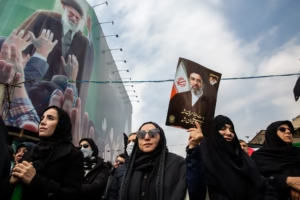
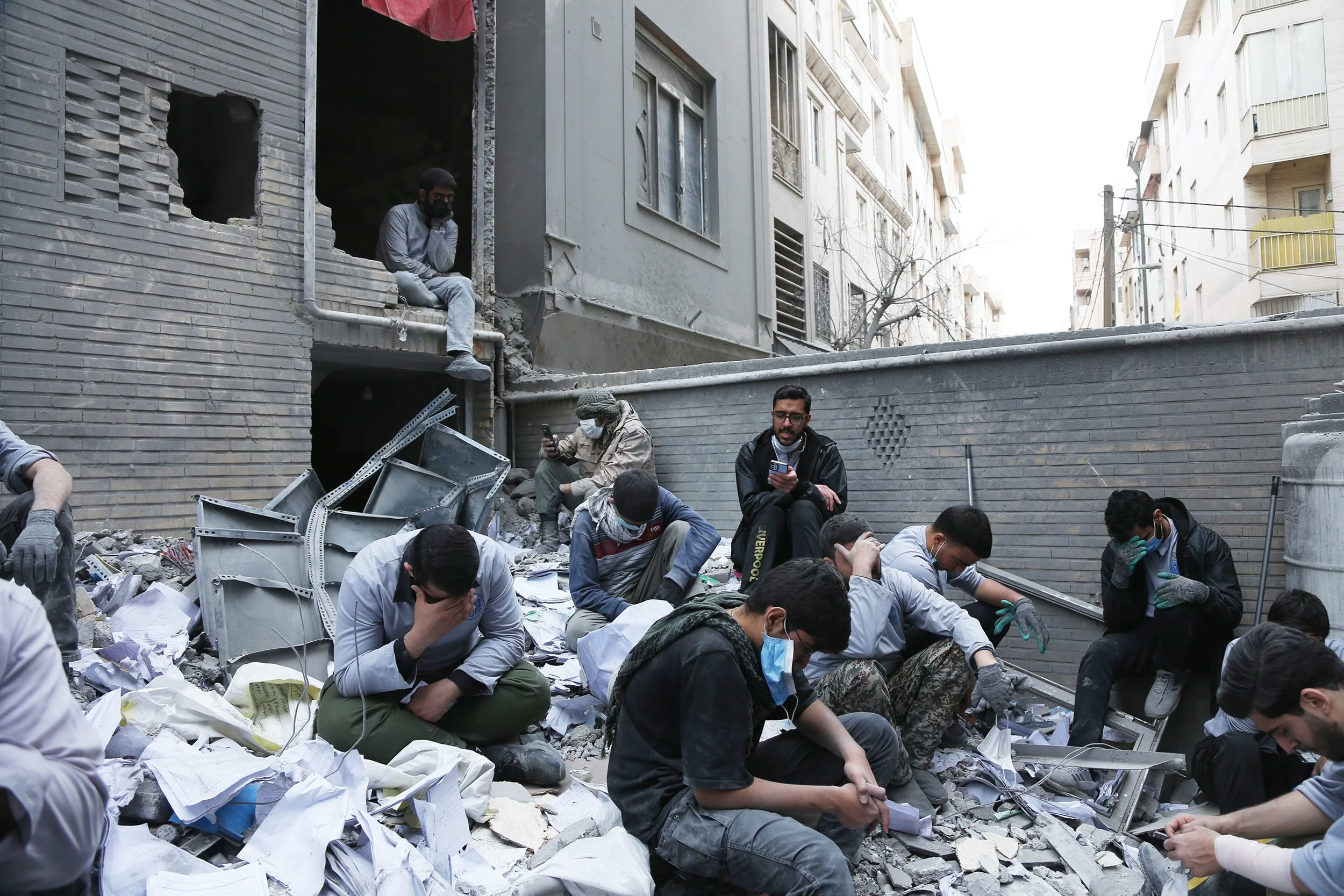
Despite heavy strikes and leadership losses, Iran’s government appears firmly in control for now. Public displays of support continue in parts of Tehran, even as explosions and drone strikes shake the العاصمة.
Yet, the killing of senior figures could complicate any chance of negotiation. Analysts warn that replacing experienced leaders with more hardline figures may push the conflict further from diplomacy.
So where does it go from here? With rising casualties, global economic risks, and political divisions on all sides, the war is entering a phase where every move carries higher stakes than the last.