
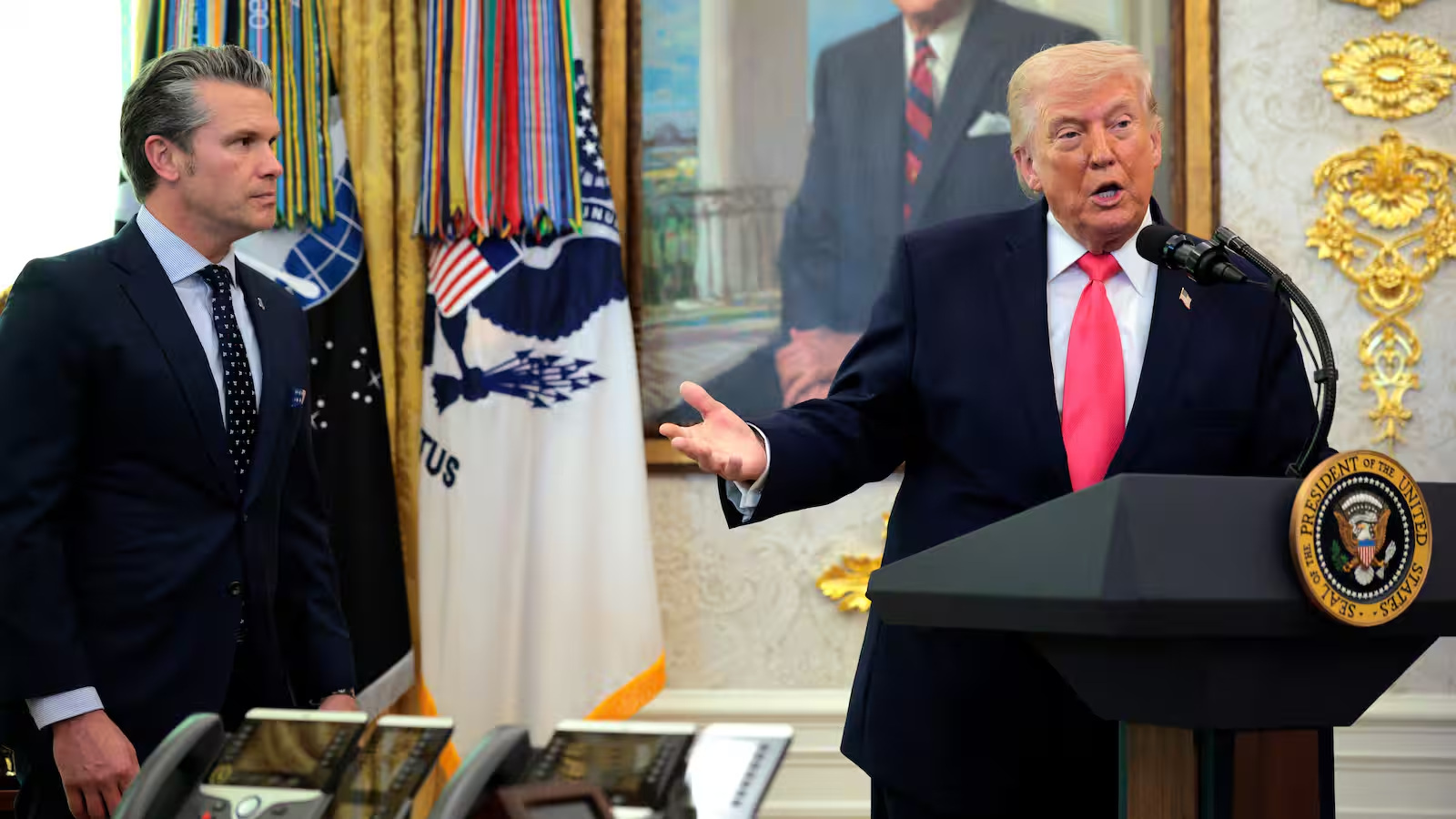
President Trump says he is shutting the door on sending American officials overseas for new negotiations tied to the Iran war, making clear that if Tehran wants a deal, it will need to come to Washington, or pick up the phone.
The blunt remarks add fresh pressure to an already volatile standoff, with military threats escalating and diplomatic efforts hanging in the balance.
Trump Says No More Long-Distance Diplomacy
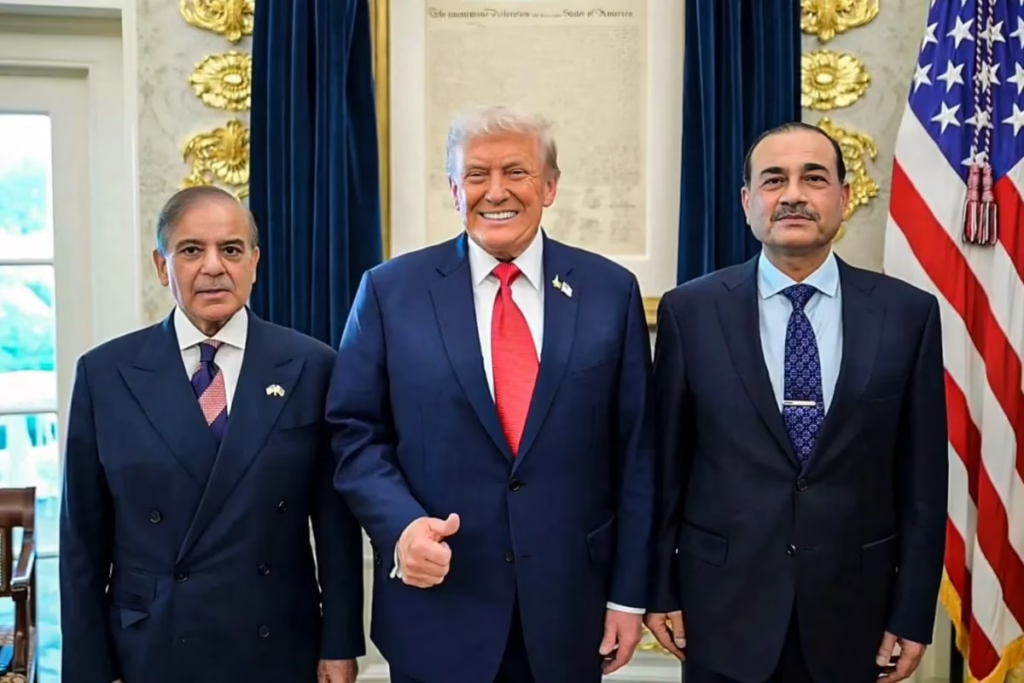
Trump said U.S. representatives would not be heading to Pakistan for planned discussions.
“We have all the cards. If they want to talk, they can come to us, or they can call us. You know, there is a telephone,” Trump said during a call-in interview on “The Sunday Briefing.”
He continued with another swipe at the idea of face-to-face talks abroad.
“We have nice secure lines, although I’m not sure any telephone line is secure, frankly, but we have secure lines, and if they want, we can talk, but we’re not sending people to travel 18 hours to meet,” he added.
The comments came one day after Trump publicly announced he had canceled the planned diplomatic trip to Islamabad.
“I just cancelled the trip of my representatives going to Islamabad, Pakistan, to meet with the Iranians,” Trump wrote.
Frustration With Iran Leadership
Trump also questioned whether Iran’s leadership is capable of negotiating in a unified way, signaling deep skepticism about internal divisions inside Tehran.
“Too much time wasted on traveling, too much work! Besides which, there is tremendous infighting and confusion within their ‘leadership,’” he continued. “Nobody knows who is in charge, including them. Also, we have all the cards, they have none! If they want to talk, all they have to do is call!!!”
Meanwhile, Vice President Vance had also scrapped a separate visit to Islamabad earlier in the week. He had been expected to join U.S. Middle East envoy Steve Witkoff and Jared Kushner for the talks.
Ceasefire Extended As Pressure Builds
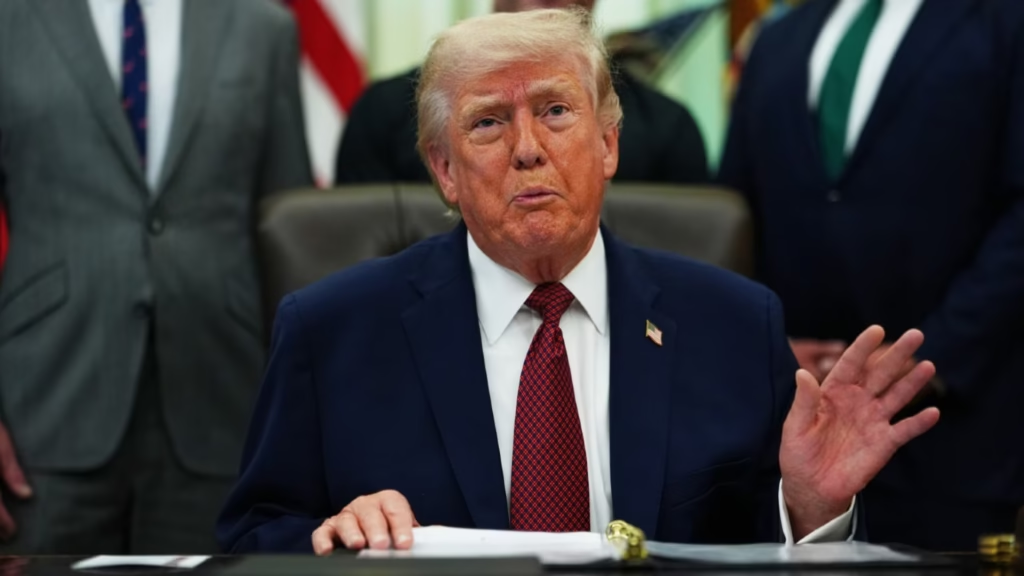
Instead of sending negotiators, Trump moved to extend the Iran ceasefire indefinitely, saying it would remain in place until Iranian officials offer a framework to end the war.
Still, the president insisted Washington’s core demand has not changed.
“Very simple. They cannot have a nuclear weapon, otherwise there’s no reason to meet,” Trump told Jacqui Heinrich.
That statement underscores the White House position that any future agreement must begin with Iran abandoning nuclear ambitions.
Strait Of Hormuz Crisis Deepens
At the same time, conflict around the Strait of Hormuz remains a major flashpoint. The narrow waterway is one of the world’s most important oil routes, and instability there has rattled global markets.
Iran has reportedly placed mines in surrounding waters, while U.S. forces have imposed a naval blockade aimed at limiting Tehran’s control over ship traffic.
Trump argued those military actions have severely weakened Iran’s capabilities.
“I think the big advantage is that we’ve taken out their navy in its entirety … we’ve taken out their air force. Have no air force left. They have no navy left,” the president said.
He also claimed a leadership shake-up inside Iran may have changed the tone of negotiations.
“Their leaders are gone. Which is, which is a good thing. They were far more radicalized than the people that we’re dealing with now, the people we’re dealing with now, some of them are very reasonable people, and others are not, and they’re not getting along,” he added.
Iran Threatens Massive Retaliation
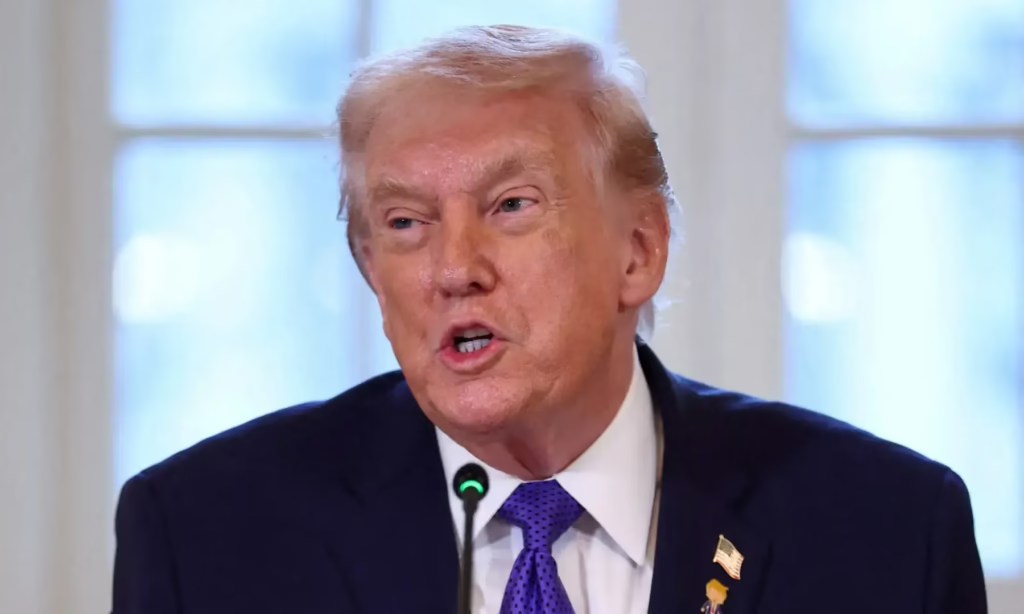
Reports indicate Iranian Supreme Leader Mojtaba Khamenei has been seriously wounded and is being shielded from further attacks.
However, Tehran’s messaging remains aggressive.
The Iranian Embassy in South Africa warned Saturday that Iran stands ready to unleash the “largest missile strike in history” if the U.S. or Israel launches another attack during negotiations.
“Iran has prepared for the ‘largest missile strike in history’ against Israel and U.S. bases in West Asia, to be launched immediately upon detecting any signs of an attack,” the embassy posted on the social platform X.
What Happens Next?
With diplomacy stalled, military pressure rising, and both sides trading threats, the path forward looks anything but certain. Trump says the line is open, but only on his terms.
Whether Iran answers that call could shape the next chapter of the crisis.