
The geopolitical shockwaves from the Iran war are no longer confined to the Middle East. Instead, they are rippling across Europe, where leaders now find themselves grappling with an energy crisis and a shifting alliance landscape, all while asking a difficult question: why were they left out of the decision, yet handed the consequences?
Back in late February, President Donald Trump delivered a striking message directly to the Iranian people. “When we are finished, take over your government,” he said. “It will be yours to take.”
Weeks later, that same tone has shifted toward Europe, with expectations that allies now shoulder the burden of stabilizing a volatile region.
Trump Signals Europe Should Take Control
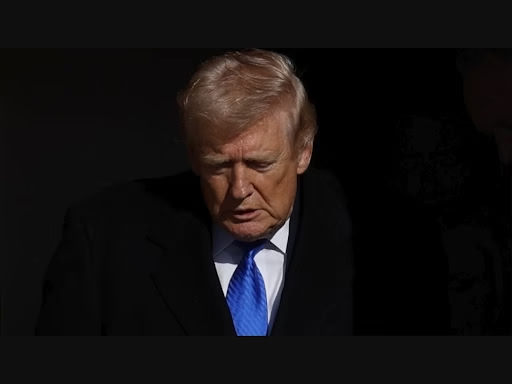
In a recent address, Trump made his position unmistakably clear. “Go to the Strait and just take it, protect it, use it for yourselves,” he said. “They must grab it and cherish it. They could do it so easily. We will be helpful, but they should take the lead in protecting the oil that they so depend on.”
However, the message was not without contradiction. On one hand, Trump urged European nations to show strength and secure the Strait of Hormuz. On the other, he suggested the situation might resolve itself once the war concludes.
Still, the underlying message stood firm: the responsibility to keep one of the world’s most critical oil routes open is no longer America’s priority.
A New Doctrine Leaves Allies Uneasy
That stance signals what analysts see as a dramatic shift in US foreign policy. Richard Haass described it as a reversal of long-standing norms, noting that instead of the traditional “you break it, you buy it” approach, the message now appears to be: “We broke it, but you own it.”
Meanwhile, frustration among US allies has been building. European and NATO leaders were not consulted before the war began, yet they are now expected to step in and manage its aftermath.
Ivo Daalder highlighted the breakdown in coordination, saying, “There was a way to bring our NATO allies into the discussion and have a discussion about how we can increase pressure on Iran. The president decided to do none of that.”
He continued with a sharper critique: “He decided to start a war without talking to Congress, without talking to the American people, without talking to our allies,” adding, “And he finds himself 31, 32 days later, where he has to choose between either escalating and getting involved in a forever war or, frankly, (turning) tail.”
Europe Hit By Renewed Energy Shock
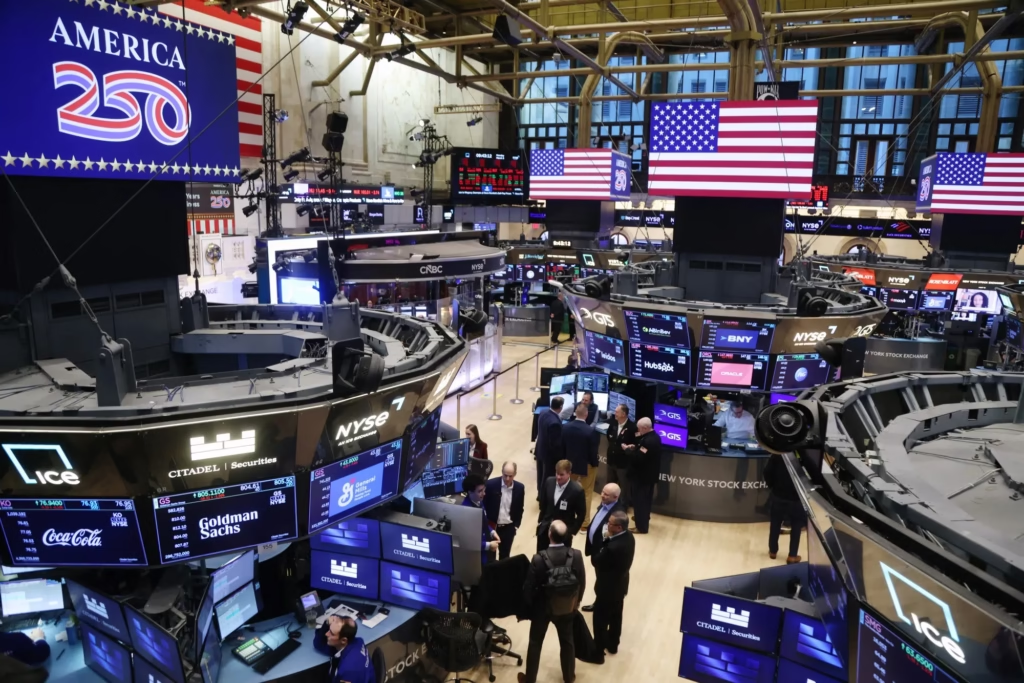
As the geopolitical tension rises, the immediate consequence for Europe is economic. The effective closure of the Strait of Hormuz has disrupted global oil flows, sending energy markets into turmoil.
This comes at a particularly fragile moment. Europe is still recovering from the energy crisis triggered by Russia’s 2022 invasion of Ukraine, which forced nations to rapidly reduce dependence on Russian fuel.
Now, the pressure is back. Analysts warn that competition for alternative gas supplies could intensify, driving prices even higher. For countries already managing inflation and economic uncertainty, the impact could be severe.
At the same time, political cracks are beginning to show. Belgium’s prime minister, Bart De Wever, recently called for restoring ties with Russia to secure cheaper energy, a suggestion that drew immediate criticism but may reflect growing unease across the continent.
NATO Tensions Begin To Surface
Beyond energy concerns, the deeper issue may be trust. Trump has openly questioned the value of NATO allies, expressing frustration over their response to the conflict.
“They haven’t been friends when we needed them,” Trump said. “We’ve never asked them for much… it’s a one-way street.”
Such remarks have reignited fears about the future of the alliance. While a full US withdrawal from NATO would face legal and political hurdles, experts suggest the damage may already be unfolding.
Daalder emphasized the core issue, writing, “Military alliances are at their core, based on trust: the confidence that if I am attacked, you will come help defend.” He added, “It’s hard to see how any European country will now be able and willing to trust the United States to come to its defense. Hope, perhaps. But they can’t count on it.”
Europe Begins To Rethink Its Strategy
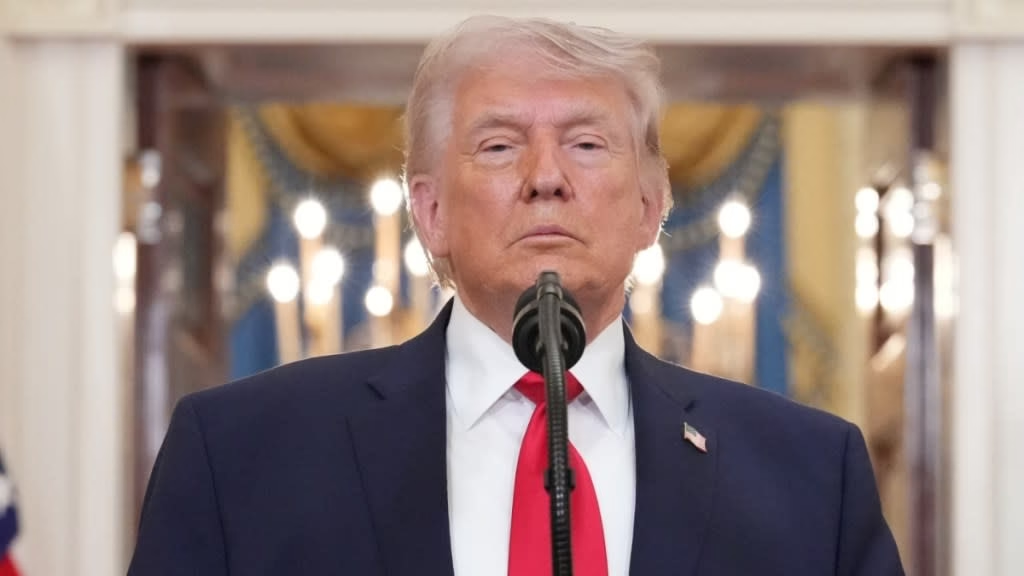
European leaders, however, are no longer standing still. In recent months, they have begun reassessing their dependence on the United States, both militarily and economically.
Tensions had already been rising earlier this year, particularly after Trump floated the idea of annexing Greenland, a move that alarmed NATO members and tested the alliance’s unity.
Now, that skepticism is turning into action. Leaders are pushing back more openly, with French President Emmanuel Macron dismissing the idea of military intervention in the Strait as impractical. “When we want to be serious, we don’t say the opposite of what we said the day before,” he said, criticizing the inconsistency in Washington’s messaging.
At the same time, Europe is accelerating efforts to strengthen its own defense capabilities and reduce reliance on external energy sources. The push toward renewable energy, once seen as a long-term goal, is quickly becoming a strategic necessity.
A Turning Point In Transatlantic Relations
For decades, the transatlantic alliance has been built on shared responsibility and mutual trust. Yet now, that foundation appears increasingly uncertain.
Trump has argued that Europe would not “be there” for the United States. But as his administration signals a reduced commitment to its allies, European nations are preparing for a future where they may need to stand more independently.
The question is no longer whether Europe can rely on the US. Instead, it is how quickly it can adapt to a world where that reliance is no longer guaranteed.