
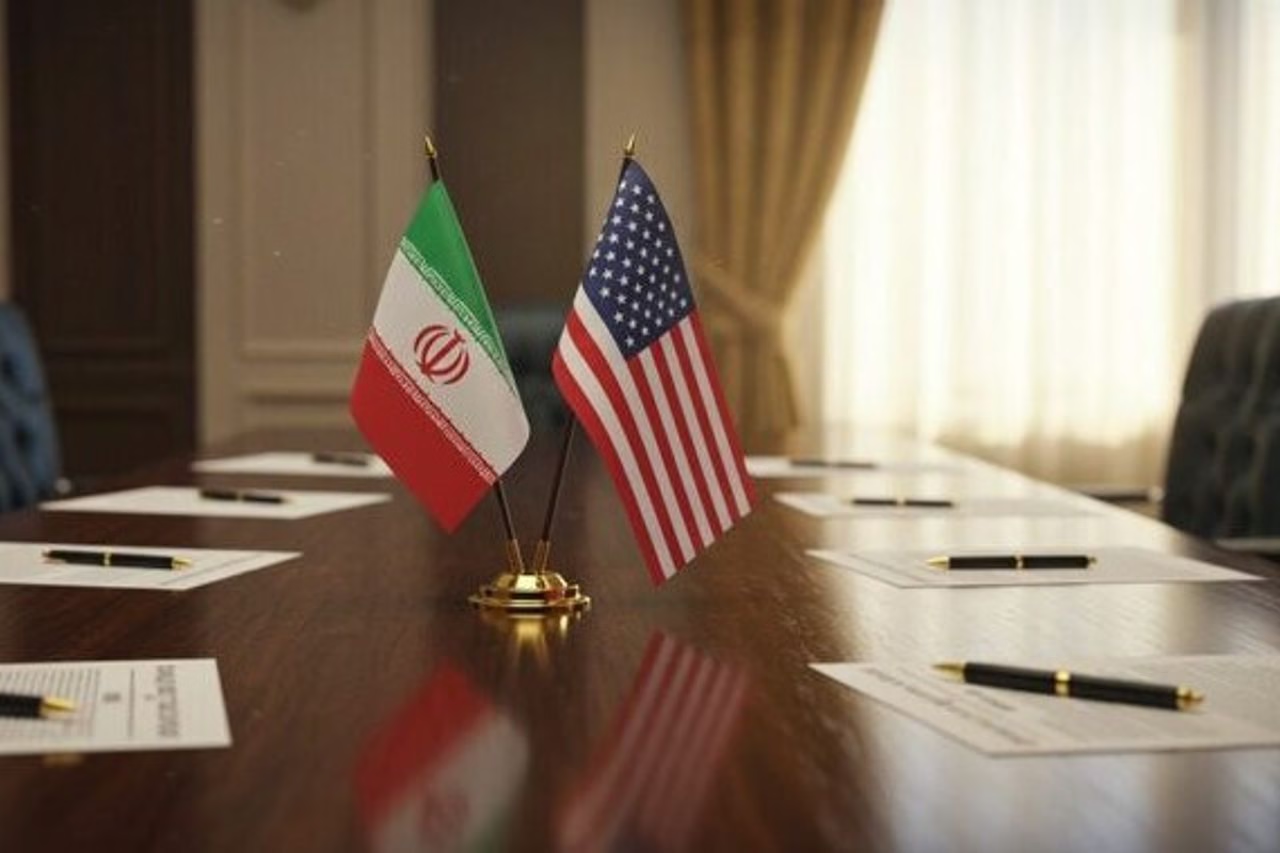
The guns may be falling silent, at least for now, but the spin machine is roaring on both sides. The United States and Iran have agreed to a two-week ceasefire after weeks of fighting that rattled global markets, sent oil prices soaring and pushed the region toward the edge. Each side is selling the pause as proof of strength. Each side says it got what it wanted. And yet, beneath the triumphant messaging, the real test starts now.
For the moment, the breakthrough offers a badly needed pause in a conflict that had already spilled far beyond the battlefield. The Strait of Hormuz, the world’s most sensitive oil chokepoint, sits at the heart of the deal. So do planned talks in Islamabad, where both sides are expected to explore whether this fragile truce can become something more durable.
Trump And Tehran Both Claim The Upper Hand
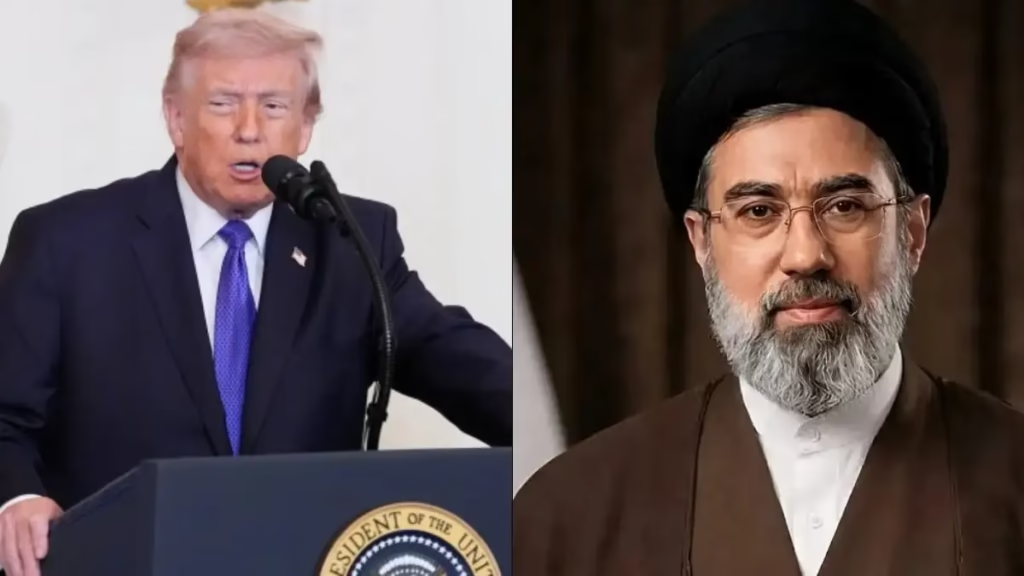
President Donald Trump wasted no time declaring success after the ceasefire was announced. He called it a “total and complete victory” and doubled down with, “Total and complete victory. 100 percent. No question about it.”
He also tied the agreement directly to the reopening of the Strait of Hormuz, a key route for global energy flows that had been effectively choked by the conflict. In a post after the announcement, Trump said the US would be “helping with the traffic buildup in the Strait of Hormuz.”
Then came the sales pitch. “There will be lots of positive action! Big money will be made,” Trump wrote. “Iran can start the reconstruction process. We’ll be loading up with supplies of all kinds, and just ‘hangin’ around’ in order to make sure that everything goes well. I feel confident that it will.”
He added: “A big day for World Peace! Iran wants it to happen, they’ve had enough! Likewise, so has everyone else!”
Still, Trump kept some ambiguity alive when asked whether he would carry out his earlier threats against Iranian civilian infrastructure if Tehran broke the deal. “You’re going to have to see,” he said.
Iran, meanwhile, pushed a sharply different version of events. Its Supreme National Security Council said the country had forced Washington to the table on Tehran’s terms, describing the outcome as a strategic success. “The enemy, in its unfair, unlawful, and criminal war against the Iranian nation, has suffered an undeniable, historic, and crushing defeat,” the statement read.
It also declared: “We convey glad tidings to the great nation of Iran that nearly all of the war’s objectives have been achieved, and your valiant sons have driven the enemy into a state of historic helplessness and enduring defeat.”
And the warning was unmistakable. “Our hands remain upon the trigger, and should the slightest error be committed by the enemy, it shall be met with full force.”
Strait Of Hormuz Sits At The Center Of The Deal
The ceasefire may be political on the surface, but the economic core of it runs through one narrow stretch of water. Trump made clear that reopening the strait was non-negotiable, demanding the “COMPLETE, IMMEDIATE, and SAFE OPENING” of the route.
Iran’s foreign minister, Seyed Abbas Araghchi, signaled that Tehran was prepared to cooperate, though on its own terms. He said, “If attacks against Iran are halted, our Powerful Armed Forces will cease their defensive operations.”
He also said safe transit through Hormuz during the ceasefire “will be possible via coordination with Iran’s Armed Forces and with due consideration of technical limitations.”
Iran’s broader position went further. A statement from its security council said the 10-point plan “emphasizes fundamental matters” like the “regulated passage through the Strait of Hormuz under the coordination of the Armed Forces of Iran.”
State-linked reporting also said Iran and Oman planned to charge transit fees during the ceasefire period, with the money earmarked for reconstruction. That proposal raises immediate questions for commercial shipping, insurers, naval forces and Washington’s long-term military posture in the Gulf.
One of the sharpest concerns is whether those conditions could collide with the presence of the US Navy’s 5th Fleet in Bahrain. As one analyst put it, “If toll is to be paid, clearly that undermines US military access to the (Persian) Gulf.”
He added, “Unless Trump is intending for CENTCOM to completely overhaul its posture in the Middle East Gulf region, I don’t see how this toll system can hold.”
Pakistan Moves To The Diplomatic Front Line
The next act may unfold in Islamabad. Pakistan’s Prime Minister Shehbaz Sharif, who helped present the ceasefire proposal, invited delegations from both sides for further talks on Friday, April 10.
His tone was celebratory and deliberate. “I warmly welcome the sagacious gesture and extend deepest gratitude to the leadership of both the countries,” Sharif said.
He then made his pitch for what comes next, inviting both governments to engage in further negotiations “to settle all disputes” in Islamabad. “We earnestly hope that the ‘Islamabad Talks’ succeed in achieving sustainable peace and wish to share more good news in coming days!”
Sharif also made a sweeping claim about the deal’s scope, saying: “With the greatest humility, I am pleased to announce that the Islamic Republic of Iran and the United States of America, along with their allies, have agreed to an immediate ceasefire everywhere including Lebanon and elsewhere, EFFECTIVE IMMEDIATELY.”
That assertion, however, quickly ran into resistance from Israel.
Israel Agrees On Iran, But Not On Lebanon
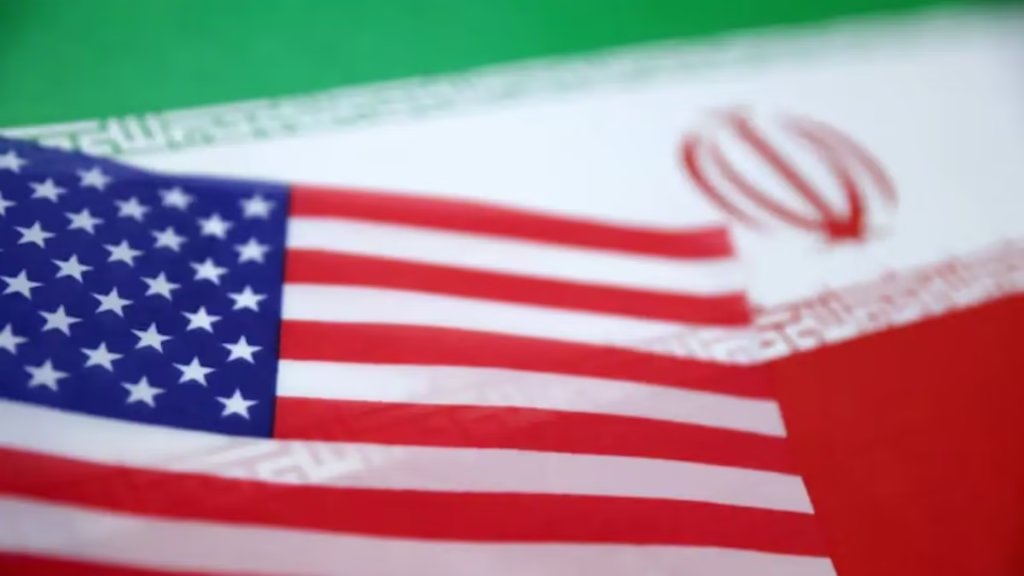
Israel said it would suspend strikes on Iran as part of the ceasefire arrangement. But it also made clear that Lebanon was a different matter.
According to a statement from Prime Minister Benjamin Netanyahu’s office, “Israel supports President Trump’s decision to suspend strikes against Iran for two weeks subject to Iran immediately opening the straits and stopping all attacks on the US, Israel and countries in the region.”
Then came the key line: “The two-weeks ceasefire does not include Lebanon.”
The Israeli military reinforced that position on Wednesday, saying, “In accordance with directives from the political echelon, the IDF has ceased fire in the operation against Iran, and is highly prepared to respond defensively against any violation.”
At the same time, it made clear the fighting elsewhere had not stopped. “Simultaneously, in Lebanon, the IDF is continuing to conduct targeted ground operations against the Hezbollah terrorist organization,” the military said.
Before the ceasefire fully settled in, Israel also said it carried out a final wave of attacks on Iran overnight, “in order to significantly degrade and neutralize its launching capabilities.”
Lebanon Violence Continues Despite Regional Pause
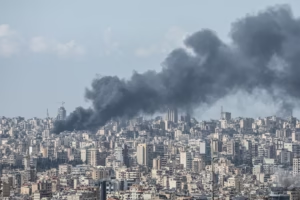
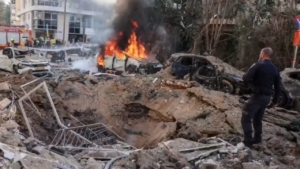
Whatever hopes existed for a broader regional halt were quickly undercut by events on the ground. In southern Lebanon, fresh strikes and evacuation warnings showed just how narrow the ceasefire really is.
An “urgent” warning told residents in the Tyre area: “To ensure your safety, evacuate your homes at once and move to the north of the Zahrani River.”
Later, an airstrike in the Sidon area killed eight people and wounded 22 others, according to Lebanon’s health ministry. Hezbollah said it had launched dozens of attacks on Israeli positions, underscoring how combustible the wider front remains.
So while Washington and Tehran talk ceasefire, Lebanon is still burning.
Markets Cheer, But Shipping And Fuel Relief May Take Time
Financial markets responded fast. Asian equities surged, and oil prices dropped sharply after the announcement. Investors clearly saw the ceasefire as a step away from catastrophe.
But traders and shipping executives are not rushing in. Traffic through Hormuz remained minimal hours after the deal was announced. One maritime expert said, “The ceasefire is a necessary first step, but it does not mean commercial shipping immediately normalizes through the international traffic lanes in the Strait.”
He continued: “Shipowners are still waiting for authoritative guidance from naval security channels, flag states, and, critically, marine war-risk insurers before sending vessels back into the strait.”
And the real indicator, he said, will come from the first ships willing to test the route. “The real signal to watch is the ‘first movers’ –– the earliest vessels willing to test the route. If those transits are completed safely, confidence will build quickly and the broader watch-and-wait cohort will follow.”
The aviation sector is also warning against expectations of instant relief. The head of the global air transport body said that even a quick reopening would not fix jet fuel supply problems overnight. “If (the strait) were to reopen and remain open, I think it will still take a period of months to get back to where supply needs to be given the disruption to the refining capacity in the Middle East, which is a critical part of the global supply of refined products, and not just jet fuel for other products as well,” he said.
Washington Signals Diplomacy, But Questions Remain
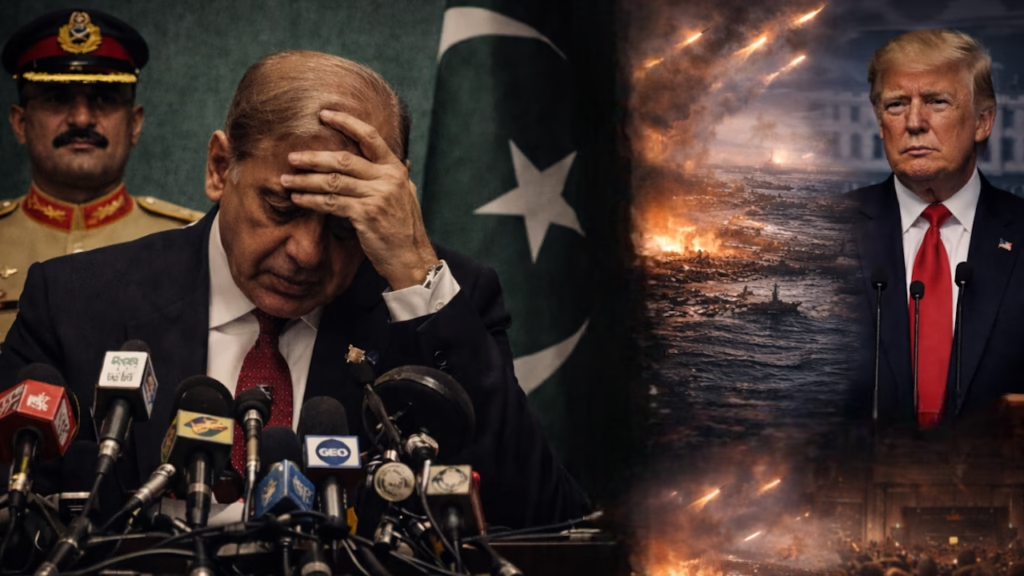
The White House framed the agreement as a hard-won strategic gain. Press secretary Karoline Leavitt called the ceasefire “a victory for the United States.”
She wrote: “We have achieved and exceeded our core military objectives in 38 days.”
She added, “The success of our military created maximum leverage, allowing President Trump and the team to engage in tough negotiations that have now created an opening for a diplomatic solution and long-term peace. Additionally, President Trump got the Strait of Hormuz reopened.”
And she offered a final flourish: “Never underestimate President Trump’s ability to successfully advance America’s interests and broker peace.”
Behind the public messaging, US officials are preparing for possible face-to-face talks in Pakistan. Leavitt confirmed: “There are discussions about in person talks, but nothing is final until announced by the President or the White House.”
The possible delegation could include senior administration figures, with Islamabad emerging as the likely venue.
Iran’s 10-Point Plan And America’s Demands Still Clash
For all the celebratory language, the substance of any lasting peace deal remains unresolved. Iran says Washington accepted “the general framework” of its own 10-point proposal “as a basis for negotiations.”
That list reportedly includes sanctions relief, compensation, the withdrawal of US forces from the region, protection for proxy groups, and a binding UN resolution. Widely circulated versions also said Washington agreed in principle to “acceptance of enrichment.”
The US, meanwhile, has its own list. Those expected demands include no nuclear weapons, surrender of highly enriched uranium, limits on Iranian defense capabilities, an end to proxy warfare and a fully reopened Hormuz.
Trump did offer one cryptic assurance on the nuclear file. “That will be perfectly taken care of or I wouldn’t have settled,” he said, referring to Iran’s uranium stockpile.
Capitol Hill is already signaling scrutiny. Senator Lindsey Graham said, “As to an Iranian ten point proposal to end the war, I look forward to reviewing it at the appropriate time and its submission to Congress for a vote, like we did with the Obama JCPOA.”
He also insisted, “I want to reaffirm that from my point of view, every ounce of the approximately 900 lbs. of highly enriched uranium has to be controlled by the U.S. and removed from Iran to prevent them in the future from having a dirty bomb or returning to the enrichment business.”
Graham warned, “We must remember that the Strait of Hormuz was attacked by Iran after the start of the war, destroying freedom of navigation. Going forward, it is imperative Iran is not rewarded for this hostile act against the world.”
And he added a note of caution: “diplomacy if it leads to the right outcome regarding the Iranian terrorist regime.”
His skepticism was plain in a final line: “At this early stage, I am extremely cautious regarding what is fact vs. fiction or misrepresentation. That’s why a congressional review process like the one the Senate followed to test the Obama Iranian deal is a sound way forward.”
Iran’s Public Celebrates, But Doubt Runs Deep
On the streets of Tehran, the ceasefire triggered a mixed reaction. Some celebrated. Others looked unconvinced.
One woman voiced deep suspicion toward Washington, saying, “America has shown itself a hundred times till now, we have gone to the negotiation table twice when it attacked us.”
She warned that the US could use the pause to “re-power itself.”
Then came her blunt question: “Is the nature of America going to change? I have no idea why they have accepted … like always, they want to buy time for Israel.”
That tension, between relief and mistrust, may define the next two weeks as much as any formal negotiation.
International Leaders Welcome A Pause, Not A Peace
Around the world, the ceasefire was greeted with cautious relief. Oman, one of the key intermediaries, summed up the moment in stark terms. Its foreign minister said “the world has stepped back from disaster. But there’s no room for complacency,” and pledged support for the next phase of “serious negotiations.”
British Prime Minister Keir Starmer said: “Together with our partners we must do all we can to support and sustain this ceasefire, turn it into a lasting agreement and re-open the Strait of Hormuz.”
Japan’s chief cabinet secretary stressed the practical stakes, saying: “What is most important now is that the situation genuinely de-escalates, including ensuring safe passage through the Strait of Hormuz.”
China also backed the diplomatic opening. A spokesperson said China had “been working to help bring about a ceasefire and end to the conflict.”
“China welcomes all efforts conducive to peace,” the spokesperson added.
“We hope relevant parties will seize the opportunity for peace, bridge differences through dialogue and put an early end to the conflict.”
The Ceasefire Has Begun, But The Hard Part Starts Now
This is the strange reality of the moment. Everyone is declaring victory, yet almost nothing has truly been settled. Iran says it forced the US to negotiate. Trump says he bent Tehran to his will. Israel has paused on one front while pressing ahead on another. Markets are breathing easier, but shippers are still waiting. Diplomats are preparing for talks, but the demands on both sides remain far apart.
A ceasefire can stop the shooting. It cannot, by itself, settle the score.
For now, the region has stepped back from the brink. The question hanging over the next two weeks is simple, and brutal: is this a real opening, or just an intermission?