
The UK government has hit the brakes on a controversial plan to transfer sovereignty of the Chagos Islands, a remote but strategically vital territory, following sharp criticism from Donald Trump. The pause signals growing tension between long-standing allies over military priorities and geopolitical strategy.
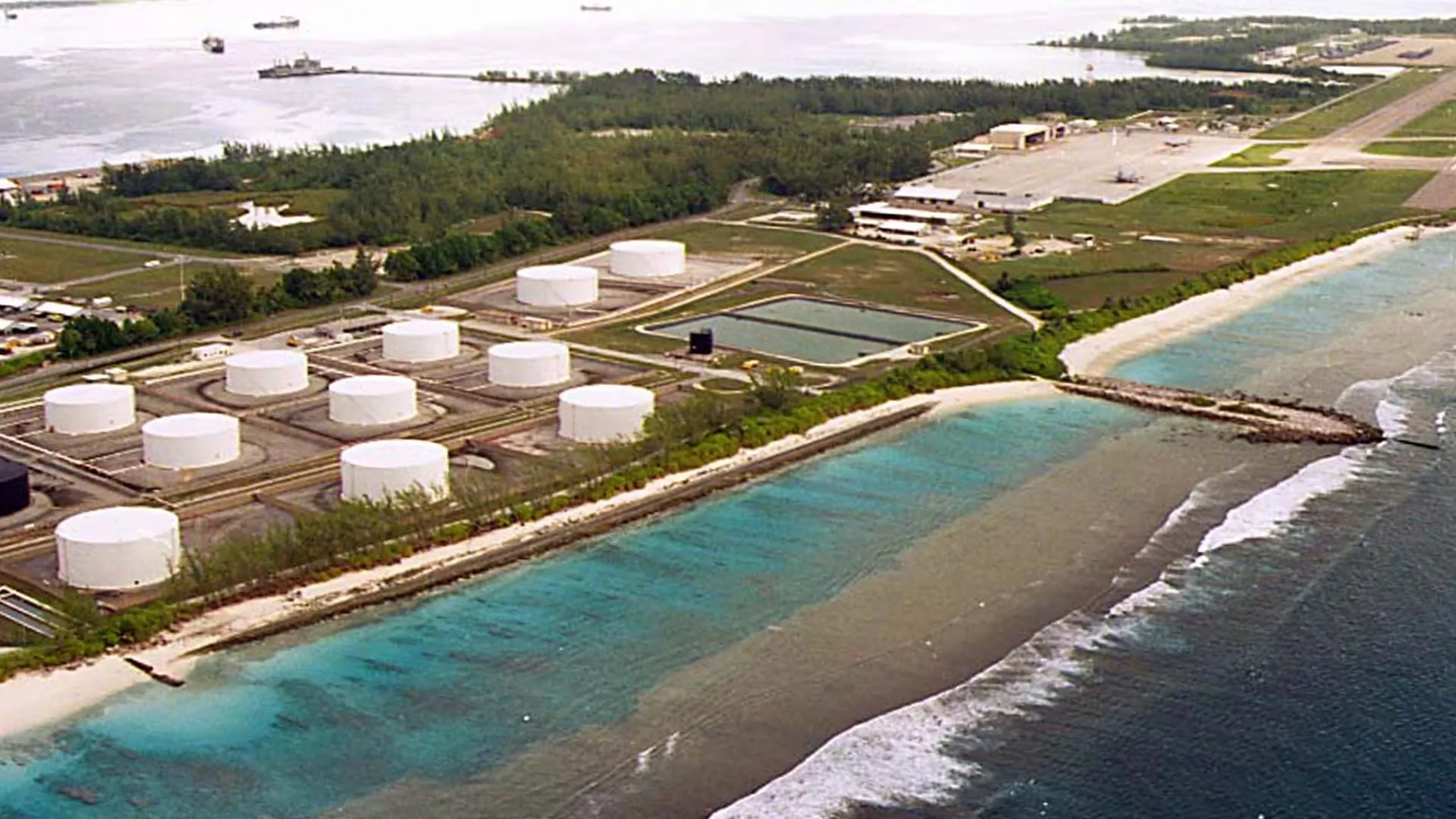
At the heart of the dispute sits Diego Garcia, a small island with outsized global importance, hosting one of the most critical overseas military bases jointly used by the US and UK.
Deal Stalls Amid Political Pressure
British Prime Minister Keir Starmer has not abandoned the plan entirely. However, the timeline has clearly slipped. Officials now admit there is simply not enough time left in the current parliamentary session to push the agreement into law.
Behind the scenes, another issue looms. The UK has long maintained that any deal involving the islands cannot move forward without Washington’s backing. So far, that formal green light has not arrived.
A government spokesperson reinforced the administration’s stance, saying, “we continue to believe the agreement is the best way to protect the long-term future of the base.”
That message remains consistent, even as political headwinds grow stronger.
Strategic Importance Of Diego Garcia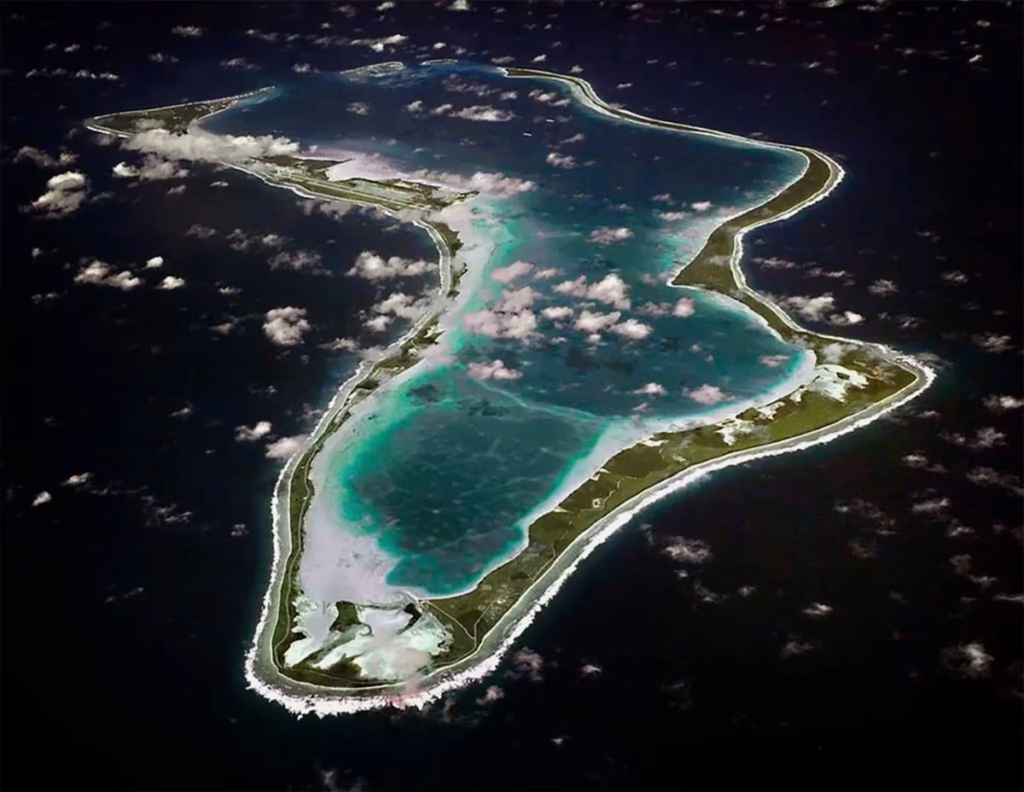
The stakes are high. Diego Garcia is no ordinary outpost.
A UK government spokesperson emphasized its role, stating, “Diego Garcia is a key strategic military asset for both the UK and the US.”
They continued, “Ensuring its long-term operational security is and will continue to be our priority – it is the entire reason for the deal.”
For decades, the base has served as a launch point for major military operations and a critical hub for global surveillance and logistics. Any uncertainty around its future raises serious concerns in defense circles.
Trump’s Sharp Reversal
Initially, the US supported the proposed agreement. That changed dramatically.
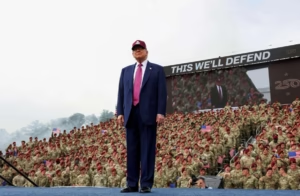
In January, Trump blasted the plan as an “act of great stupidity,” signaling a major shift in Washington’s tone. Then, just weeks later, he escalated his criticism even further.
In a February post, he wrote: “DO NOT GIVE AWAY DIEGO GARCIA!”
His warning did not stop there. Trump also argued that the base could play a key role in potential military operations, particularly in relation to Iran.
The blunt messaging rattled diplomatic discussions and forced London to reassess its timeline.
Tensions Over Military Use
Meanwhile, tensions between the two countries deepened over military strategy.
Reports in February suggested that Starmer rejected a request from Trump to allow US forces to use UK air bases, including Diego Garcia, for offensive operations against Iran.
That decision added another layer of complexity to an already fragile negotiation process.
What The Deal Actually Involves
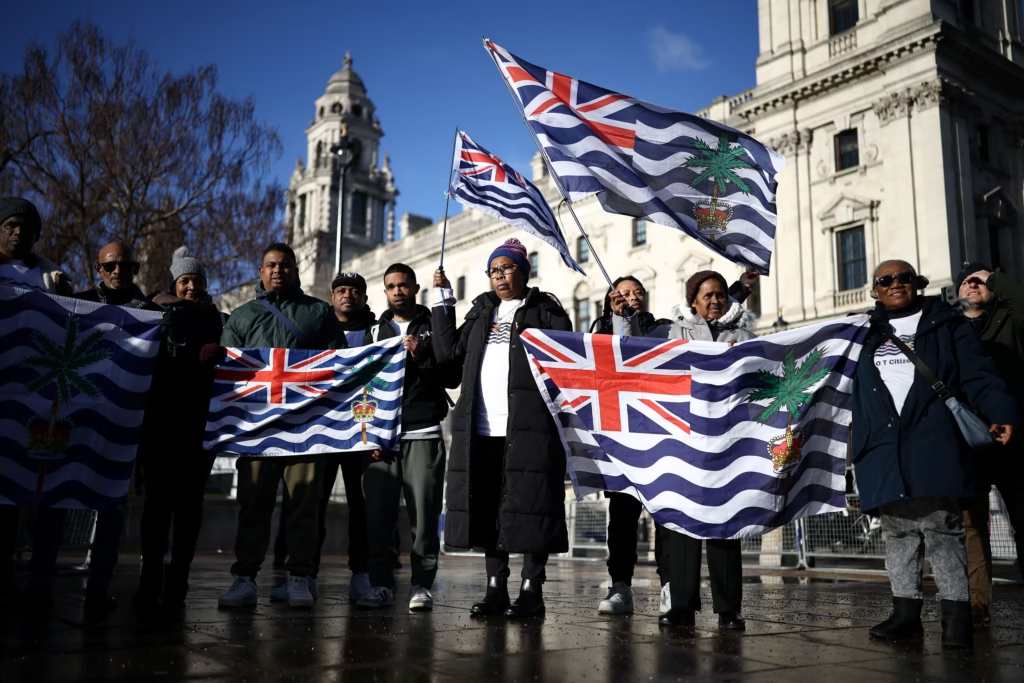
The proposed agreement aimed to transfer sovereignty of the Chagos Islands to Mauritius, which has long claimed ownership of the territory.
Under the plan, the UK would lease back Diego Garcia for military use, paying £101 million annually over a 99-year period. This arrangement was designed to maintain Western military access while addressing international legal pressure.
Still, the deal has proven politically sensitive on multiple fronts.
A Colonial Legacy Under Scrutiny
The roots of the dispute stretch back decades.
In 1965, the UK separated the Chagos Islands from Mauritius, shortly before granting Mauritius independence. The islands remained under British control, and in the years that followed, many Chagossians were forcibly removed to make way for the military base.
Most displaced residents resettled in Mauritius, more than 1,000 miles away.
The issue has lingered ever since, evolving into both a legal and moral challenge for the UK.
International Pressure Mounts
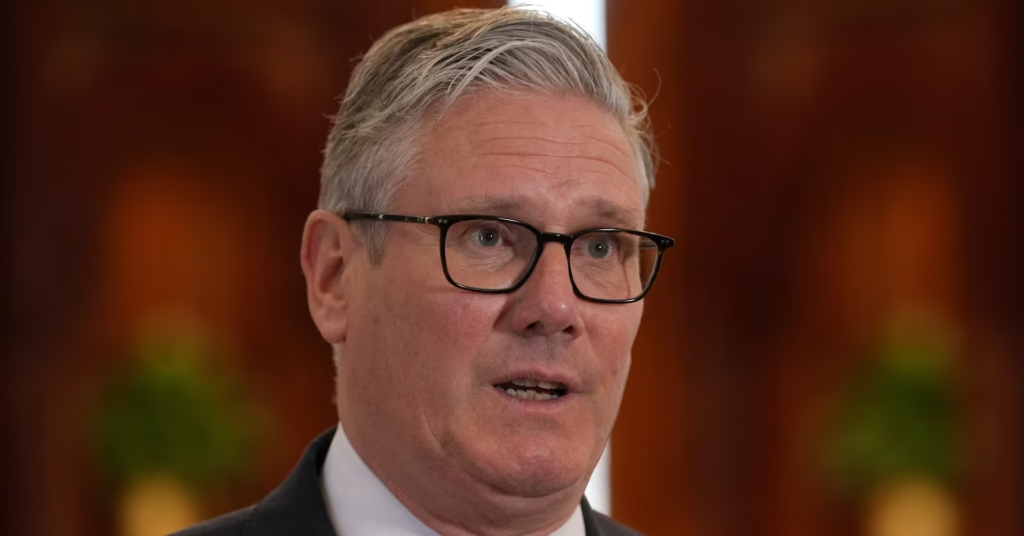
In 2019, the International Court of Justice ruled that Britain should return the islands to Mauritius “as rapidly as possible.”
Although the ruling was not legally binding, it intensified global pressure on London.
Successive UK governments have framed compliance as a test of their commitment to international law. However, balancing that obligation with military interests has proven far from simple.
What Happens Next?
For now, the deal remains in limbo.
Talks between the UK, the US, and Mauritius are ongoing, but no clear resolution is in sight. With geopolitical tensions rising and alliances being tested, the future of the Chagos Islands, and Diego Garcia in particular, hangs in the balance.
One question lingers: can diplomacy overcome strategic rivalry, or will this deal remain indefinitely stalled?