
Donald Trump’s sudden shift on Iran has ignited a fierce debate in Washington and beyond, raising a critical question: is this bold diplomacy, or a sign of shrinking leverage?
The U.S. president’s dramatic reversal, after issuing one of his most extreme warnings yet, has pulled the spotlight onto his negotiating style. Supporters call it strategic. Critics call it reckless. Either way, the stakes could not be higher.
A Sudden Climbdown After Stark Threats
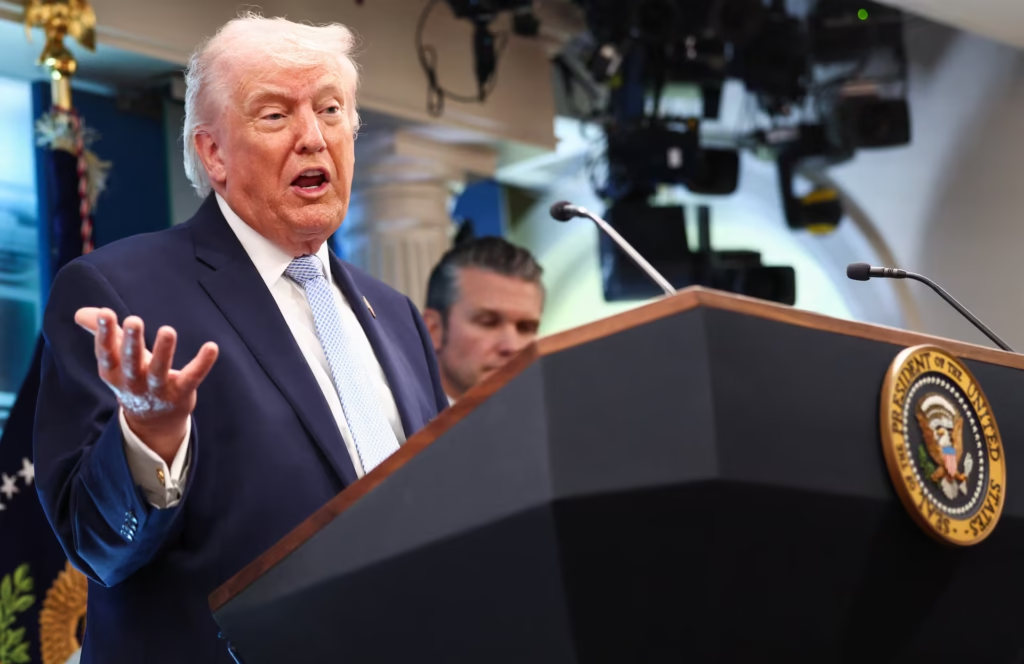
Trump stunned observers when he warned Iran that unless it reached a deal, “a whole civilization will die tonight, never to be brought back again.”
The message, delivered via social media, sent shockwaves through diplomatic circles. Tensions surged, and the world braced for escalation.
However, within hours, the tone shifted.
Trump abruptly backed away from the threat and agreed to a two-week ceasefire. The move, mediated by Pakistan, came just two hours before his own deadline for Iran to reopen the Strait of Hormuz.
Meanwhile, critics were quick to seize on the reversal. Some labeled it a “TACO” moment, shorthand for “Trump always chickens out.”
Claims Of Victory Meet Skepticism
Despite stepping back, Trump projected confidence.
He declared that the United States had “already met and exceeded all Military objectives.”
Still, analysts were not convinced.
Many argue that the administration’s approach, mixing sweeping demands with unpredictable messaging, risks weakening U.S. credibility. In contrast, Iran may emerge from the conflict battered but far from defeated.
Experts suggest Tehran retains influence over key shipping routes and maintains access to enriched uranium stockpiles, both of which could shape future tensions.
A Risky Negotiating Playbook
Trump has long styled himself as a master negotiator. Yet, this episode has intensified scrutiny over his methods.
Jon Alterman of the Center for Strategic and International Studies offered a blunt assessment: “The president was trapped by his own hyperbole,” he said. “He could not have destroyed Iranian civilization, and the costs of even appearing to try would have been massive.”
That criticism cuts to the core of the issue. By setting extreme expectations, the administration risks cornering itself.
Moreover, frequent reversals may reduce the impact of future threats.
Allies And Rivals Take Notice
The pattern has not gone unnoticed on Capitol Hill.
“The surprise value is wearing off,” said a Republican lawmaker who had been in contact with the White House on Tuesday night.
That sentiment reflects a growing concern. If adversaries such as China and Russia begin to anticipate these shifts, Trump’s unpredictability could lose its edge.
At the same time, the White House has pushed back firmly.
Press secretary Karoline Leavitt dismissed claims of a retreat, insisting Trump’s rhetoric is part of a calculated approach. She said his language reflects a “tough negotiating style” and urged the world to “take his word very seriously.”
High Stakes In A Volatile Region
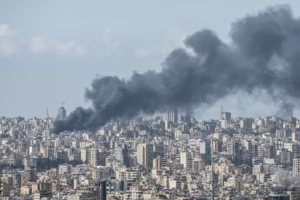
The ceasefire marks the most significant step toward easing a 40-day conflict that has rattled the Middle East and disrupted global energy markets.
However, the situation remains fragile.
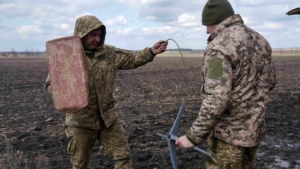
Iran has continued deploying large numbers of low-cost drones, signaling that tensions could flare again at any moment. Meanwhile, the strategic importance of the Strait of Hormuz ensures that any misstep could have global consequences.
That said, Trump’s latest move highlights both the potential and the limits of his approach. It can create pressure, but it can also expose vulnerabilities.
And in a region as volatile as this, even small miscalculations can carry enormous risks.