
Iran launched a fresh wave of missile strikes across Israel and Gulf Arab states on Thursday, signaling that its military reach remains intact despite U.S. claims that its power has been significantly reduced. The escalation comes at a critical moment in the ongoing conflict, raising new concerns about regional stability, global energy flows, and the risk of a prolonged war.
Meanwhile, the strikes served as a direct rebuttal to Washington’s messaging. While U.S. President Donald Trump suggested the threat from Tehran was nearly over, events on the ground told a different story.
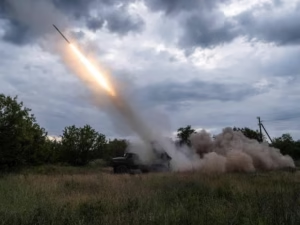
Iran Continues Missile Strikes Across Region
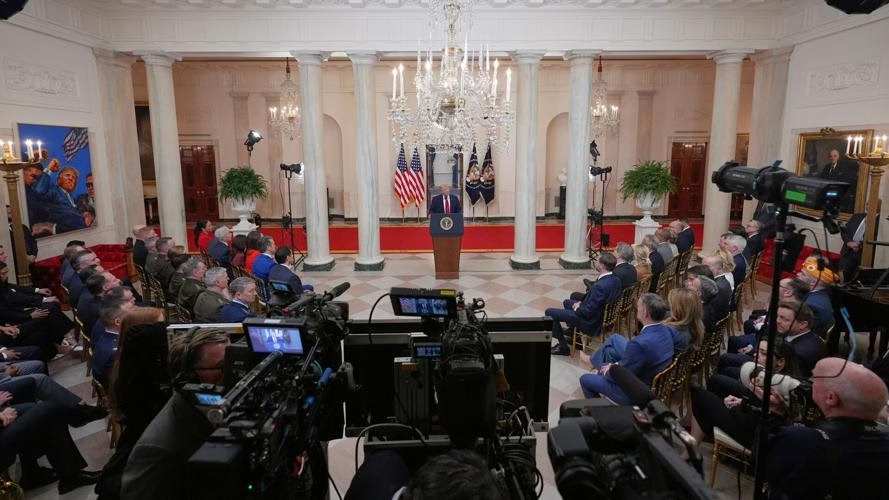
Iran wasted no time responding to Trump’s remarks. The president had declared that U.S. military action had been so decisive that “one of the most powerful countries” is “really no longer a threat.”
However, Tehran pushed back strongly. A spokesman for Iran’s military, Lt. Col. Ebrahim Zolfaghari, insisted the country still has significant capabilities, stating that facilities targeted so far by U.S. strikes are “insignificant.”
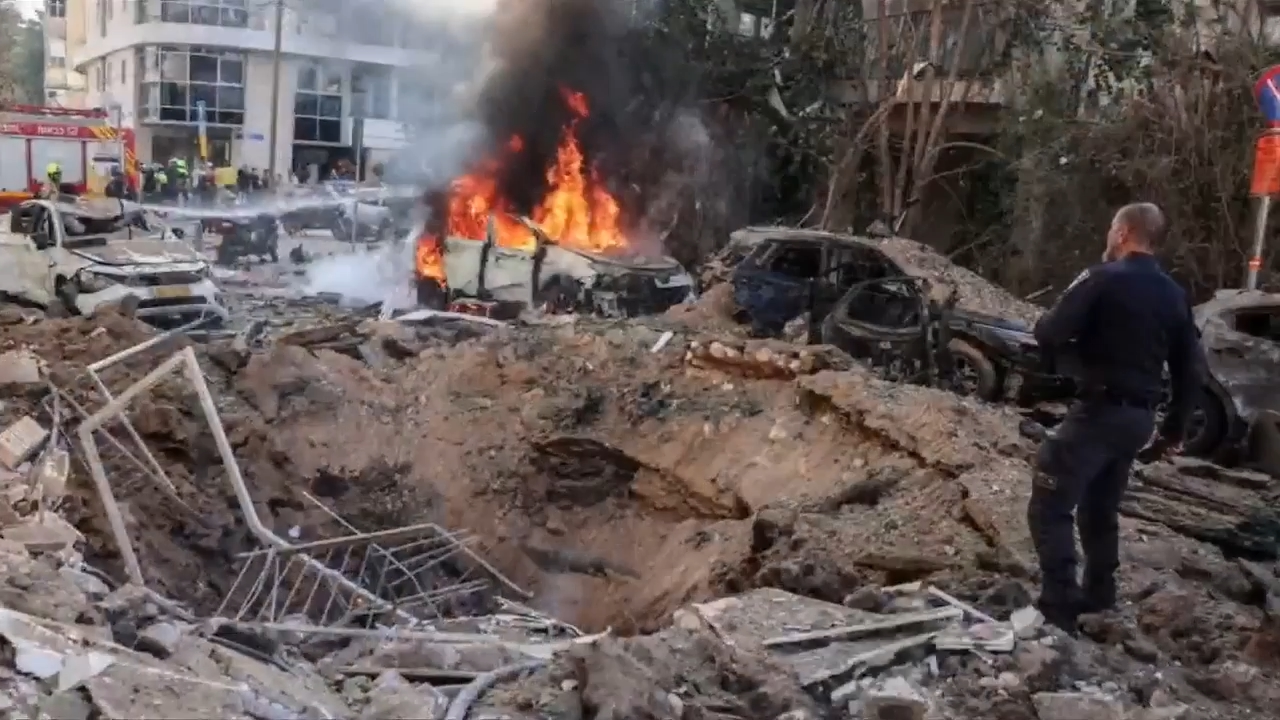
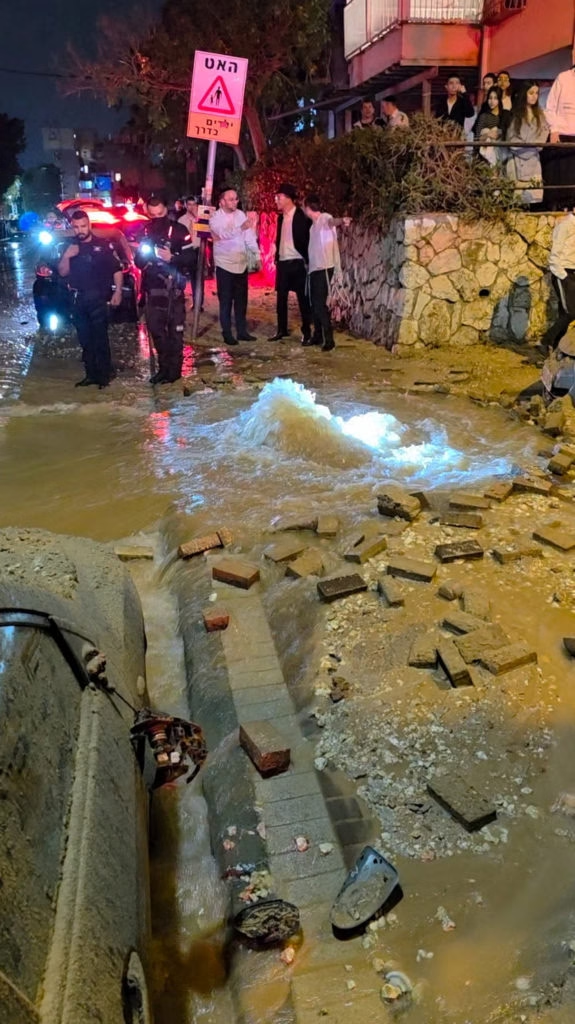
At nearly the same time as Trump’s address, explosions were reported in Dubai. Air defense systems were activated to intercept incoming Iranian missiles. Shortly after the speech ended, Israel confirmed that it was also intercepting additional missile threats.
Sirens echoed in Bahrain, home to the U.S. Navy’s 5th Fleet, adding to the sense of urgency across the region.
Strait Of Hormuz Becomes Strategic Pressure Point
Beyond the battlefield, Iran’s influence is being felt in global markets. Its grip on the Strait of Hormuz has disrupted energy supplies worldwide, creating ripple effects far beyond the Middle East.
Before the war began on Feb. 28, the vital waterway handled roughly 20% of globally traded oil. Now, that flow has nearly come to a halt.
According to shipping data, traffic through the strait has dropped by 94% compared to the same period last year. Only a handful of vessels have managed to pass through, often under special agreements or after paying fees.
Trump acknowledged the importance of the strait but took a controversial stance. He said countries dependent on its oil should “build some delayed courage” and go “take it,” while also noting it was not the U.S.’ responsibility to act.
Rising Death Toll And Expanding Conflict

The human cost of the war continues to climb. More than 1,900 people have been killed in Iran, while Israel has reported 19 deaths. In addition, over two dozen people have died across Gulf states and the occupied West Bank.
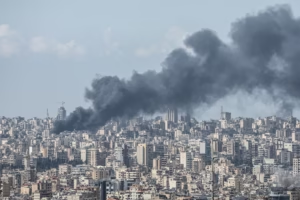
The conflict has also spread into Lebanon. Israeli strikes in the south killed four people, according to local health officials. Overall, more than 1,200 people have died in Lebanon, and over 1 million have been displaced.
Meanwhile, 13 U.S. service members have also been killed, along with 10 Israeli soldiers in Lebanon, underscoring the widening scope of the war.
Global Efforts To Secure The Strait
As tensions escalate, nearly three dozen countries are stepping in to address the crisis. A coordinated international effort is now underway to find ways to secure the Strait of Hormuz once the fighting ends.
These discussions include all G7 nations except the United States, along with regional players such as the United Arab Emirates and Bahrain.
British Foreign Secretary Yvette Cooper confirmed that talks are focused on diplomatic solutions. However, military planners are also preparing for potential operations, including mine-clearing efforts and measures to restore confidence in commercial shipping.
Still, there is hesitation. French President Emmanuel Macron described any immediate military attempt to reopen the strait as “unrealistic,” reflecting broader concerns about escalating the conflict further.
Oil Prices Surge As Markets React
Brent crude climbed to around $109 per barrel on Thursday, marking a roughly 50% increase since the war began. The disruption has also affected jet fuel supplies, creating challenges for airlines and global travel.
Although much of the oil passing through the strait is destined for Asia, only Japan and South Korea joined the latest international talks, highlighting uneven global engagement.
Uncertain Path Forward
Despite Trump’s suggestion that U.S. “core strategic objectives are nearing completion,” the situation remains volatile. Missile attacks are ongoing, regional tensions are rising, and critical trade routes remain under threat.
The key question now is whether diplomatic efforts can keep pace with military developments. Until then, the conflict shows no clear sign of slowing down.