
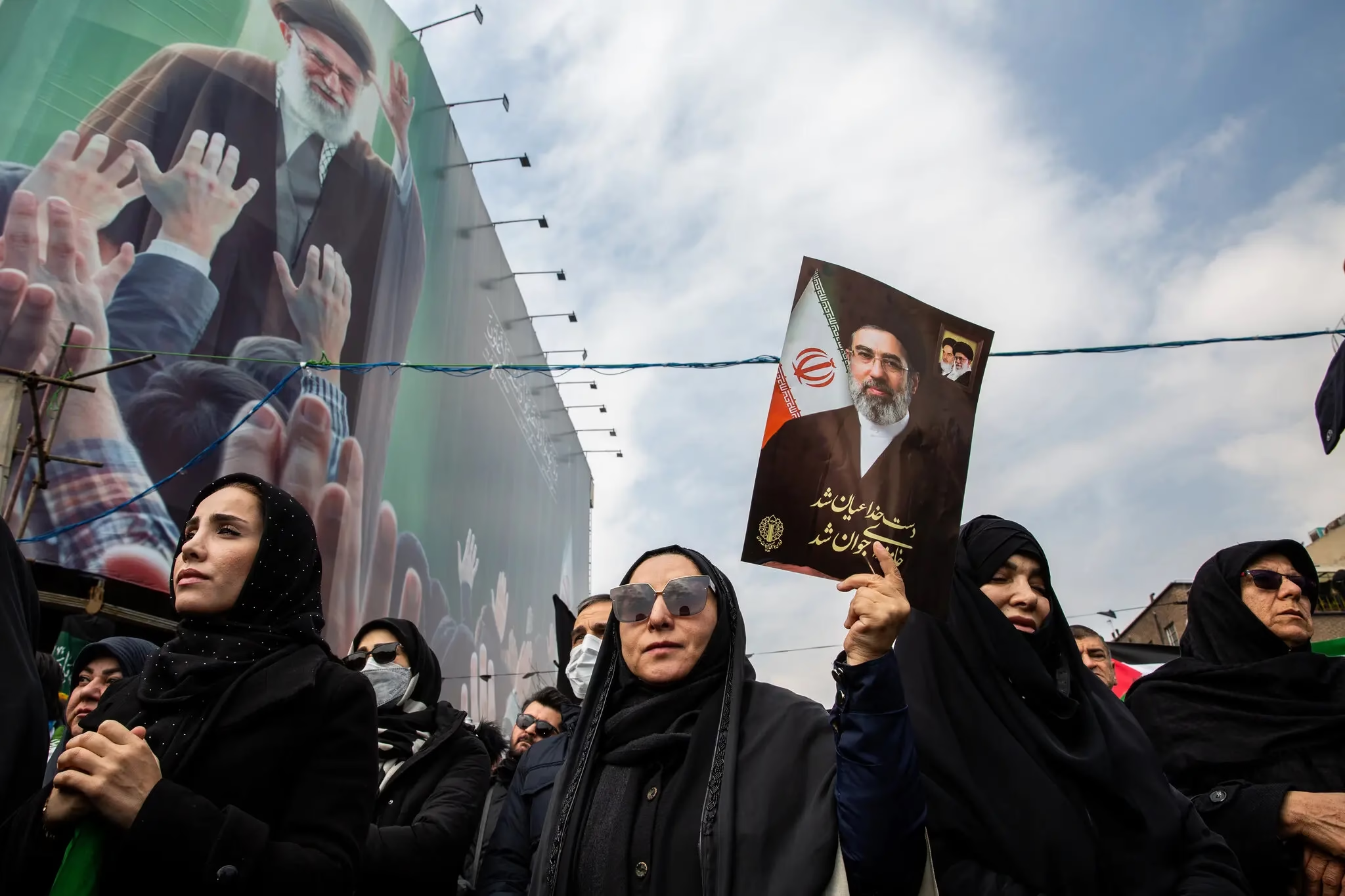
Mojtaba Khamenei’s path to becoming Iran’s new supreme leader may look inevitable from the outside. In reality, it unfolded through a tense, behind-the-scenes struggle packed with political maneuvering, ideological clashes, and wartime urgency.
What played out was not a smooth transition, but a high-stakes power contest at the heart of the Islamic Republic.
A Power Struggle Behind Closed Doors
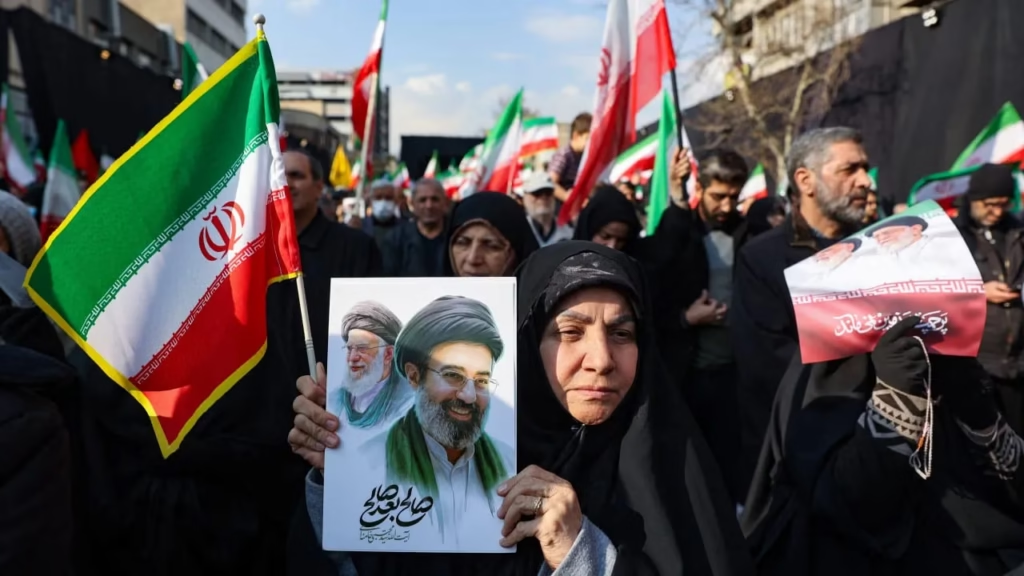
The fight to replace Ayatollah Ali Khamenei quickly turned into something far more intense than a routine leadership change. With the country under attack and leadership suddenly vacant, Iran’s political and military elite scrambled to shape the future.
The situation resembled a dramatic contest for control. Clerics debated fiercely, military leaders pushed their preferred candidates, and influential insiders worked quietly to secure influence.
Even in stable times, selecting a supreme leader is complex. The position carries ultimate authority over religion, politics, and the armed forces. But amid war with the United States and Israel, the stakes rose sharply. The decision became a test of whether the system itself could endure.
Secret Meetings And Early Voting Drama
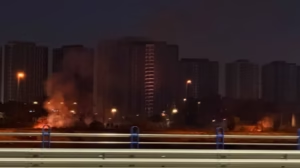
On March 3, the Assembly of Experts convened in a secret virtual session to begin the selection process. The timing was critical. Just hours earlier, Israeli strikes had hit their headquarters in Qum, killing administrative staff and adding urgency to the proceedings.
As deliberations began, two clear camps emerged.
Hard-liners demanded continuity. They pushed for a leader who would maintain existing policies and confront both internal dissent and foreign pressure.
Moderates, however, wanted change. They argued for a fresh leadership style and a shift away from escalating tensions with the West.
“We were looking at seven criteria for picking a candidate,” Ayatollah Mahmoud Rajabi said in an interview with state television. “Some had very strong social and political vision, another one had more religious credentials, another had strong management, one in wisdom.”
Despite the divisions, Mojtaba Khamenei secured a two-thirds majority in the initial vote, signaling that the military-backed faction had gained the upper hand.
Rival Camps And Competing Visions
Mojtaba Khamenei’s support came from some of the most powerful figures in Iran’s security establishment. Revolutionary Guards leaders and key political figures rallied behind him, seeing him as a symbol of continuity during crisis.
Still, opposition formed quickly.
Ali Larijani warned that the country needed a unifying figure rather than a polarizing one. Meanwhile, President Masoud Pezeshkian and several senior clerics aligned with moderate candidates.
Names like Hassan Rouhani and Hassan Khomeini surfaced as alternatives, alongside Alireza Aarafi as a compromise option.
However, anger toward external enemies began to shape the mood inside the assembly. Calls for resilience and retaliation overshadowed arguments for reform.
A Sudden Halt And Renewed Tensions
Just as the announcement of Mojtaba Khamenei’s leadership seemed imminent, it was abruptly delayed.
Larijani intervened, citing security concerns. With threats from foreign leaders targeting any successor, he argued that revealing the decision could put Khamenei’s life at risk.
Days later, Israeli strikes hit the supreme leader’s compound in Tehran. The building was destroyed, but Mojtaba Khamenei was not inside.
This pause gave moderates one last opportunity to challenge the decision.
They argued that the virtual vote violated constitutional requirements for in-person voting. At the same time, reports surfaced that Mojtaba himself had declined the role.
“When they told Mojtaba he was elected, he said, ‘I don’t want to accept it, pick someone else,’” Abdolreza Davari said in a telephone interview from Tehran. “It’s a Shia custom of polite refusal among clerics to say ‘I’m not after power,’ but then they eventually accept.”
A Controversial Twist Over Succession
In a dramatic turn, senior aides to the late Ayatollah Khamenei presented what they described as his final directive.
They claimed he opposed hereditary succession and did not want his son to take power. According to them, such a move would contradict the principles of the 1979 Islamic revolution.
The revelation stunned many clerics.
For a moment, it appeared the entire process might be reversed. Some assembly members pushed to honor the late leader’s wishes, while others insisted the constitution allowed them to decide independently.
Tensions escalated further when Ayatollah Ali Moalemi publicly criticized the moderates’ efforts.
“There were efforts to change the minds of the assembly members and drag us in another direction,” he said. “There were hands from outside the assembly with the intention to infiltrate and influence us.”
Military Pressure And Final Vote
Meanwhile, events on the ground intensified the urgency.
President Pezeshkian announced a temporary de-escalation with Arab nations, a move that angered military leaders backing Mojtaba Khamenei.
In response, Revolutionary Guards commanders pushed for an immediate final vote. Behind the scenes, lobbying intensified. Calls were made to assembly members, urging them to support Khamenei’s candidacy as a matter of duty.
On March 8, the Assembly reconvened.
Despite lingering objections, members agreed that wartime conditions justified the earlier virtual process. Ballots were cast and transported for counting under strict procedures.
The result was decisive.
Mojtaba Khamenei secured 59 out of 88 votes, comfortably surpassing the required threshold.
Shortly before midnight, the announcement was made. Iran had a new supreme leader.
A Fragile Unity After Victory
Following the decision, public unity quickly emerged.
Even those who had opposed Mojtaba Khamenei’s rise offered congratulations and pledged loyalty. The political establishment closed ranks, at least outwardly.
Yet questions remain.
The process exposed deep divisions within Iran’s leadership. It also highlighted the powerful role of the military in shaping political outcomes.
For now, Mojtaba Khamenei stands at the helm of a nation at war, inheriting both authority and an uncertain future.