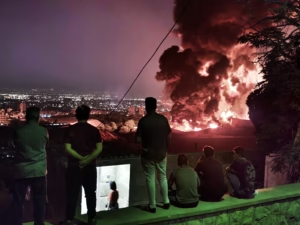

Israel has agreed to enter negotiations with Lebanon, even as fresh airstrikes threaten to unravel a fragile ceasefire tied to broader tensions involving the United States and Iran. The development comes at a critical moment, with diplomatic efforts underway but trust between key players hanging by a thread.
Meanwhile, violence on the ground continues to reshape the situation hour by hour.
Beirut Reels After Deadly Airstrikes
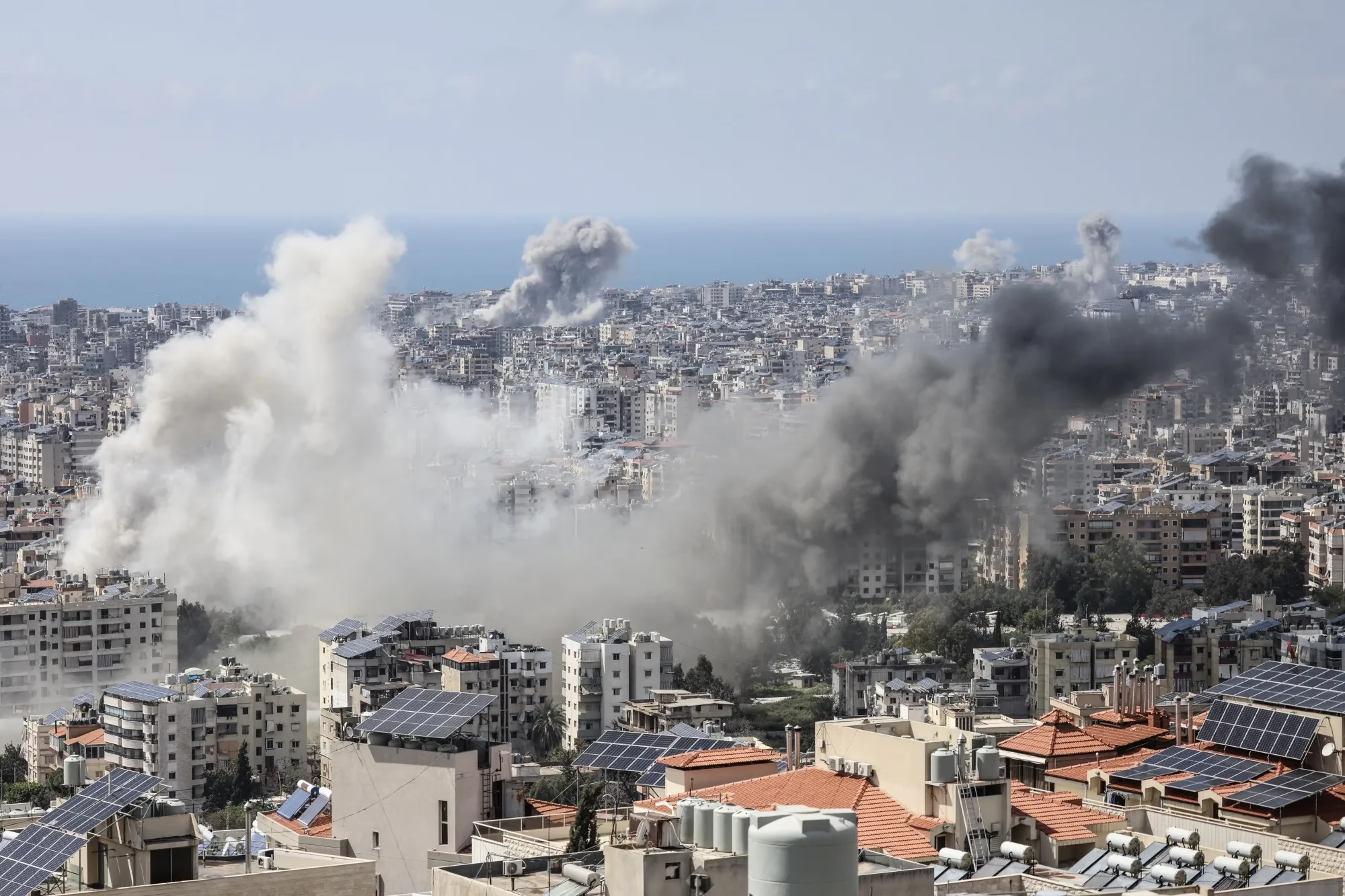
Beirut is still in shock after one of the deadliest days of Israeli bombardment in recent memory. Rescue teams have been working nonstop, pulling victims from collapsed buildings as hope fades for those still trapped beneath the rubble.
According to reports, Israeli warplanes unleashed over 100 strikes in just 10 minutes. The result was devastating, more than 300 people killed and over 1,000 injured. Entire neighborhoods, once considered relatively safe, now lie in ruins.
Rescue efforts remain ongoing despite the danger overhead.
Ali Khaled Al Haybi, Civil Defense Volunteer (through interpreter), said:
“We are currently carrying out this search-and-rescue operation the fastest we can. We came here so we can implement this mission and so that we can recover the four missing victims.”
Still, fear is constant.
Ali Khaled Al Haybi (through interpreter) added:
“It’s not just a worry. It’s a risk above our head, this constant annoying sound that’s making us nervous. So, yes, we are a bit distracted, but we will stay here to complete the mission.”
Civilian Toll Sparks Outrage
The strikes targeted areas Israel claims were linked to Hezbollah. However, the attacks hit densely populated residential zones, raising serious concerns about civilian casualties.
Survivors describe scenes of chaos and confusion.
Raghd Ali Mohammed, a resident who narrowly escaped, recalled:
“I was in my room downstairs and suddenly the rockets came down, hitting this dental clinic. The ceiling came down on us. There was no warning. The place was full of dust. It took 10 to 15 minutes until I could see anything, so I could open the door and escape through a small crack.”
He insisted the building housed only civilians.
Raghd Ali Mohammed (through interpreter) said:
“Our building has seven floors. All of the residents are civilians. There’s no one else here.”
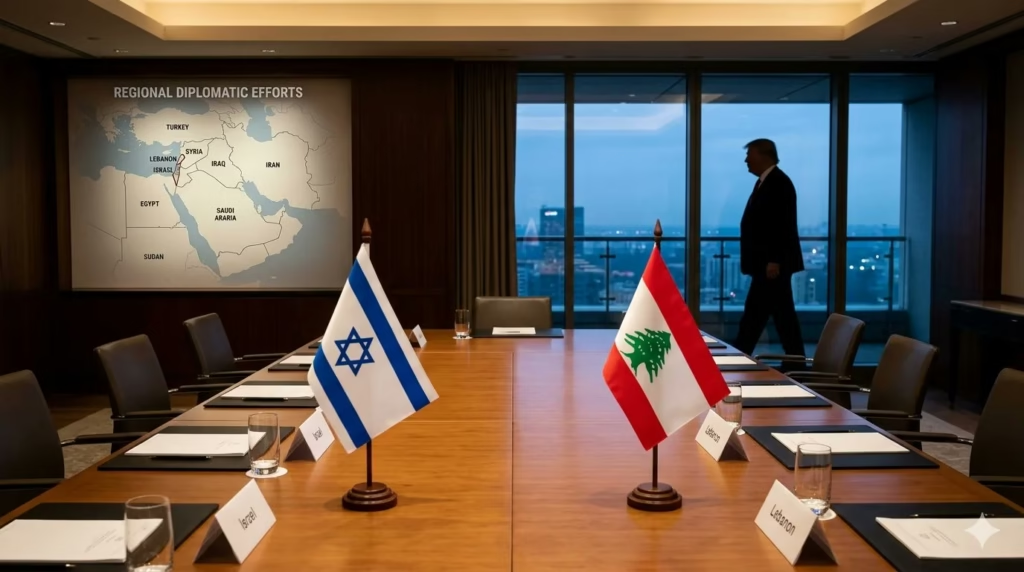
Israel Pushes For Talks With Lebanon
Despite the ongoing violence, Israel has signaled a willingness to engage diplomatically.
Prime Minister Benjamin Netanyahu confirmed the move, stating:
“I instructed the Cabinet to open direct negotiations with Lebanon in order to achieve two goals, one, the disarmament of Hezbollah, two, a historic sustainable peace agreement between Israel and Lebanon.”
These talks, expected to take place in Washington, would mark a rare moment of direct engagement between the two nations after decades of hostility.
However, skepticism remains high, especially among those directly affected by the violence.
U.S. And NATO Signal Continued Military Presence
At the same time, the United States is maintaining a strong military posture in the region.
President Donald Trump emphasized that American forces will remain until a final agreement is reached, referring to it as a “real agreement” that must be fully enforced. He also added:
“The U.S. military is looking forward, actually, to its next conquest.”
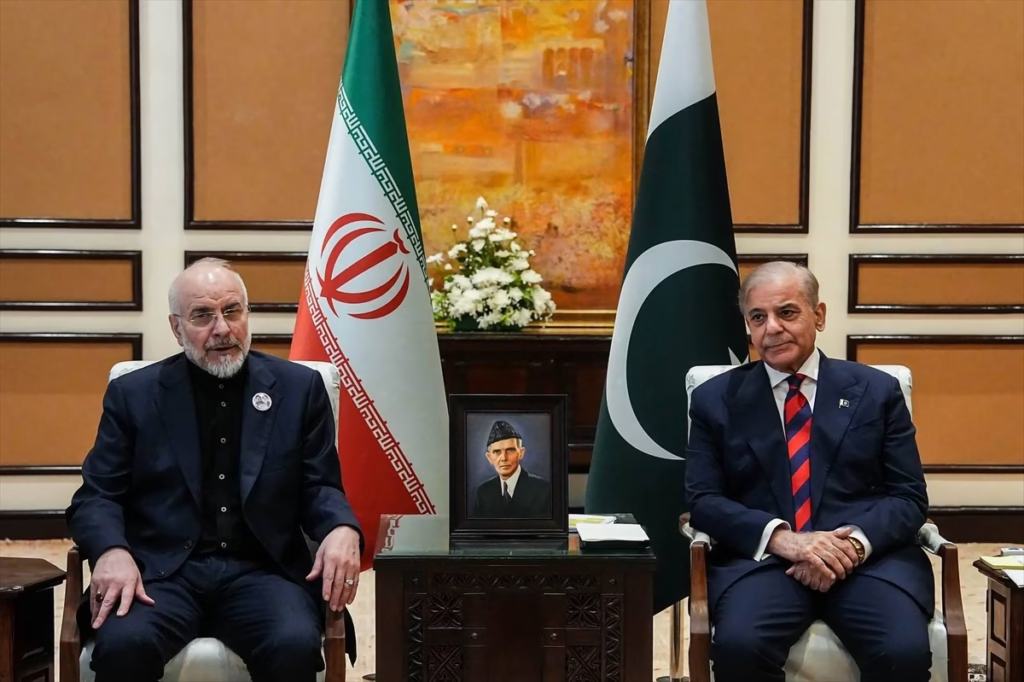
The comments come as tensions extend beyond Lebanon, with broader concerns about Iran’s role in the conflict.
NATO Secretary-General Mark Rutte sought to reassure allies of their support.
Mark Rutte said:
“Allies are doing everything the United States is asking.”
He further explained:
“But what I see when I look across Europe today is allies providing a massive amount of support, basing, logistics and other measures to ensure the powerful U.S. military succeeds in denying Iran a nuclear weapon and degrading its capacity to export chaos.”
Iran Declares Strength Amid Conflict
Iran, for its part, has projected confidence despite mounting pressure.
A statement attributed to Supreme Leader Mojtaba Khamenei, read on state television, declared:
“It is clear before everyone’s eyes the dawn of the Islamic Republic’s emergence as a great power while the evil is facing the downhill slope of weakness.”
The message signals defiance and suggests that Tehran sees itself gaining ground despite ongoing hostilities.
Lebanon Condemns Escalation
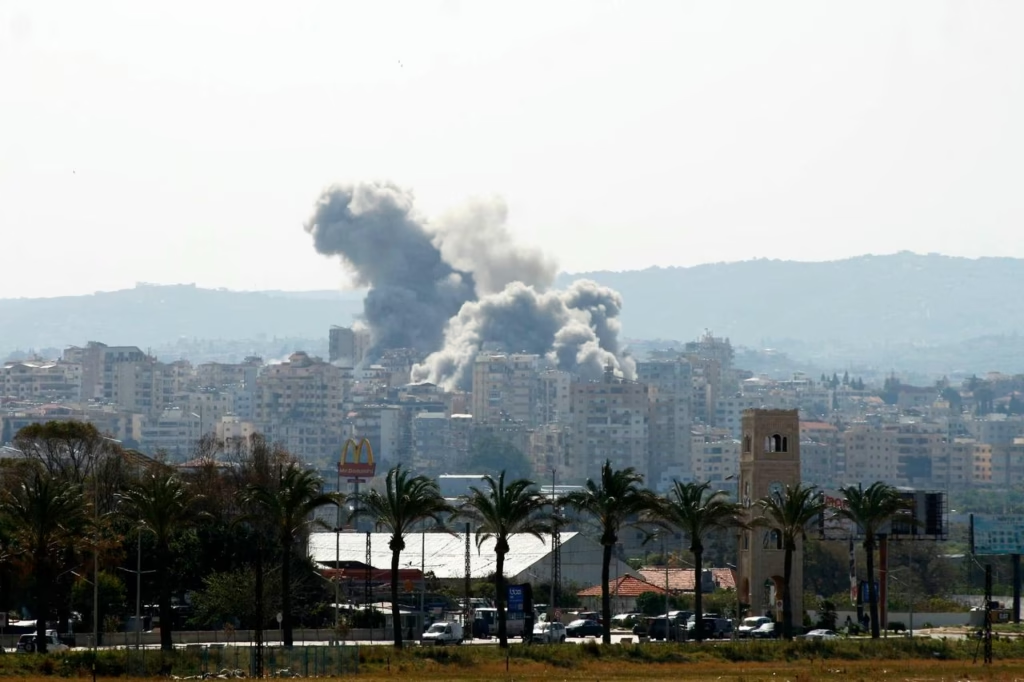
Lebanon’s leadership has strongly criticized the strikes, calling them a violation of international law.
Prime Minister Nawaf Salam warned:
“This dangerous escalation comes in defiance of all international and regional efforts to end the war in the region and blatantly disregards the principles of international law and international humanitarian law. Indeed, it flagrantly violates them.”
He also reiterated the need to strengthen state control over armed groups.
Nawaf Salam stated:
“The army and security forces are required to immediately begin enhancing the state’s full authority across Beirut and restricting arms to legitimate forces only.”
Confusion And Fear Grip Communities
In the aftermath of the attacks, uncertainty continues to spread among residents.
Some locals claim suspicious activity had been taking place in targeted buildings, though these accounts remain unverified.
One anonymous resident said:
“For two years, we have been saying that there are trucks entering the building that we are suspicious of. They have entered several times.”
However, others dispute these claims, saying inspections previously found no evidence of militant activity.
A Fragile Path Forward
As diplomatic talks loom, the situation remains highly volatile. Continued strikes risk undermining any chance of a lasting ceasefire, while mistrust between nations complicates negotiations.
For civilians on the ground, the promise of peace feels distant.
The question now is whether diplomacy can outpace destruction, or if the region is headed toward deeper conflict.