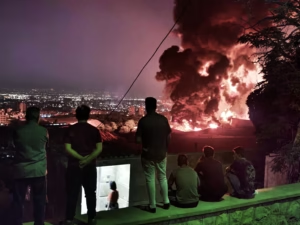

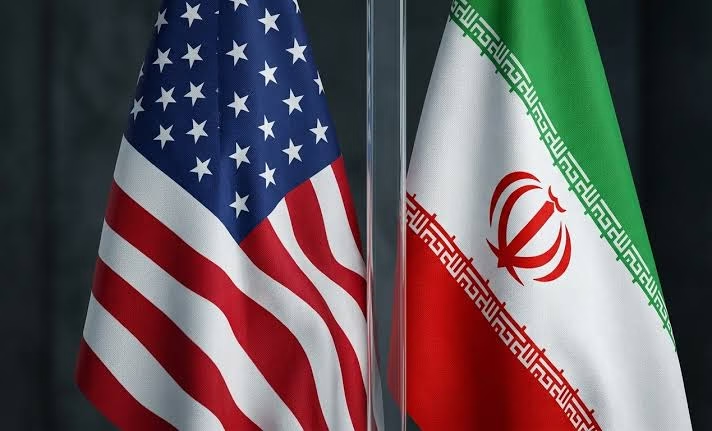
Tensions across the Middle East deepened on Saturday as Iran accused the United States of fueling instability following a fresh exchange of military strikes involving American forces, Iran, and several Gulf states. The latest developments have raised new concerns that a broader regional conflict could be taking shape despite previous ceasefire efforts.
Iran’s Foreign Ministry sharply criticized Washington after the US military reported intercepting seven Iranian missiles aimed at Kuwait and Bahrain. Tehran’s Islamic Revolutionary Guard Corps said it had targeted what it described as “enemy bases in the region.”
Iran And US Exchange New Accusations
Iran’s Foreign Ministry said Washington was responsible for worsening tensions rather than calming them.
In a statement, the ministry said the US “not only lacks the will to reduce tensions and return to the path of stability, but with its adventurist actions, it seriously endangers the security of the region”. It also condemned American strikes on Iranian radar and surveillance facilities in the Sirik region and on Qeshm Island, calling them ceasefire violations.
The ministry further warned that responsibility for any fallout from the attacks would rest with the United States and urged neighboring countries not to allow their territories to be used for military operations against Iran.
Gulf Nations Condemn Iranian Missile Attacks
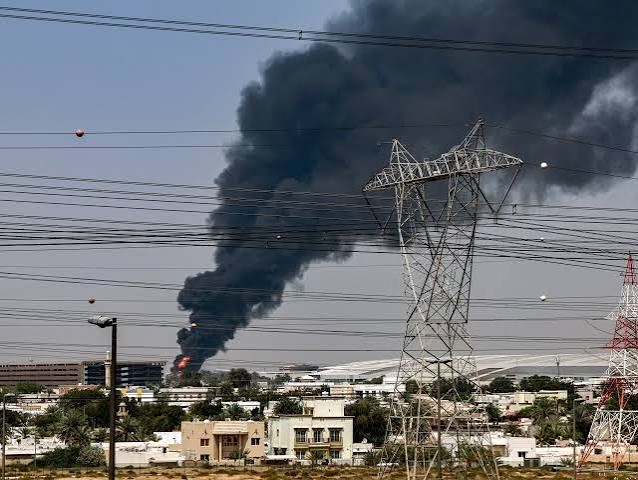
Kuwait confirmed that its armed forces detected and intercepted seven ballistic missiles that entered its airspace before dawn.
According to the Kuwaiti Ministry of Defence, debris from the interceptions caused material damage but no casualties. The country’s fire brigade also responded to multiple incidents linked to falling fragments from the defensive operations.
Meanwhile, Qatar, Egypt, and Jordan condemned the attacks, describing them as violations of Gulf sovereignty and international law. All three countries expressed support for Kuwait and Bahrain while urging efforts to prevent further escalation.
Lebanon Conflict Adds Pressure To Regional Crisis
 As tensions between Washington and Tehran intensified, violence also continued in Lebanon.
The Lebanese army reported that an Israeli strike on a military vehicle in southern Lebanon killed Brigadier General Wassam Sabra, Captain Elie Khoury, and soldier Hussein Ghozal. Lebanese Prime Minister Nawaf Salam condemned the attack, calling it “a heinous crime and an attack on Lebanon and all Lebanese people”.
Hezbollah described the strike as “a deliberate crime” and “a deliberate and premeditated crime that adds to the series of crimes the enemy continues to commit against our Lebanese people, particularly in the south and the Western Bekaa”. The group also declared: “We condemn this sinful aggression and reaffirm our steadfast support for our national army.”
Iran also weighed in on the attack. Foreign Ministry spokesperson Esmaeil Baghaei called it “a heinous crime against Lebanon, its army, and its sovereignty, and a clear message of aggression stating that Israel desires no security, stability, or prosperity for Lebanon.”
Analysts Warn Of Wider Regional Risks
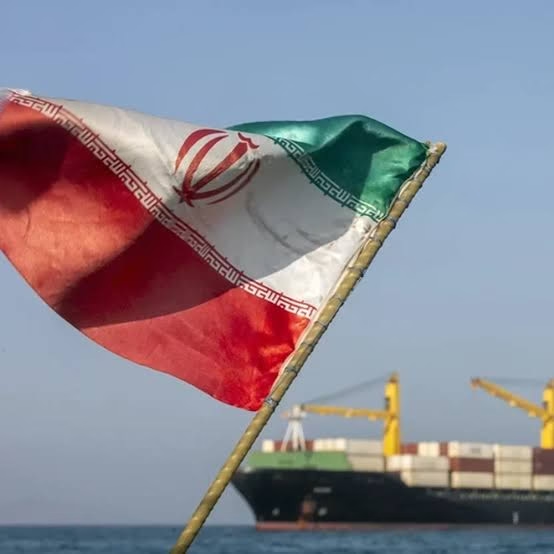
Experts monitoring the conflict say both Tehran and Washington are pursuing competing objectives around the Strait of Hormuz, a crucial global energy route.
Military analyst Alexandru Hudisteanu said: “This type of freedom of navigation operation that the US is trying to push [is to try] to delegitimise this monolithic control that Iran claims to have” over the strategic waterway. He added that despite the ongoing clashes, “The US still wants the behaviour to change now for some benefits later, whereas Iran wants the benefits now and the discussion of a change of behaviour later.”
Researcher Ali Akbar Dareini offered a more alarming assessment, saying: “There is no ceasefire, we are in a low-scale war at this moment.” He further warned, “Iran’s red line is clear: if Iran cannot export oil, no one in this region will either.”
Gaza And West Bank Violence Continues
 While attention remains fixed on the US-Iran confrontation, violence continued elsewhere in the region.
In Gaza City, at least five people were killed when missiles struck a wedding tent, according to reports from the ground. Medical officials said casualties could rise as several wounded victims remain in critical condition.
Elsewhere, Palestinian officials accused Israeli settlers of attacking residents in Huwara in the occupied West Bank, injuring several people, damaging property, and setting fire to agricultural land. Videos circulating online also appeared to show confrontations involving settlers, Palestinian residents, and Israeli soldiers.
Pakistan Takes Diplomatic Role
Amid the escalating crisis, Lebanon’s army commander, General Rudolf Haykal, traveled to Pakistan at the invitation of Field Marshal Asim Munir.
The visit comes as Pakistan continues diplomatic efforts aimed at helping mediate talks intended to end the broader conflict involving the United States, Israel, Iran, and Lebanon.