
Australians facing mounting mortgage stress received another financial blow Tuesday after the Reserve Bank of Australia lifted interest rates again, pushing borrowing costs to their highest level in years while warning more pain could still be ahead.
The Reserve Bank raised the official cash rate to 4.35%, marking the third rate increase of 2026 as inflation continues to surge amid global instability and rising energy prices linked to conflict in the Middle East.
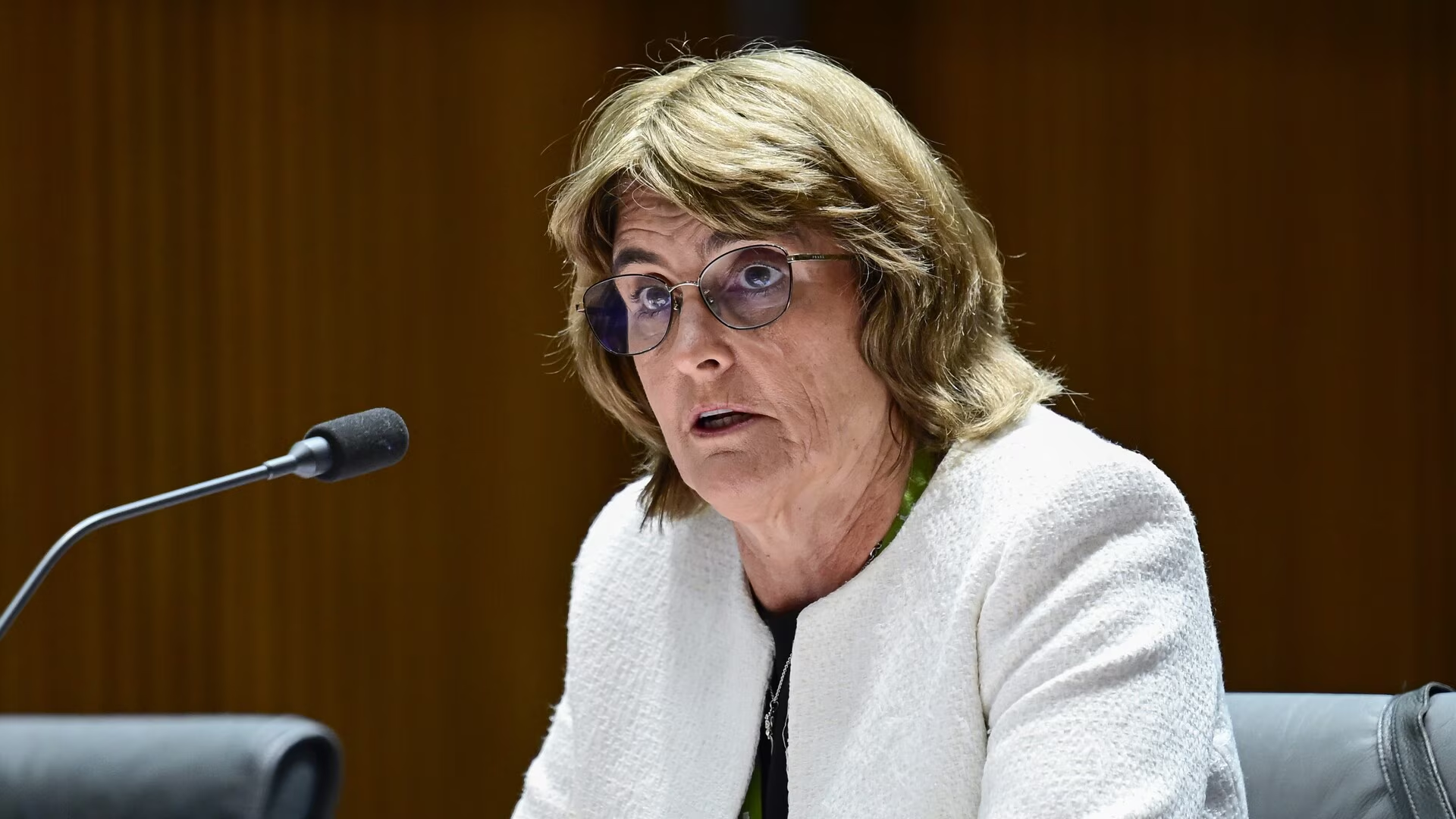
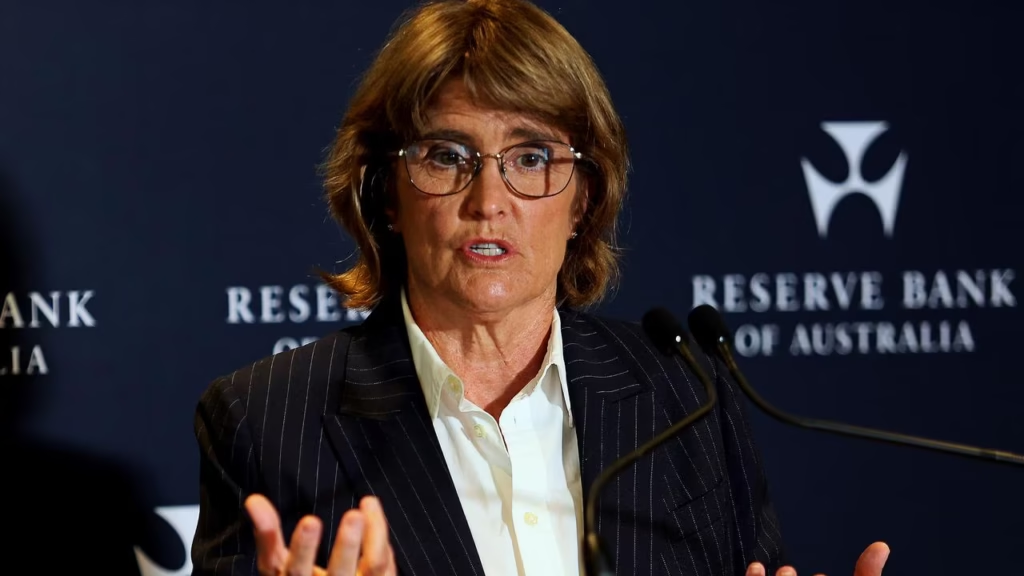
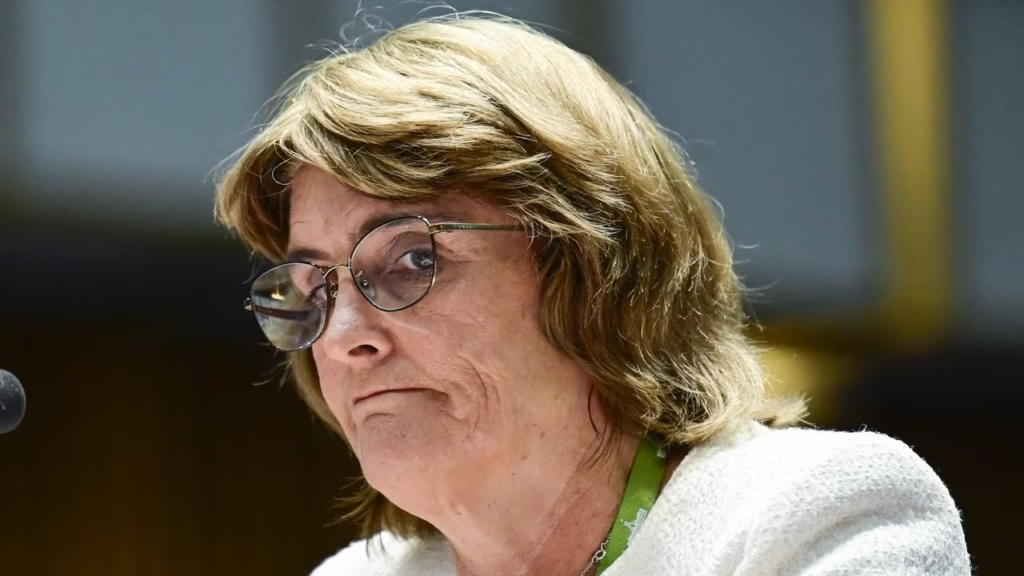
Reserve Bank governor Michele Bullock delivered a blunt assessment of the country’s economic reality, saying many households are now materially worse off than before.
“Australians are poorer,” Bullock said.
The comments landed heavily across a nation already grappling with soaring grocery bills, rising rents, expensive fuel and relentless pressure on household budgets.
RBA Signals More Pain Could Come
The central bank made clear it believes inflation remains too high to back away from aggressive monetary tightening.
Bullock warned the economic damage tied to the global energy crisis and geopolitical instability cannot simply be avoided through domestic policy changes.
“We are poorer and there is no way out of it,” she said.
That stark message underscored the RBA’s concern that external shocks, particularly linked to turmoil in the Middle East, are continuing to drive up costs throughout the economy.
Meanwhile, economists say the latest increase will likely add hundreds of dollars a month to repayments for many mortgage holders already stretched thin by previous hikes.
The move immediately intensified fears that consumer spending could weaken further in coming months.
Treasurer Says Australians Paying “A Hefty Price”
 Federal treasurer Jim Chalmers acknowledged the growing financial pressure facing households after the central bank’s decision.
Chalmers said the rate rise would “make it tougher” for Australians already dealing with rising costs tied to international conflict and economic uncertainty.
Australians are paying “a hefty price” for the war in the Middle East, he said.
Still, the government stopped short of criticizing the Reserve Bank directly, instead emphasizing the global nature of inflationary pressures.
Cost-Of-Living Crisis Dominates National Debate
The rate increase quickly became the dominant political and economic story of the day, overshadowing several other major developments across Australia.
Among them was continuing testimony at the antisemitism royal commission, where the inquiry heard disturbing claims involving children “saying heil Hitler and putting up their arm in a salute”.
In New South Wales, authorities confirmed the deaths of three people, including two Marine Rescue volunteers, after a tragic boating incident near Ballina.
Meanwhile, four Australians remained stranded aboard a luxury cruise ship off Cape Verde after a suspected respiratory virus outbreak reportedly killed three people and forced nearly 150 passengers into isolation.
Victoria also announced its first budget surplus since the pandemic, although concerns remain over state debt levels projected to approach $200 billion in coming years.
Great Barrier Reef Suffers Summer Damage
 Environmental concerns also surfaced Tuesday after officials revealed parts of the northern Great Barrier Reef endured significant coral bleaching during the summer months.
According to the Great Barrier Reef Management Authority, 28 of 79 surveyed reefs between Cairns and Cooktown showed “prevalent bleaching”.
The agency said the damage was “likely a cumulative effect of heat stress and freshwater impacts from flood plumes, particularly on inshore and mid-shelf reefs”.
Severe Tropical Cyclone Narelle and Cyclone Koji also contributed to reef damage through flooding and strong weather systems that affected coral ecosystems across Queensland waters.
Electric Truck Rollout Expands In Australia
In contrast to the bleak economic outlook, the clean energy sector received a boost with the announcement of a new electric truck fleet operating across Sydney and Melbourne.
Fleet electrification company Zenobē partnered with appliance retailer Winnings on a project backed by a $3.5 million government grant through the Australian Renewable Energy Agency.
The rollout includes 30 electric delivery trucks aimed at reducing emissions in urban freight transport.
Arena chief executive Darren Miller said:
“What sets this project apart is the focus on real world operations – heavy payloads, managed from active depots, running on real delivery routes in New South Wales and Victoria. That’s where electric trucks need to prove themselves if they’re going to scale.”
Political Pressure Likely To Intensify
The latest rate hike is expected to fuel fresh political debate over inflation, government spending and the Reserve Bank’s strategy heading deeper into 2026.
For many Australians, however, the economic discussion is becoming increasingly personal.
Higher mortgage repayments, rising essentials and persistent uncertainty are leaving households asking a difficult question: how much more pressure can families absorb before the broader economy begins to crack?